DIY Vintage dress | Sleeveless button down midi dress | Step by step sewing tutorial

DIY Vintage dress | Sleeveless button down midi dress | Step by step sewing tutorial

Welcome or welcome back to my channel. My name is Jess and I love doing DIY, making clothes in a "simply but pretty" way.
It's my birthday month. And I want to make something special for myself. So I chose a few designs that I really love for the tutorials this month. I hope you will enjoy all of them. In today's tutorial, I'm going to share with you how I made my vintage dress. This is the sleeveless dress with button down and side pockets. It's in midi length. So it's not only pretty but also elegant.
I hope you like it and try it out. So let’s get started!
WHAT YOU’LL NEED

2.5m of soft cotton fabric. The width of the fabric is 130cm
Pattern paper
Sewing machine
Pins
Scissors
Ruler
Long stick
Buttons
MAKING THE PATTERNS
Here’s the pattern for the project. To get a clear understanding of all the measurements needed for the pattern, watch the video from 0:43 to 5:55.
Remember, you can adjust these measurements to fit your own dimensions!

THE FRONT BODICE PATTERN
THE SIDE PART OF THE FRONT BODICE PATTERN

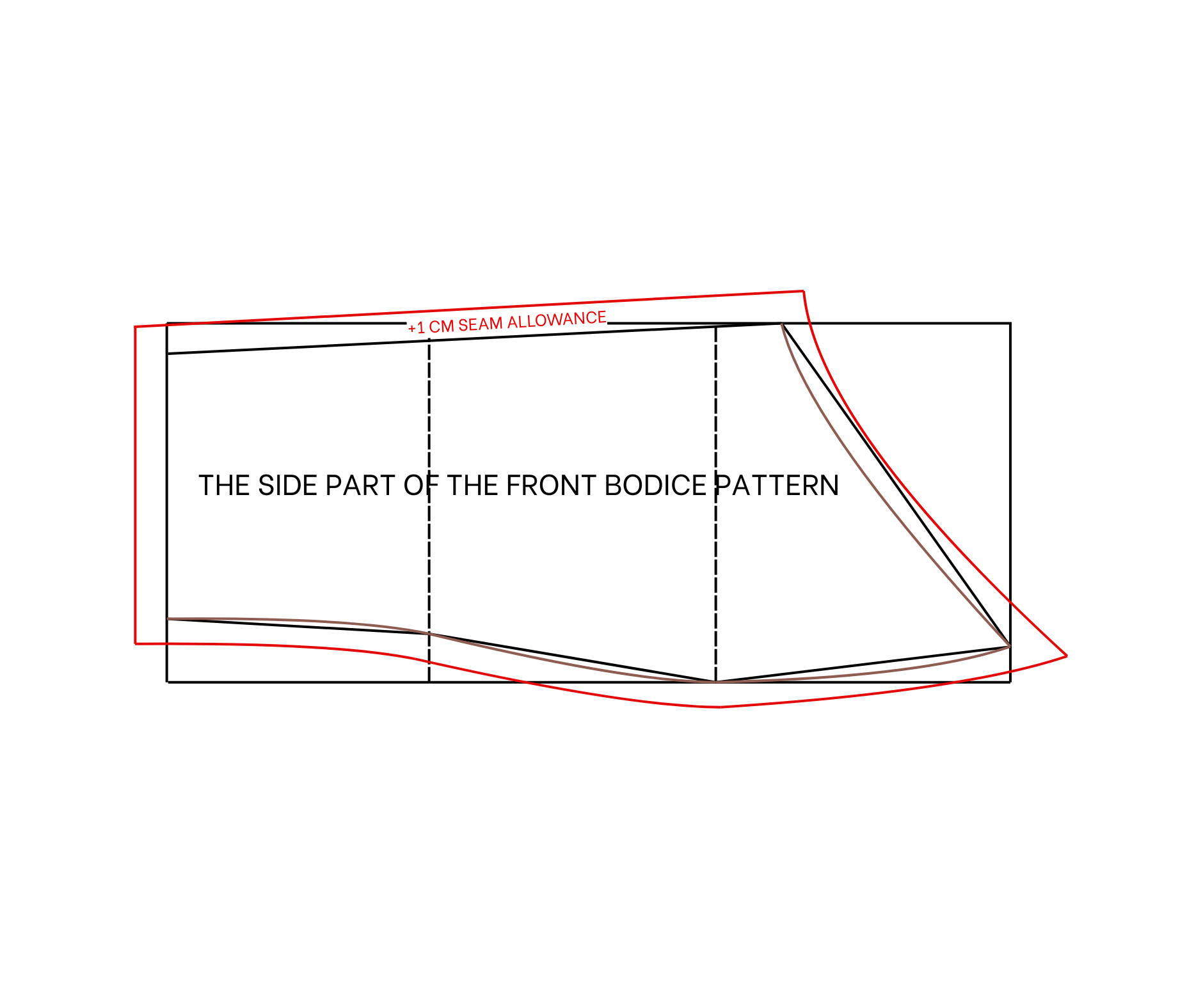
To make the bodice pattern, draw a rectangle with 11 cm width (1/8 your bust size plus 1 cm) and 26 cm length (a length from above your breast to 3 cm above your belly button). It's the length of the top bodice that you want.
From the top width line, mark down on the length line 18 cm, which is the width from above to under your breast.
Then, draw a line to connect two marks together. This line will be the underbust line of the top bodice.
After that, make another line in the middle between the first one and the top width line. This line will be the bust line of the top bodice.
From one length line, mark at 10 cm on the top width line; it's 1/8 your above-bust size.
On the first straight line, mark at 9.5 cm, which is 1/8 your underbust size plus 0.5 cm.
On the bottom width line, mark at 9 cm, which is 1/8 cm above your belly size plus 1 cm.
Then, connect these marks together. Based on it, draw a slightly curved line.
From the top of the length line, mark down 7 cm, which is the position of the underarm line.
Then, connect this mark to the one on the top width line. Based on it, draw a slightly curved line to finish the sleeve line of the front bodice pattern.
From the mark on the bottom width line, mark down 8 cm, which is 1/8 above your belly size.
Then, connect this mark to the mark on the length line next to it to finish the side line of the top bodice pattern.
After all, check to make sure the width of these lines are correct.
Add 1 cm for seam allowance after that.
THE CENTER PART OF THE FRONT BODICE PATTERN
To make the center pattern of the front bodice, draw a straight line and a horizontal line cutting each other first.
After that, use the side pattern of the front bodice to copy it.
From the end of the sleeve line, mark out 3 cm.
Then, connect this mark to the other end of the sleeve line to create a neckline for the center pattern of the front bodice.
Make this line a big curve to make it nicer.
At the dress, if you have the button, add 4.5 cm at one side of the pattern to create a button area. 4.5 cm is 1.5 times the width of the button area you want to make.


THE BACK BODICE PATTERN
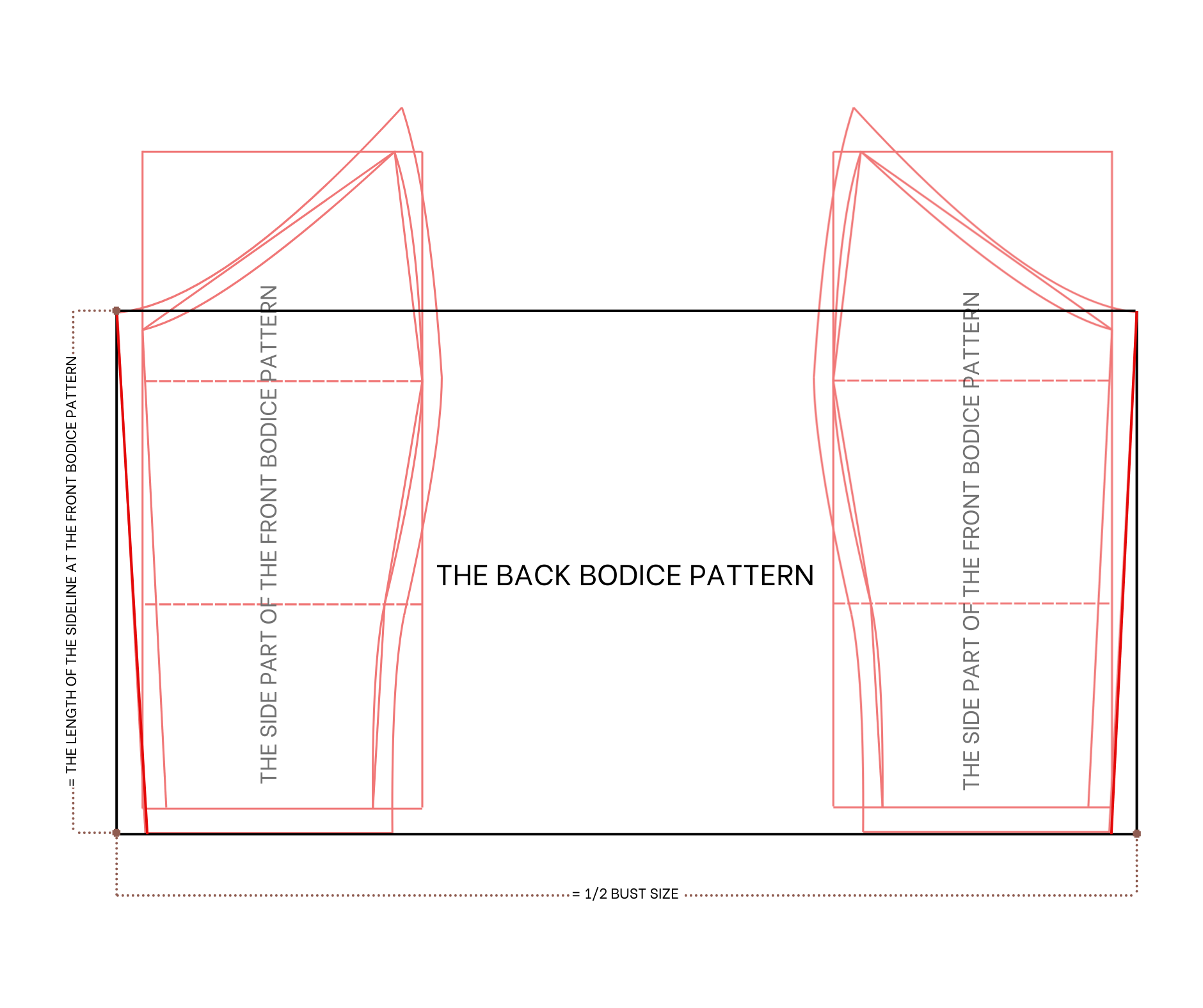
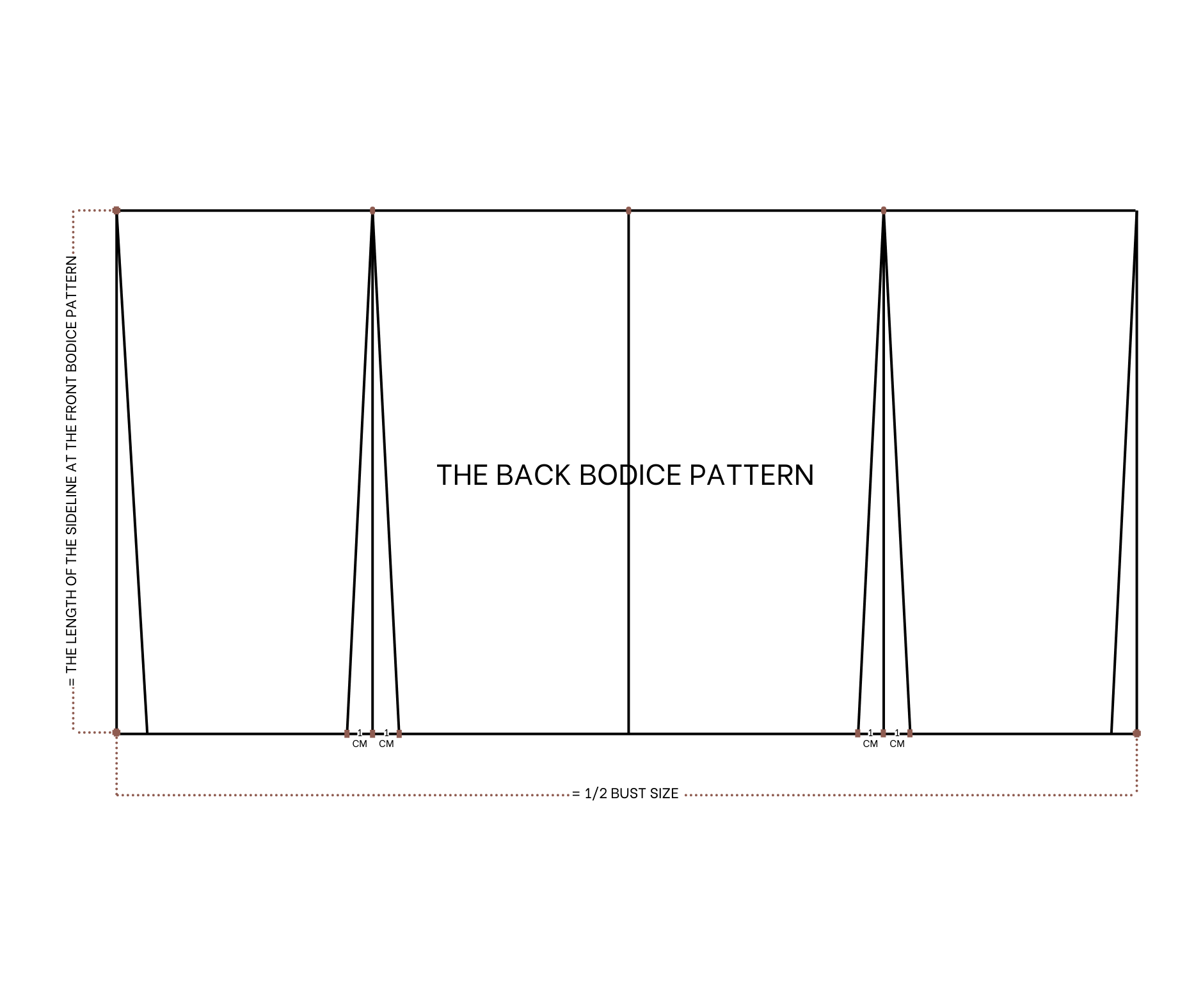
To make the back bodice pattern, cut a rectangle with a 21 cm length, which is the length of the side line of the front pattern, and 40 cm width, which is the half of your bust size.
Use the side pattern of the front bodice to copy the side line to the back bodice pattern first.
Then, draw a straight line in the middle to divide the back bodice pattern into two equal parts.
Keep making another straight line in the middle of each smaller part of the back bodice.
At the end of this line, mark two sides 1 cm.
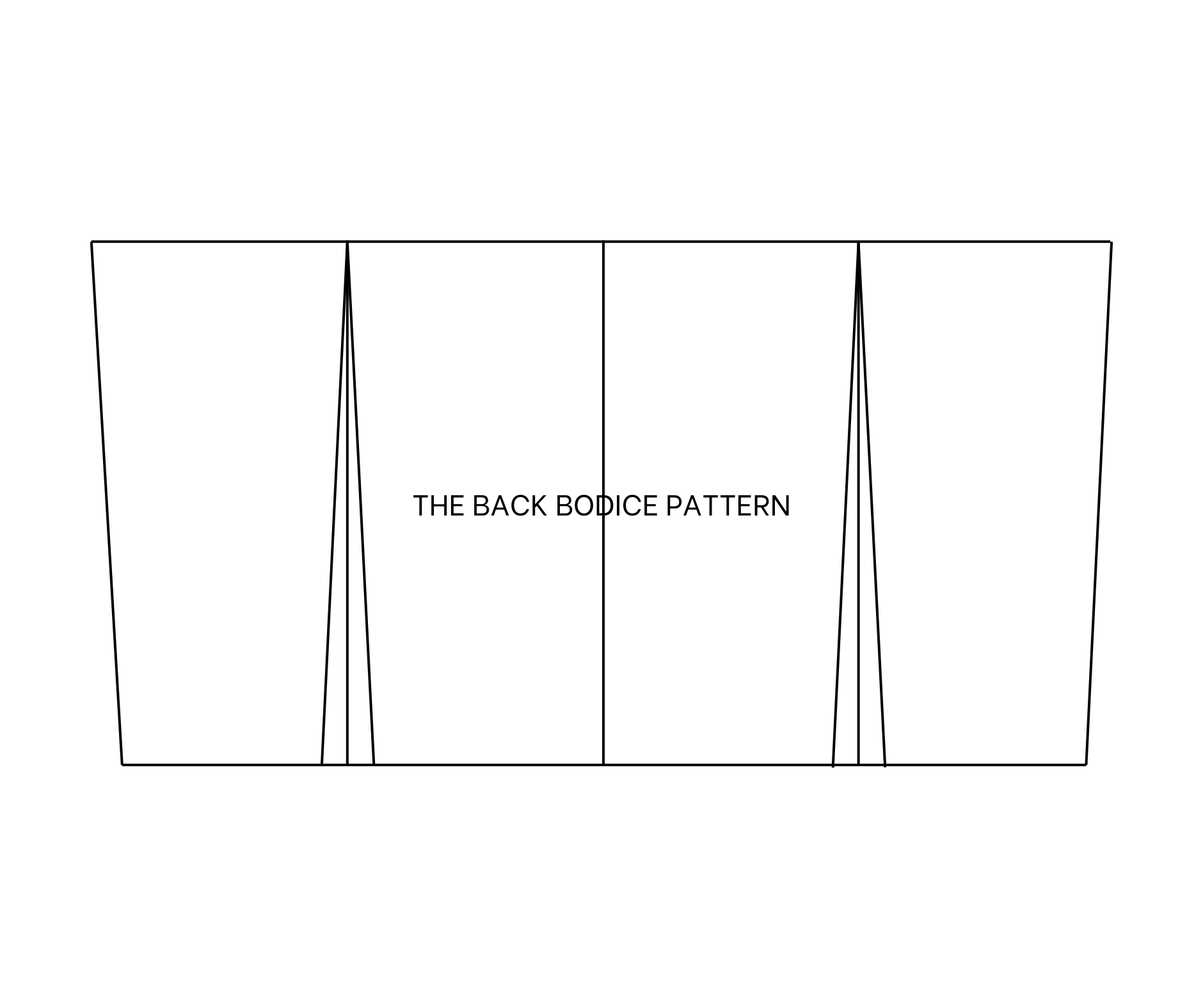
Then, connect this mark to the end of the straight line to create a triangle there. This will be the dart at the back of the bodice.
Do the same for the other side.
Make sure the final width at the end of the back bodice will be 34 cm, which is a half of your 3 cm above the belly button plus 2 cm for seam allowance. .
THE POCKET PATTERN
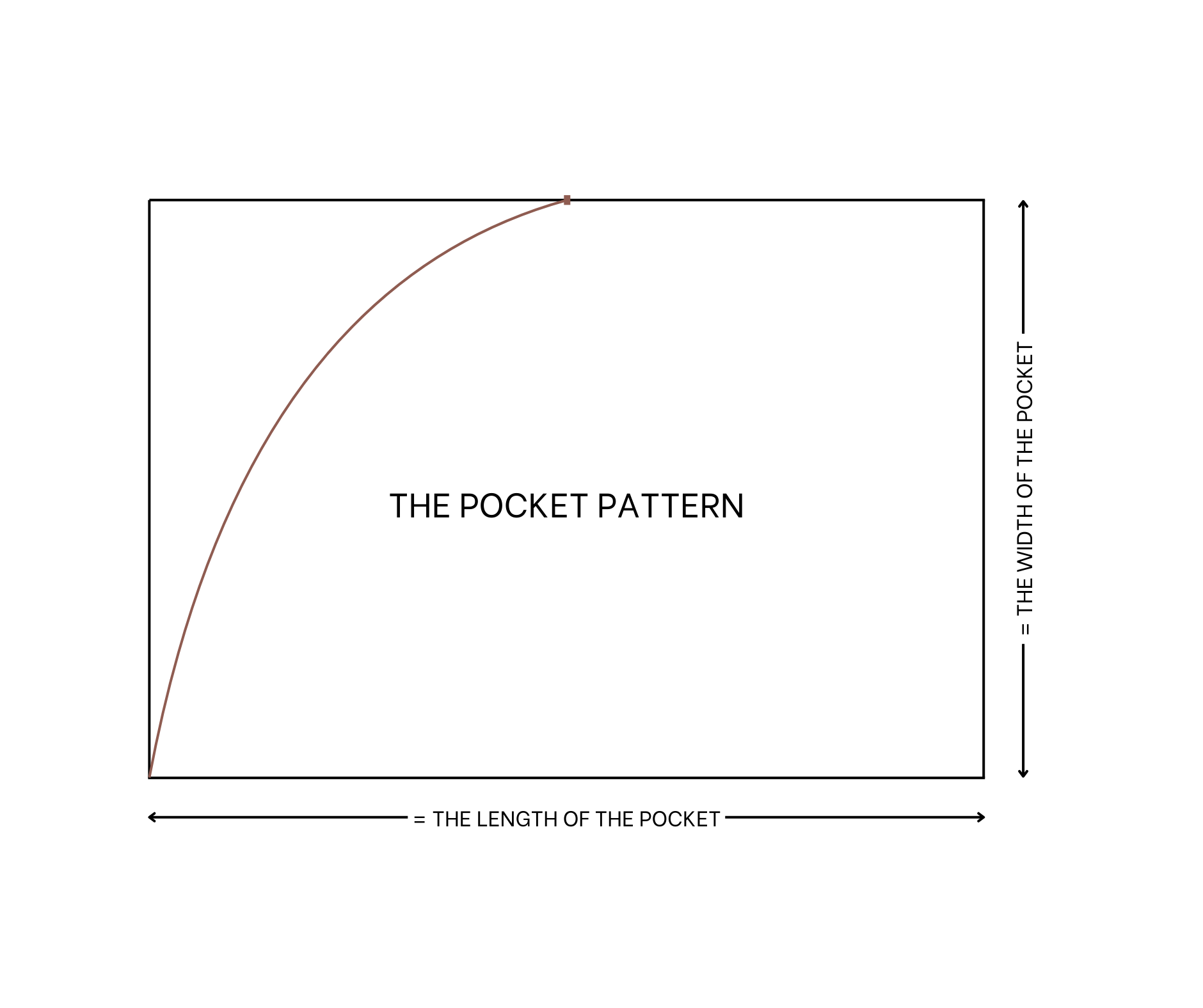
To make the pocket pattern, cut a rectangle with 20 cm width and 30 cm length.
On one length line, mark in the middle first.
Then, connect this mark to one end of the other length line by a curved line.
SEWING THE DRESS
THE TOP PART
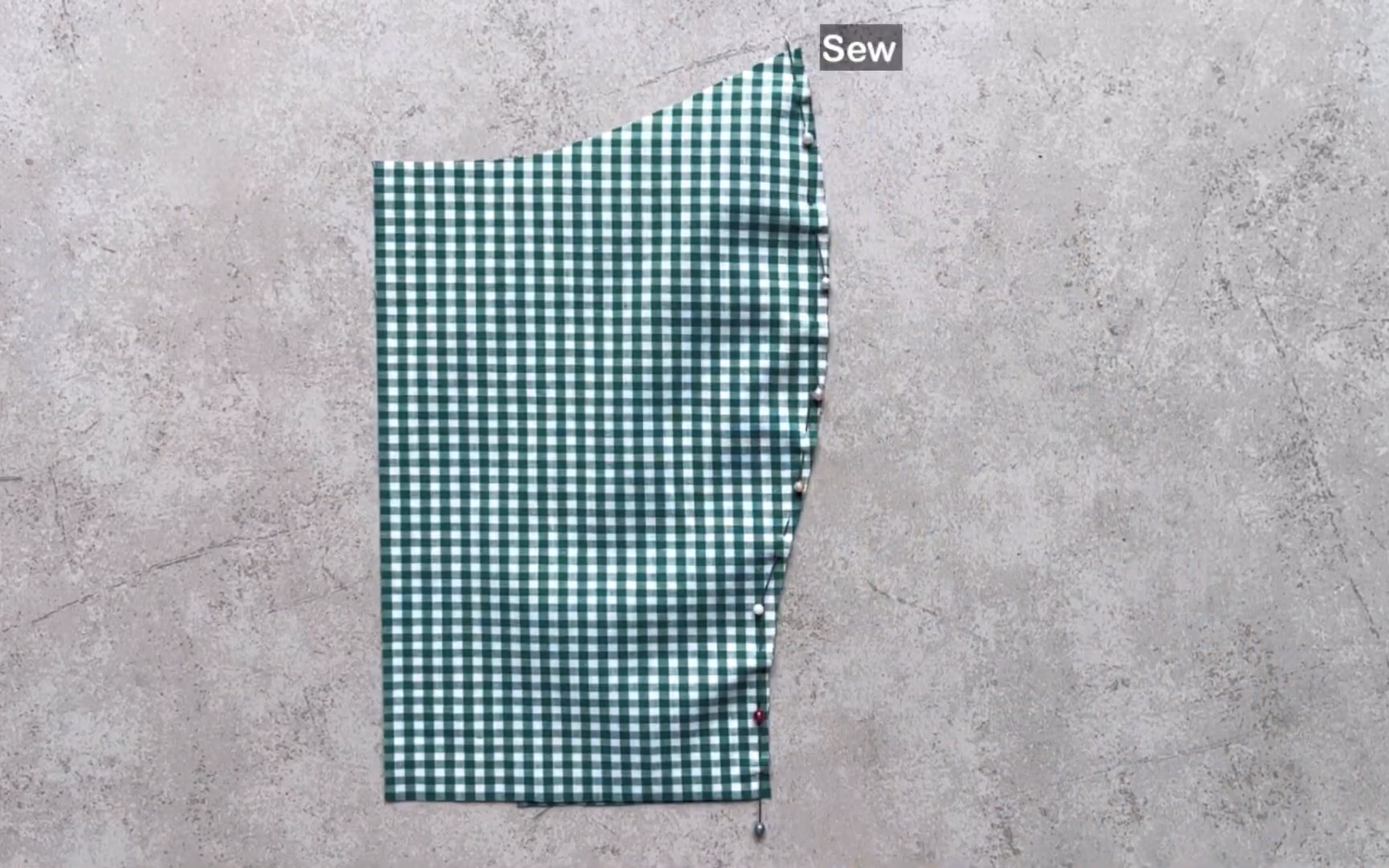
First, connect the two pieces of the front bodice pattern together at the curved line.
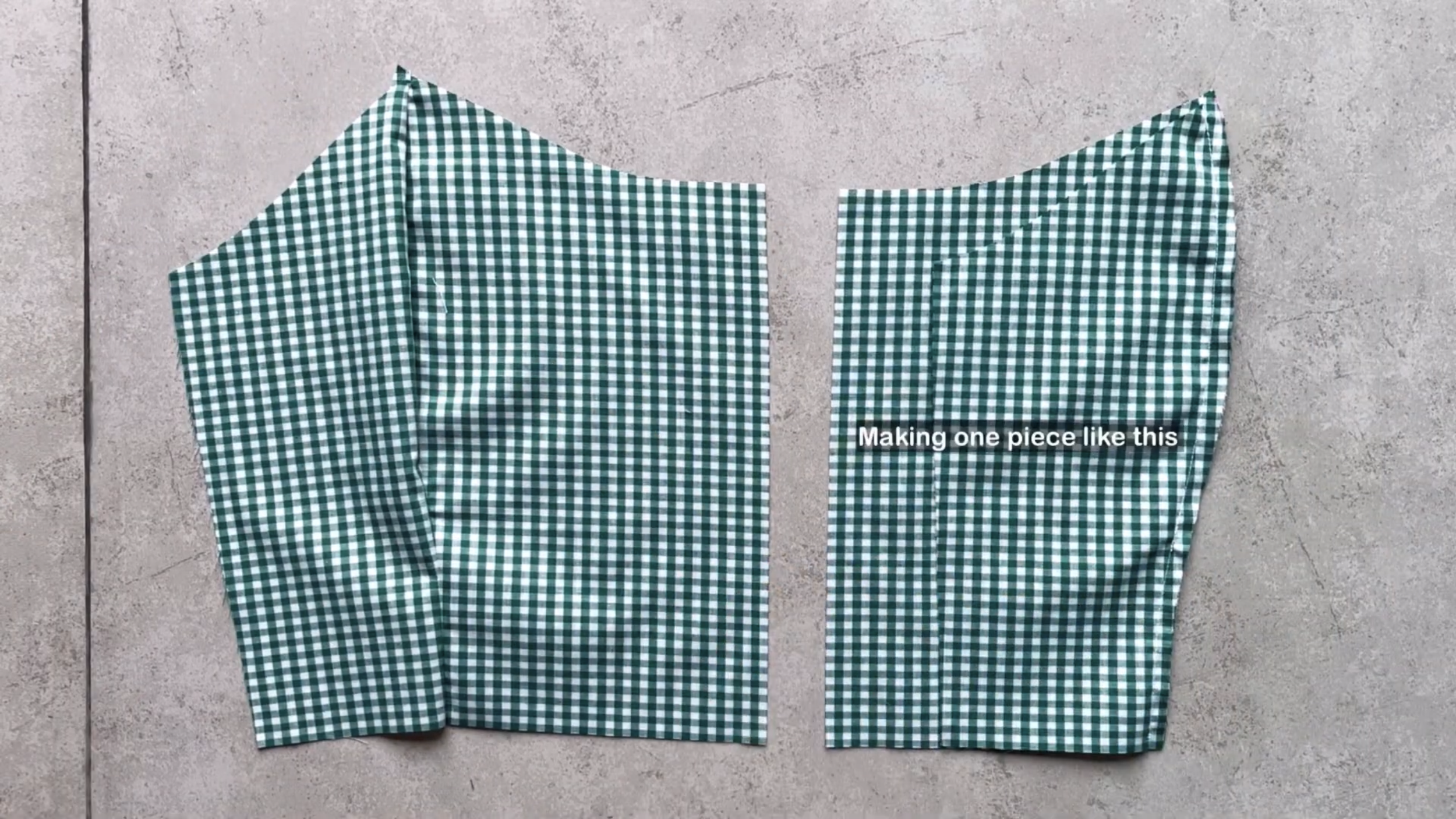
Then make one more piece like this.
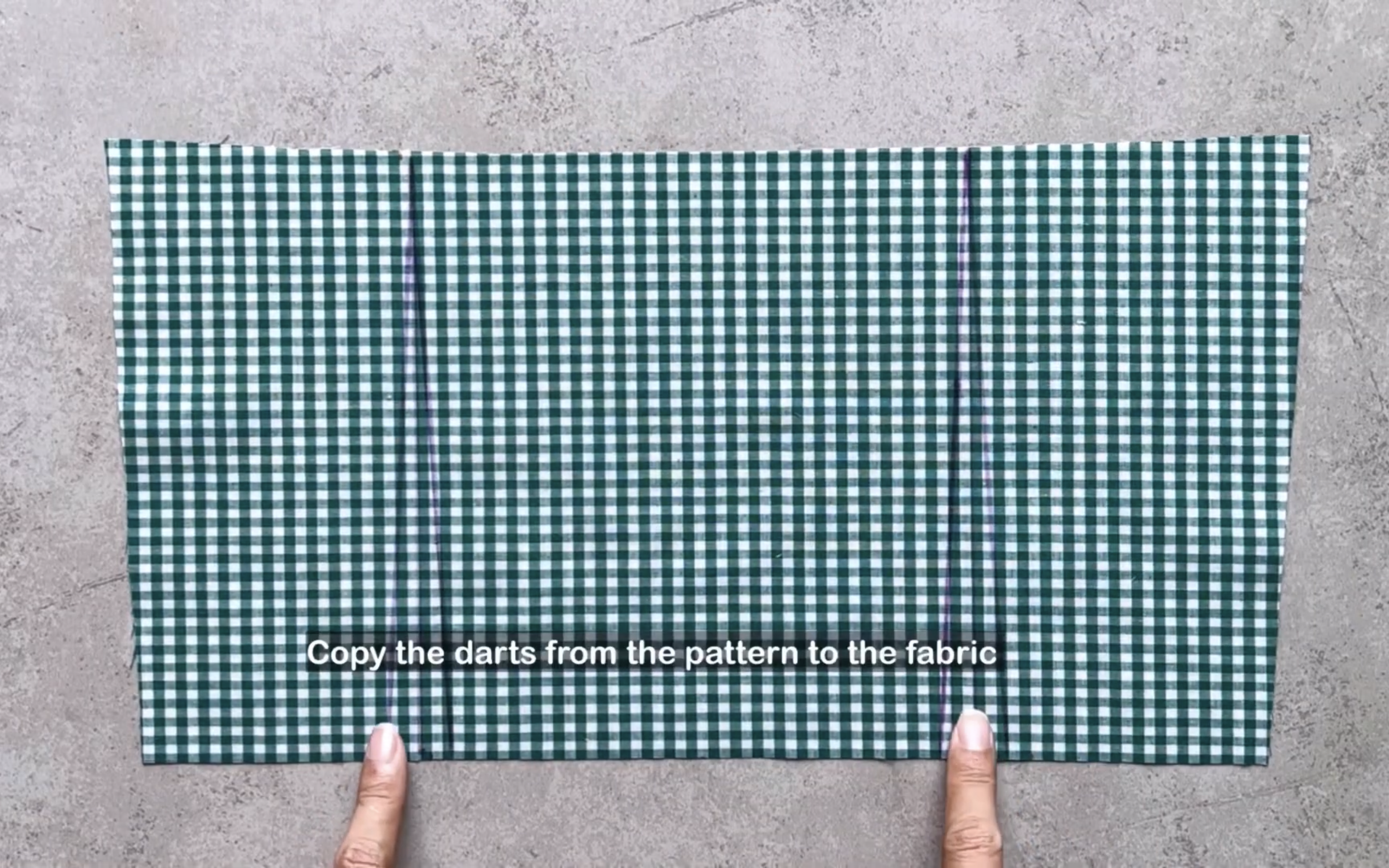
For the back bodice pattern, copy the dart from the pattern to the fabric first.
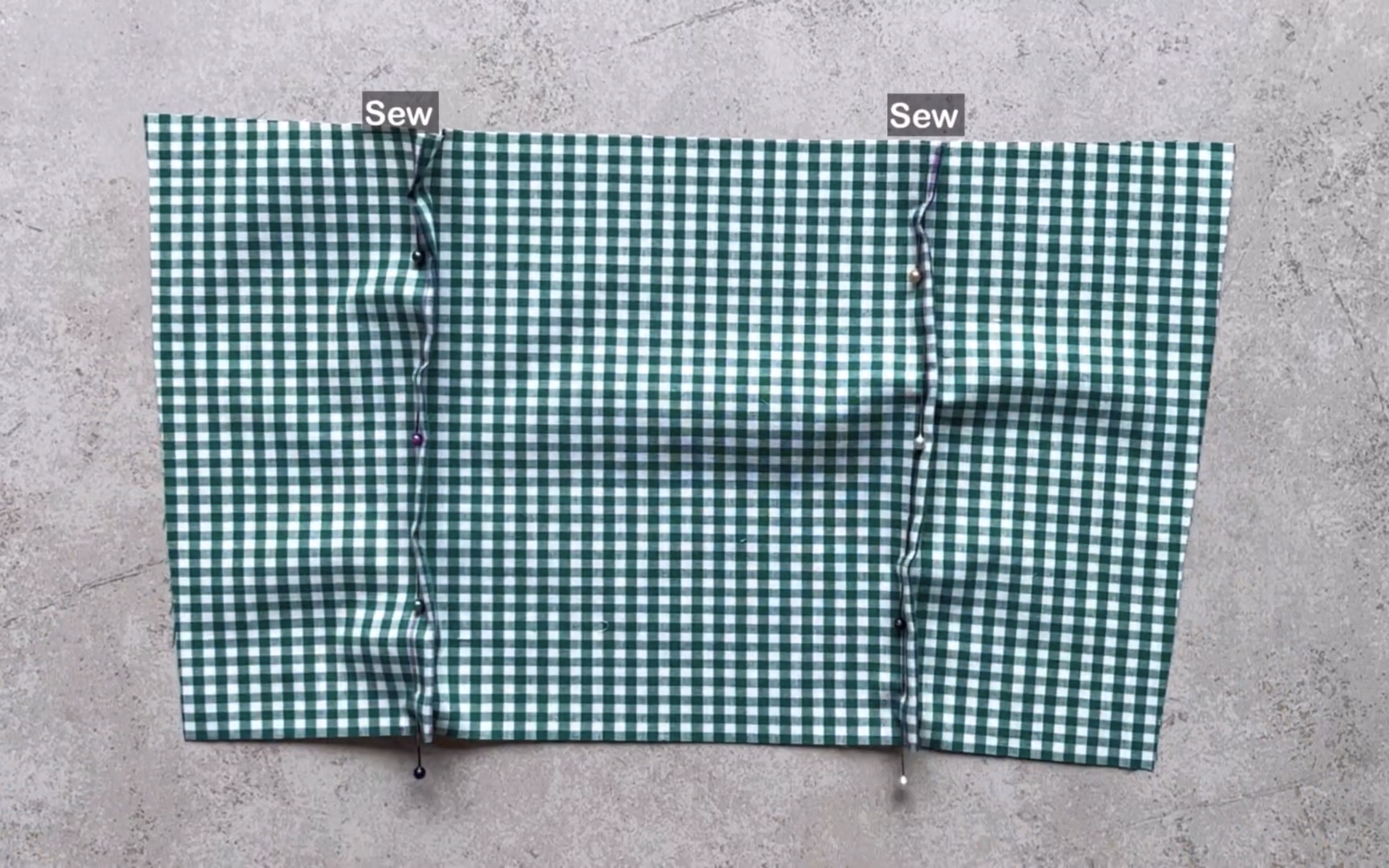
Then finish them.
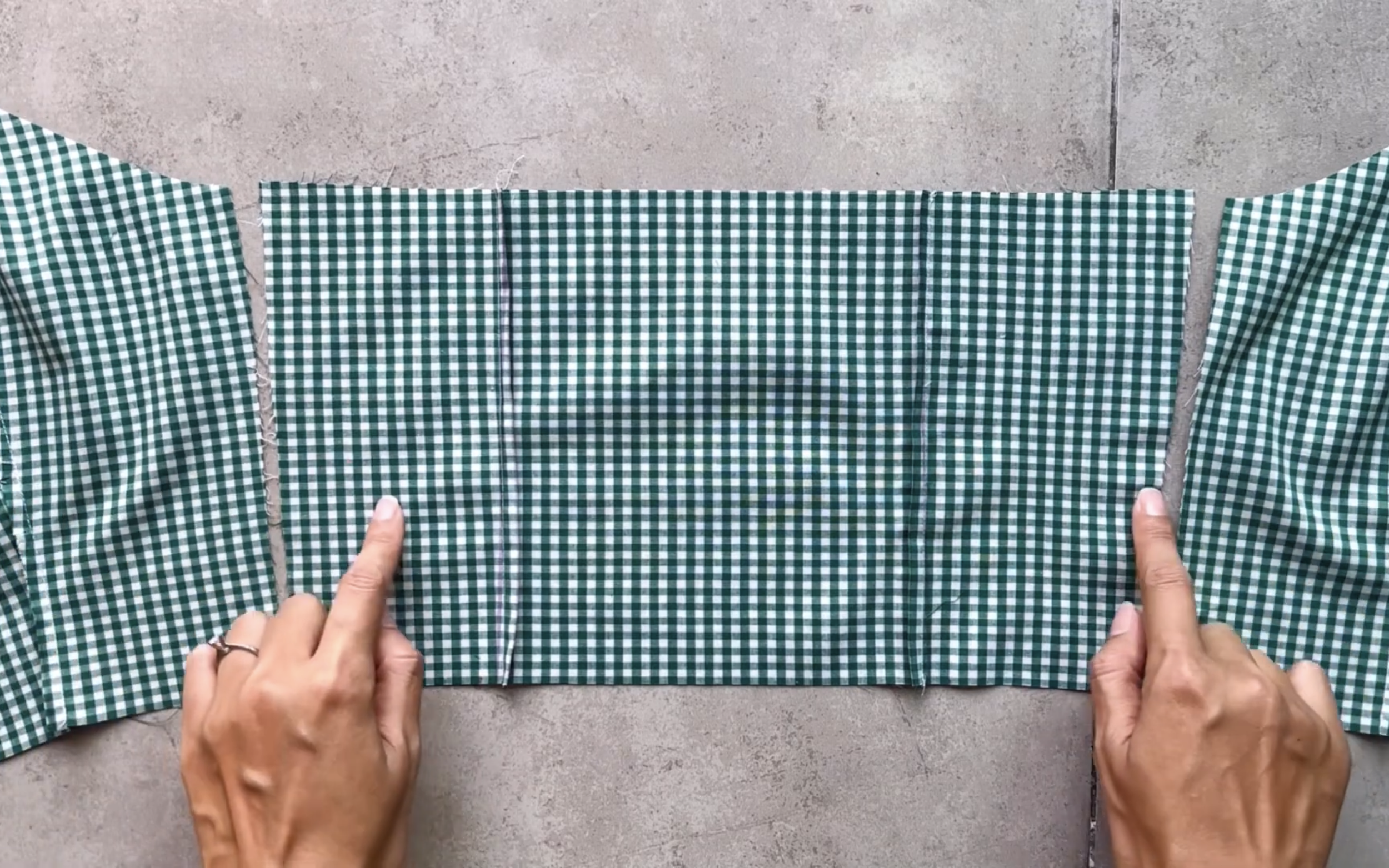
Now, connect the two pieces of the front bodice to the back bodice at the side.
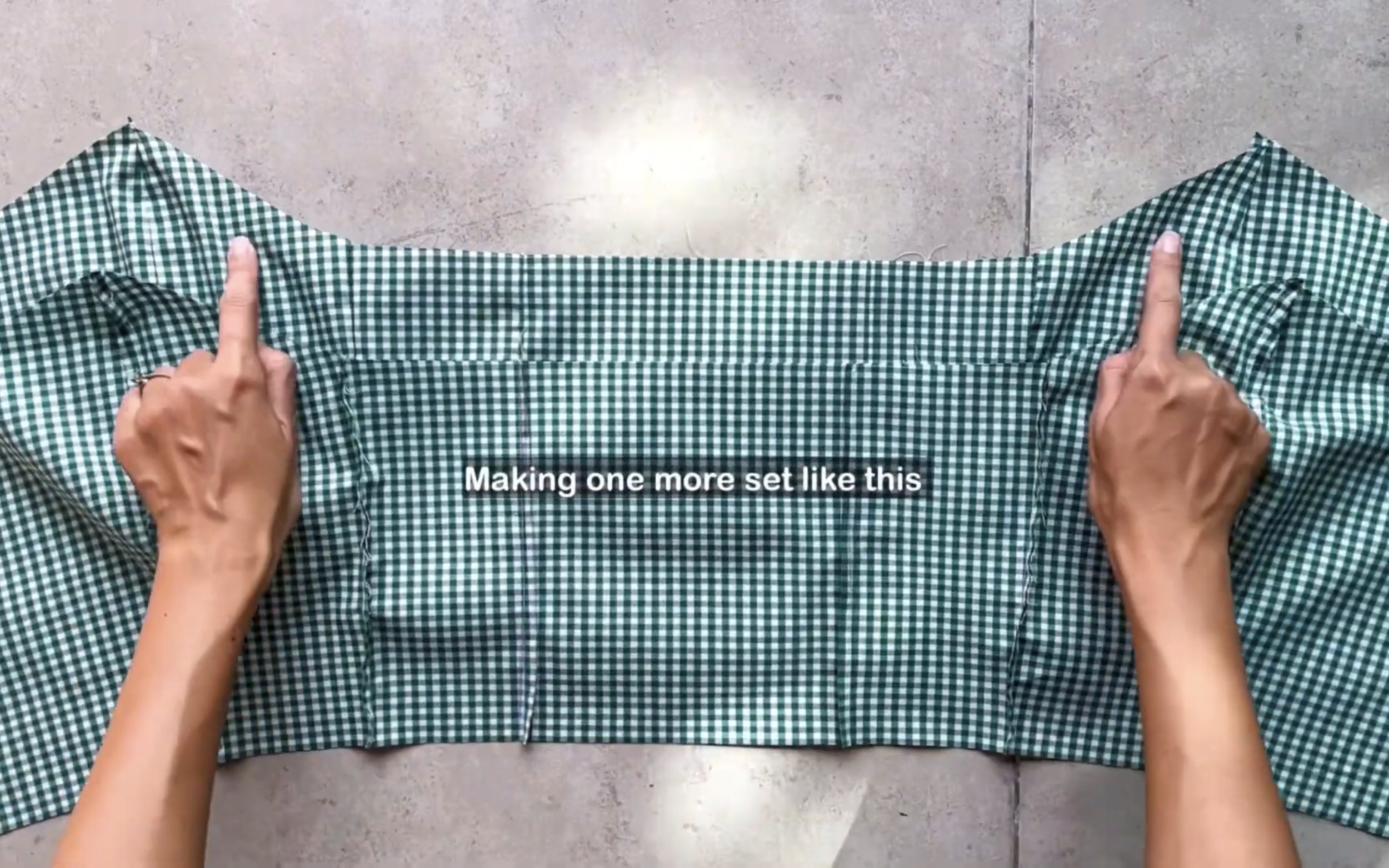
Make one more set like this.
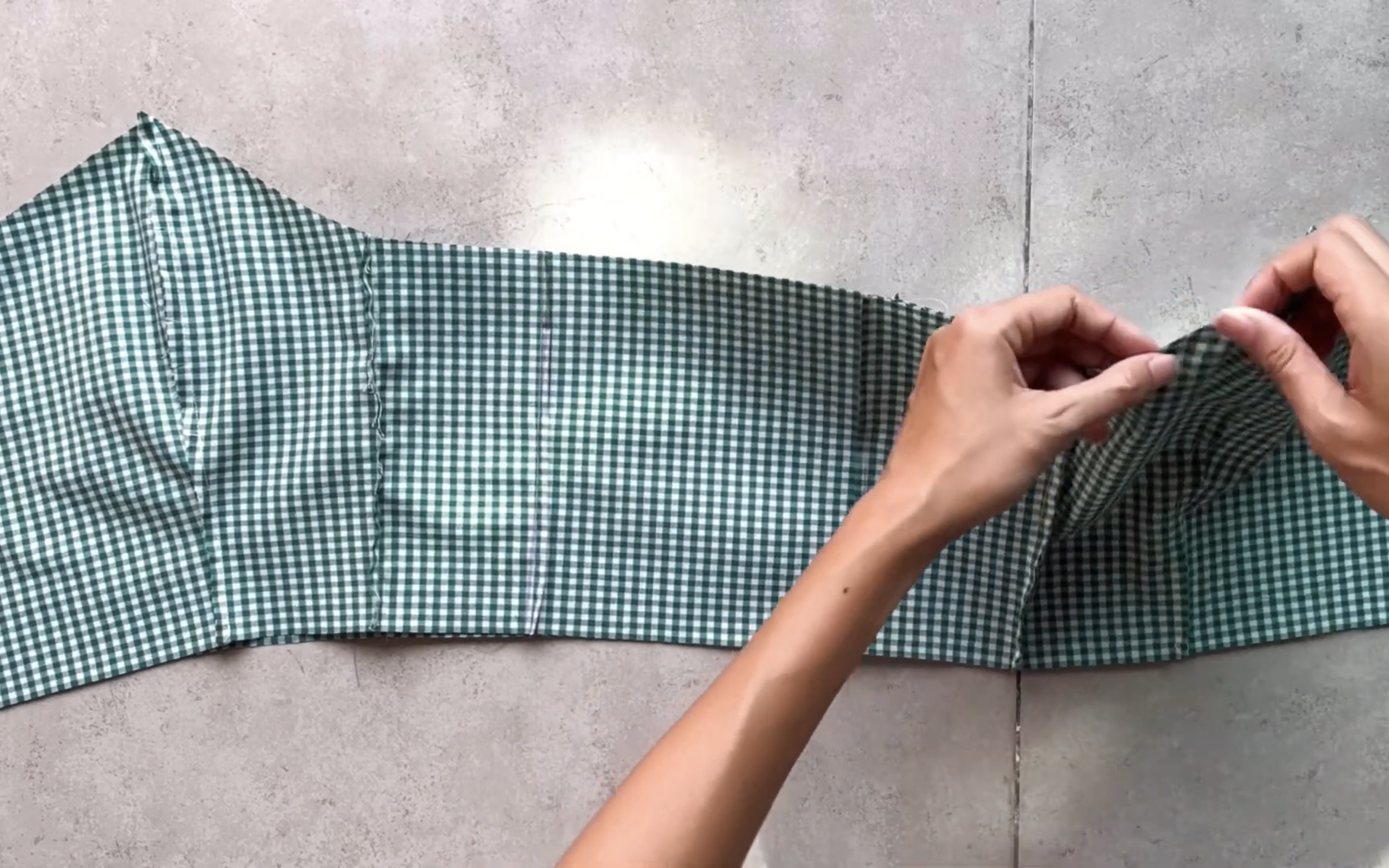
Then connect them together from the sleeve line to the neckline using pins.
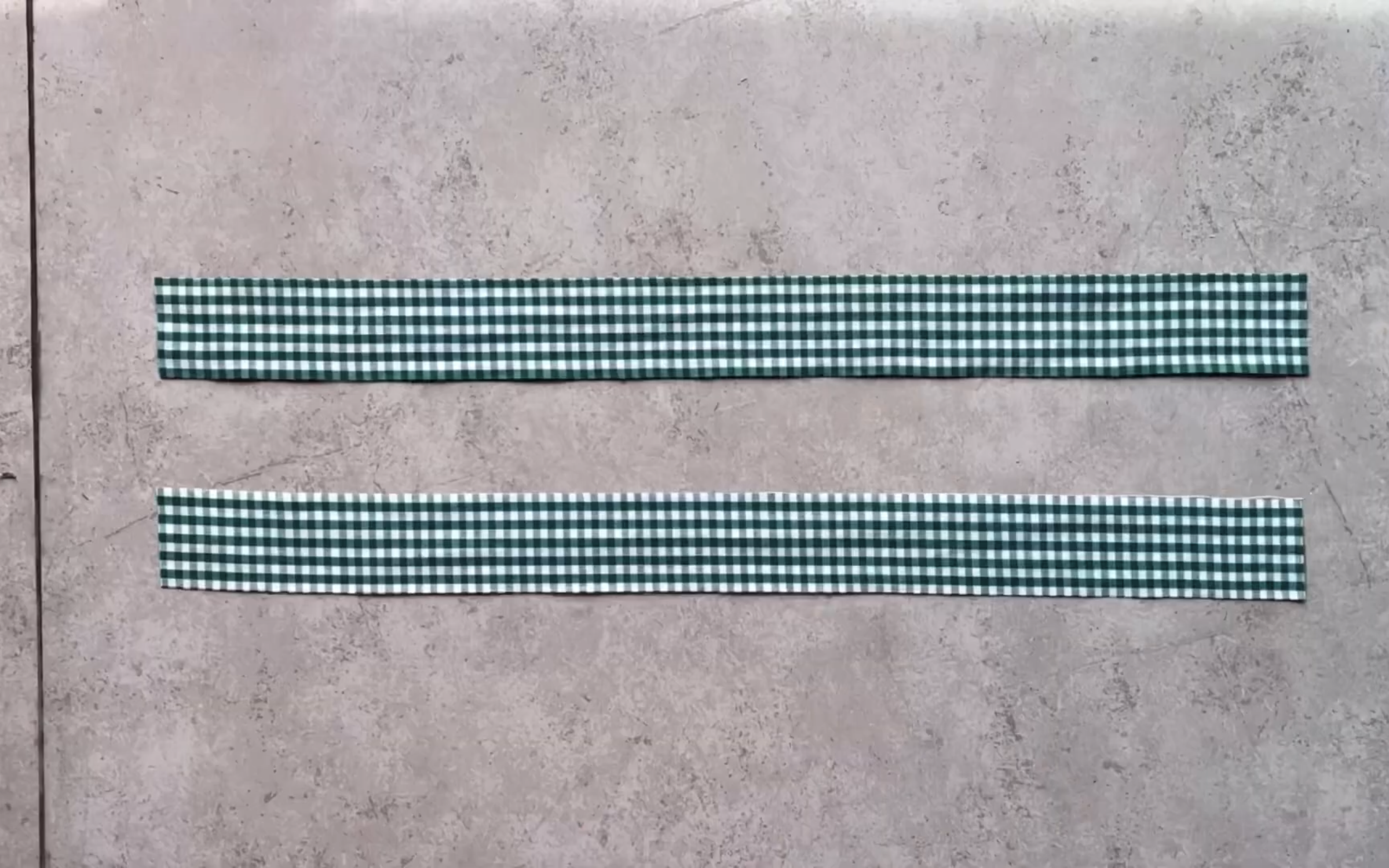
To make the shoulder strap, cut two rectangles with 4 cm width (two times the width of the shoulder strap that is wanted plus 1 cm for seam allowance) and 37 cm length (the length of the shoulder strap from the front to the back of the top bodice plus 2 cm for seam allowance).
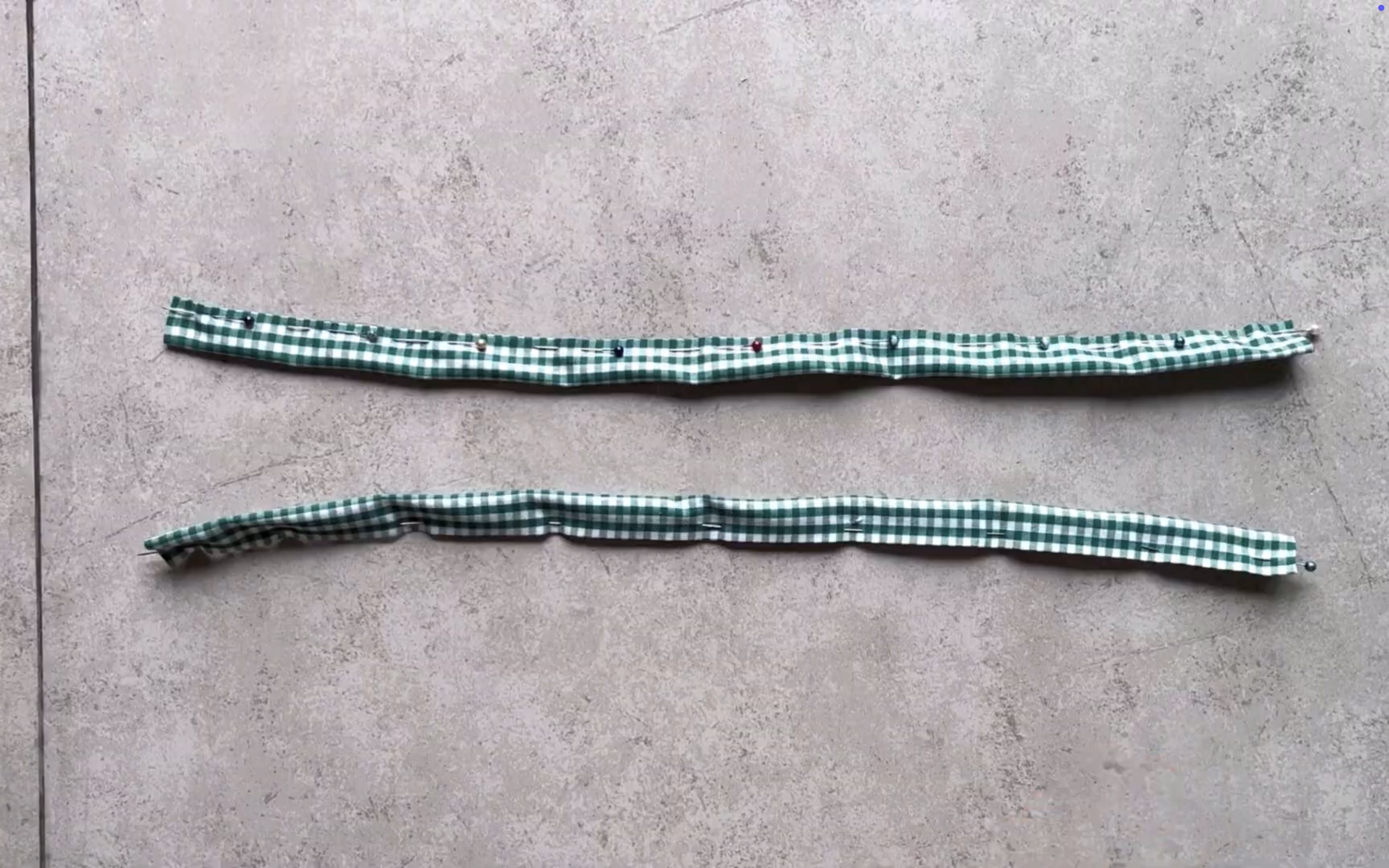
Sew two length lines of the rectangle together first.
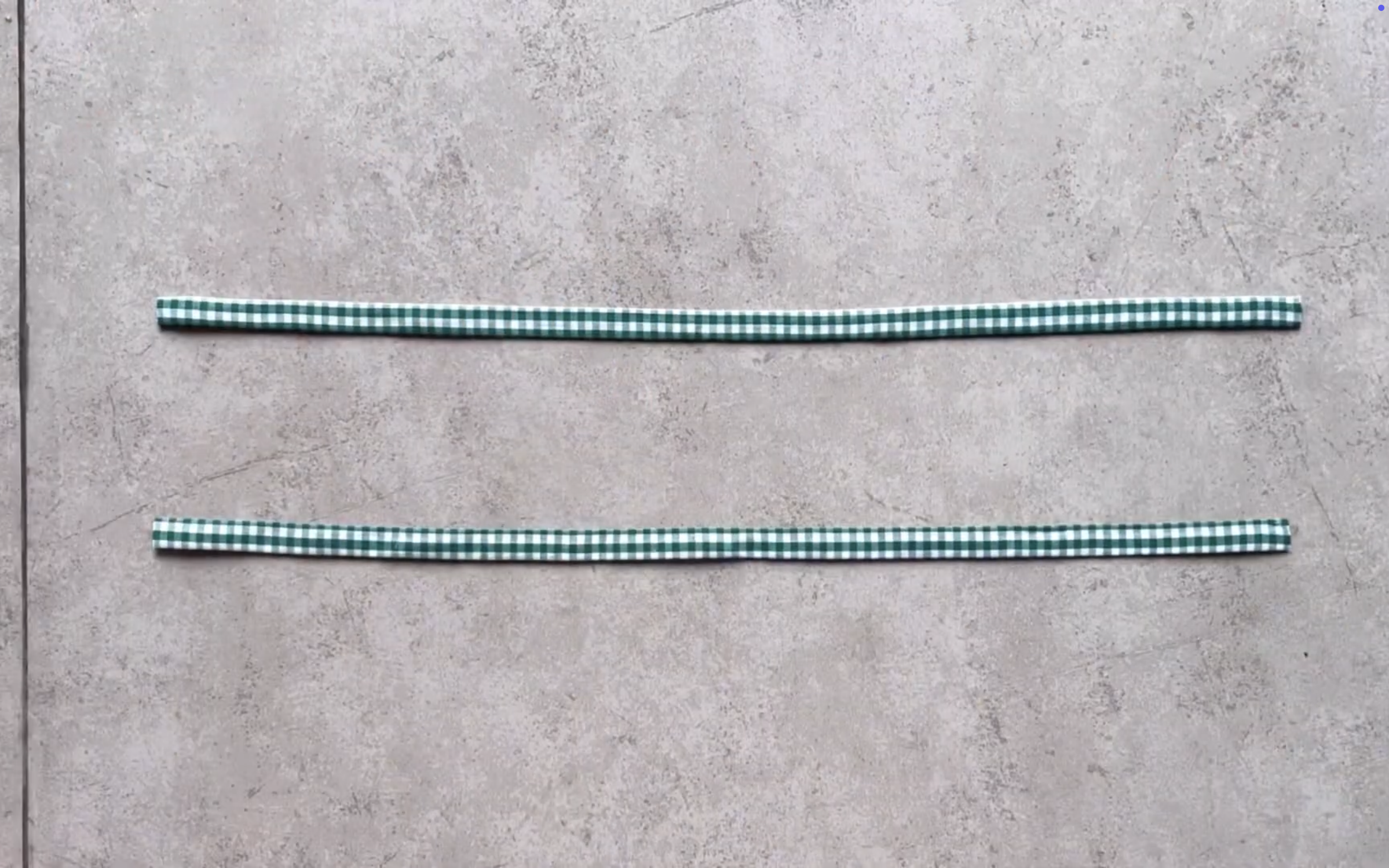
Then turn it right-side out.
Use the iron to keep the seam after that.
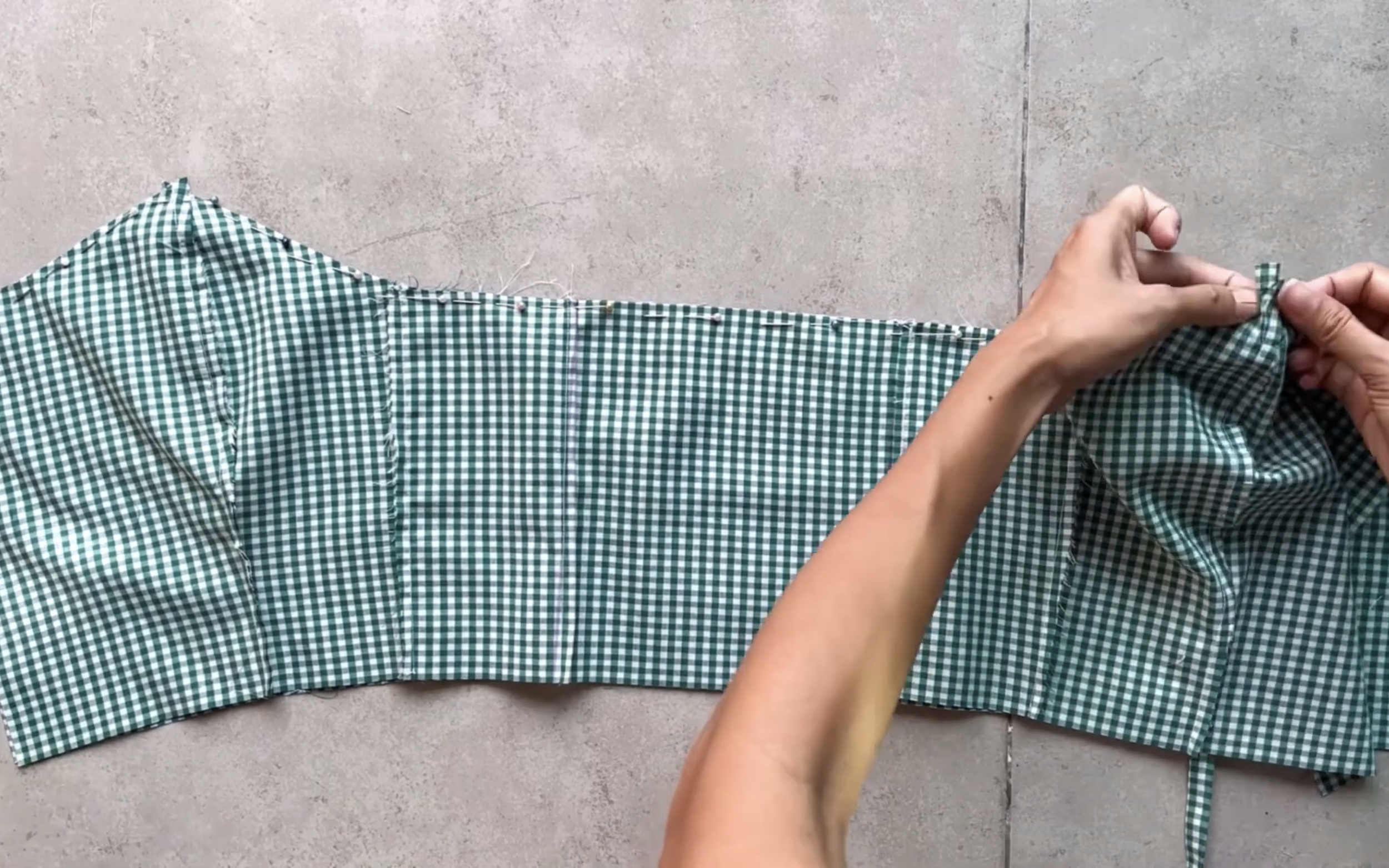
Now, add one end of the shoulder strap to the top of the neckline at the front bodice.
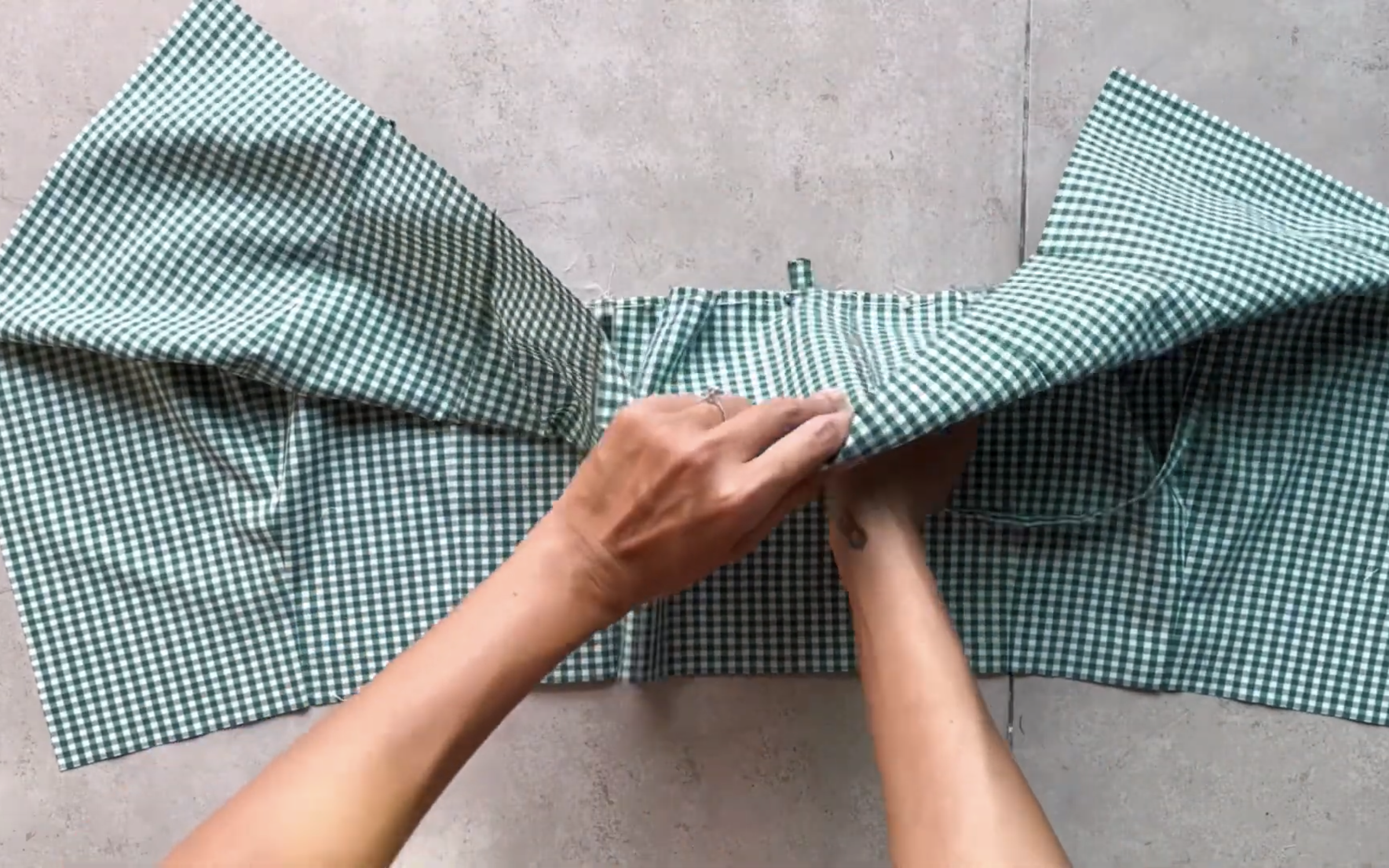
Also, add the other end to the top of the dart line of the back bodice.
Make sure the shoulder strap will be in the middle between two pieces of the top bodice.
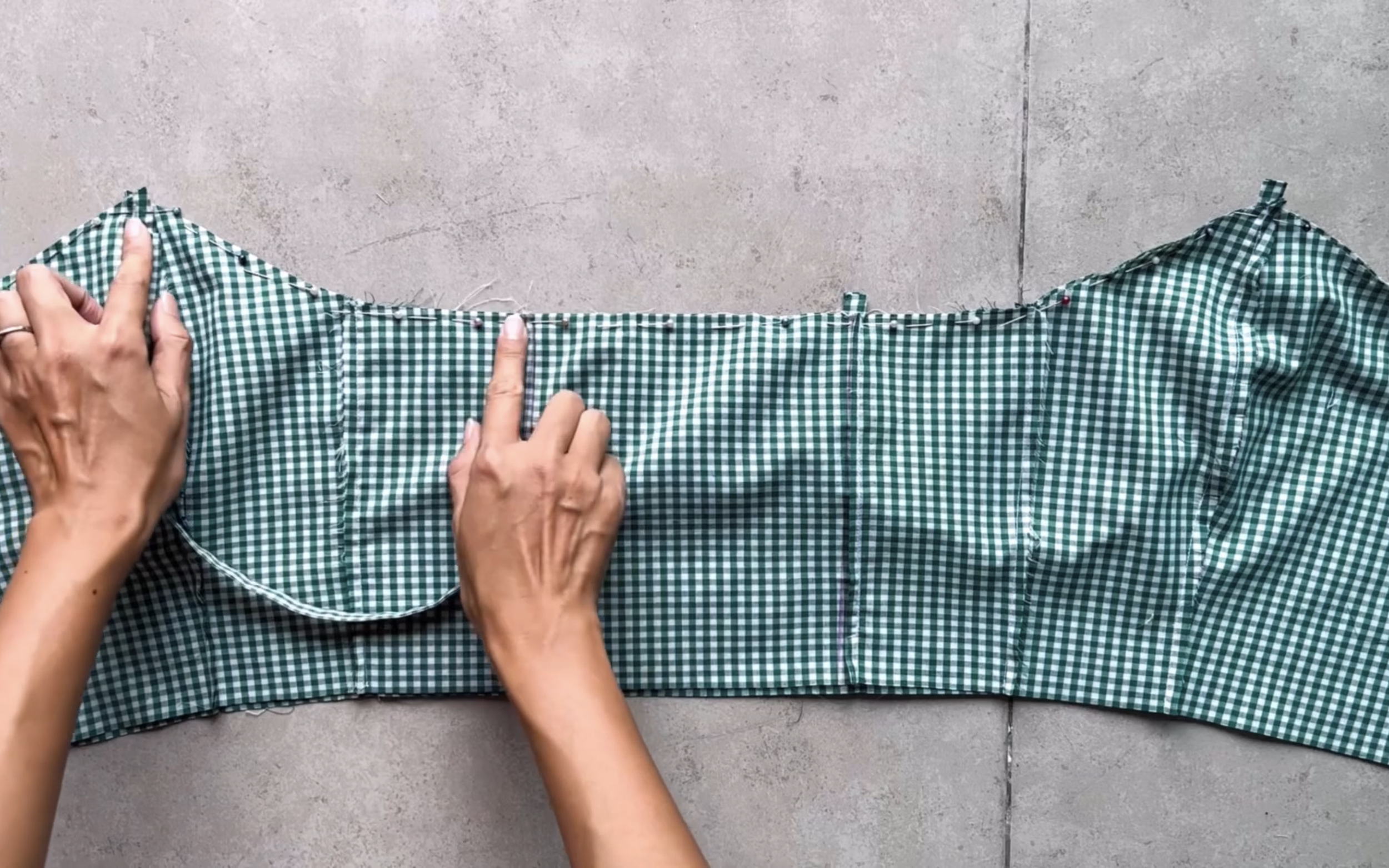
Then, sew to connect them all together.
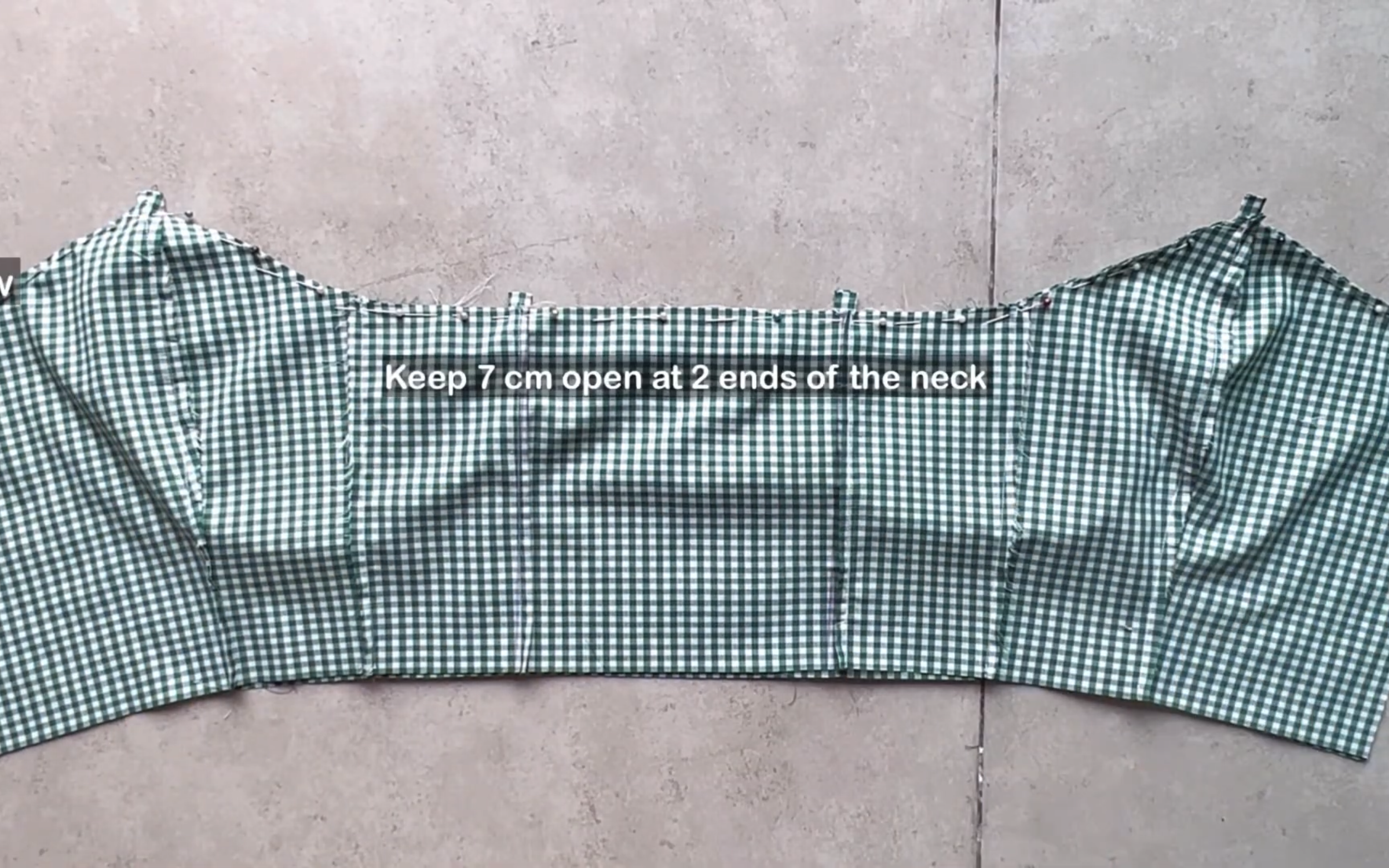
However, keep 7 cm unsewn at two sides of the neckline. 7 cm is two times the width of the button area plus 1 cm for seam allowance.
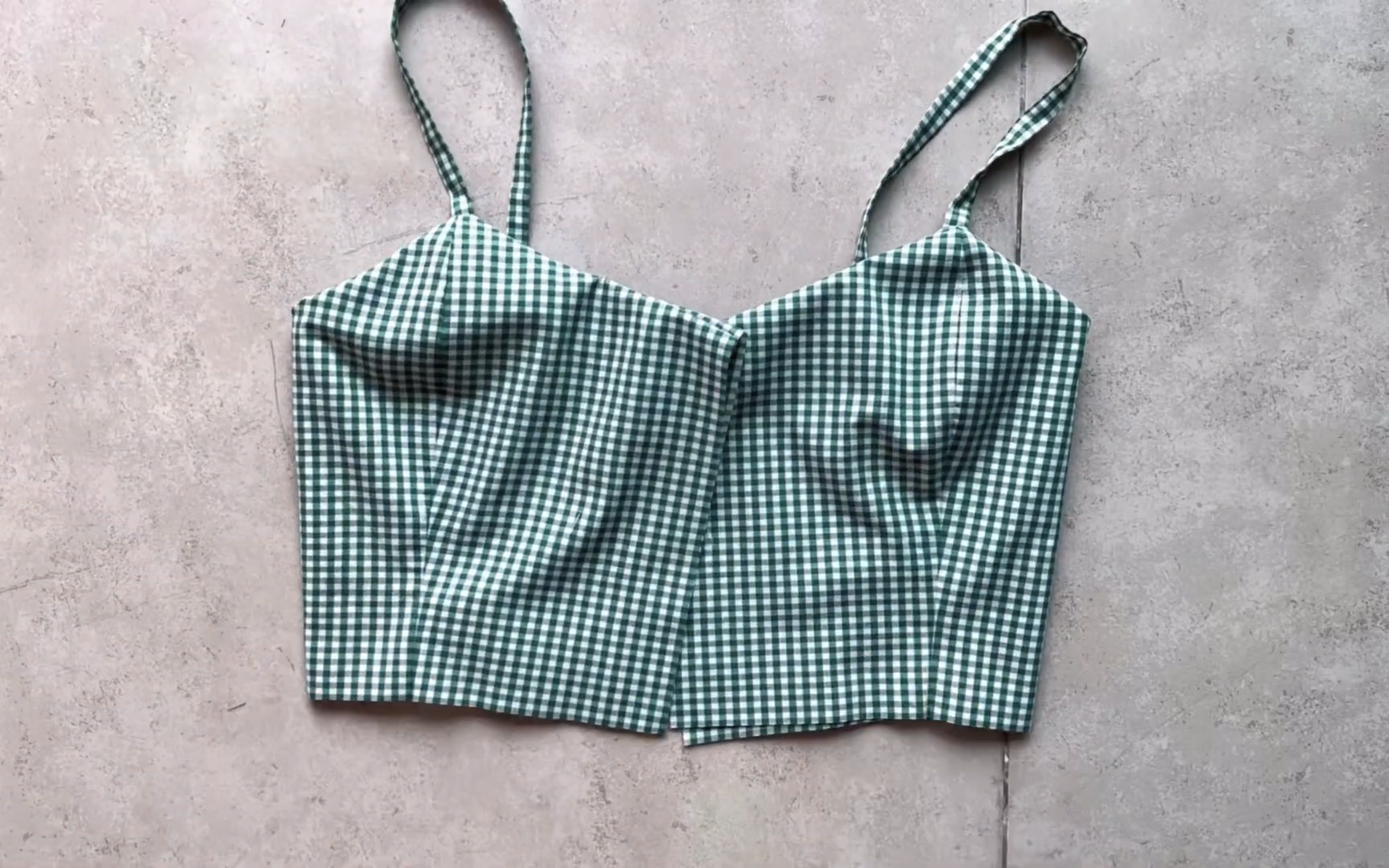
After sewing, turn the top bodice to hide the seam inside.
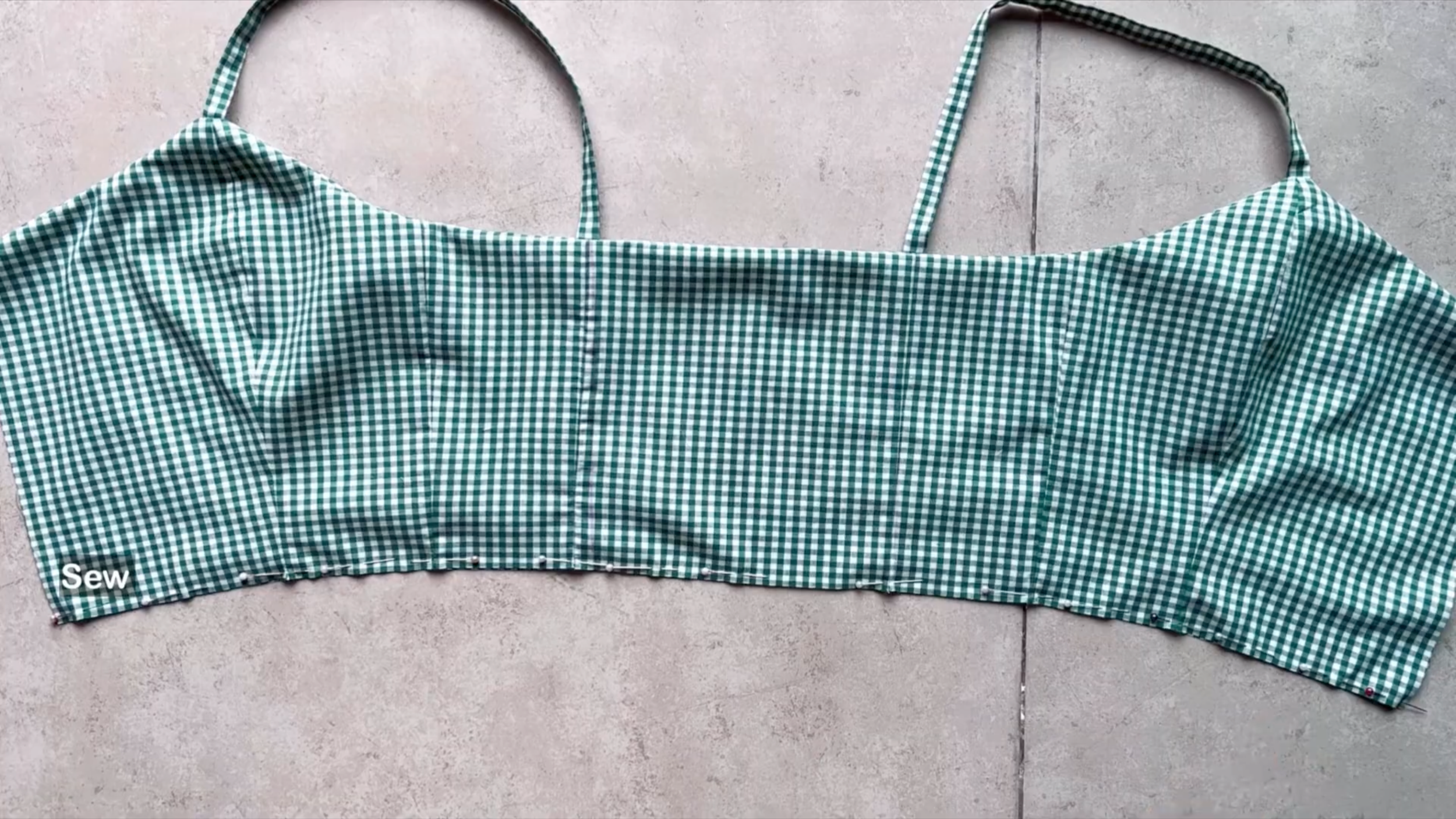
Then, connect two pieces of the top bodice together at the ending line by overlocking.
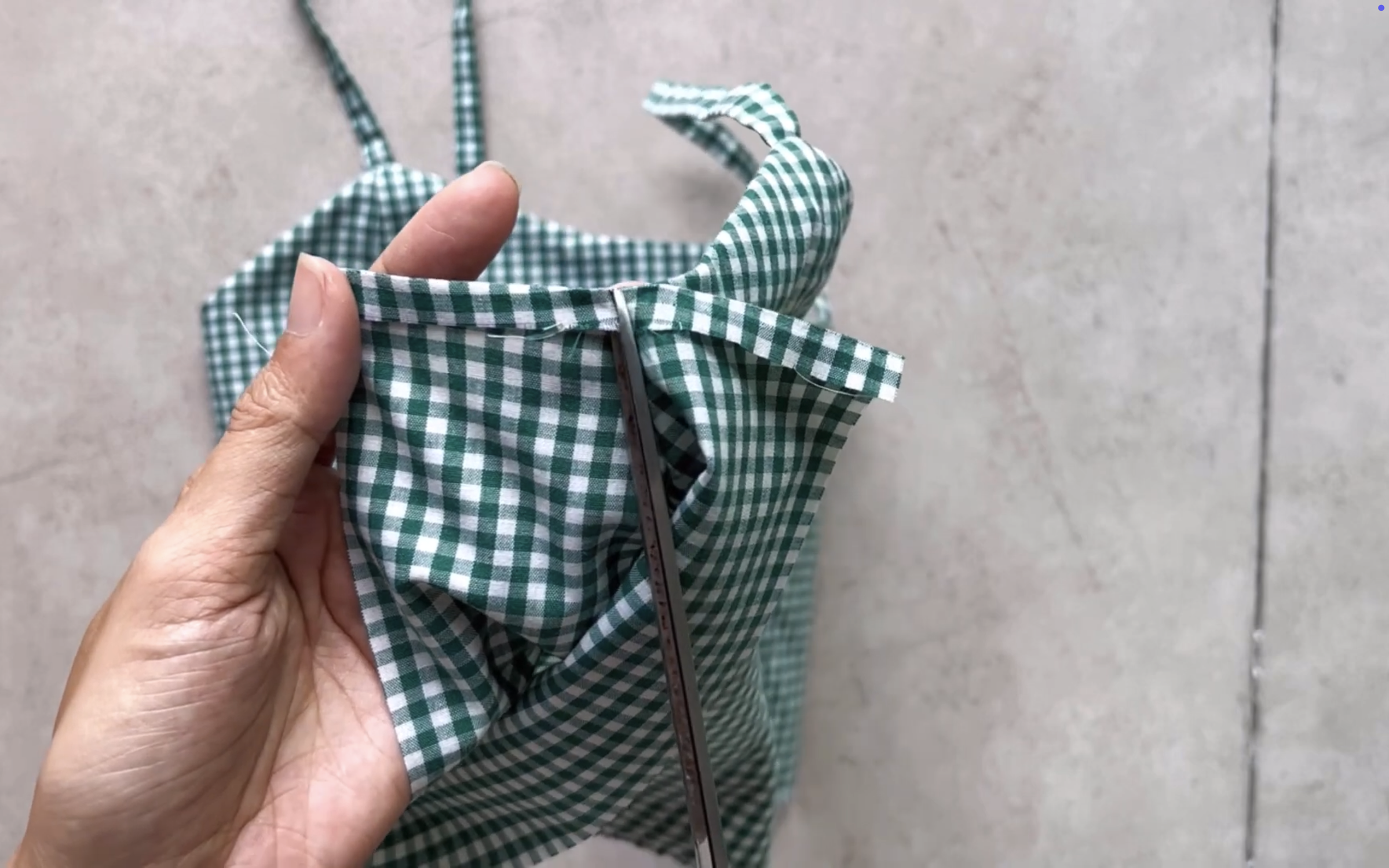
Cut the fabric at the end of the seam on the neckline to straighten the fabric there.
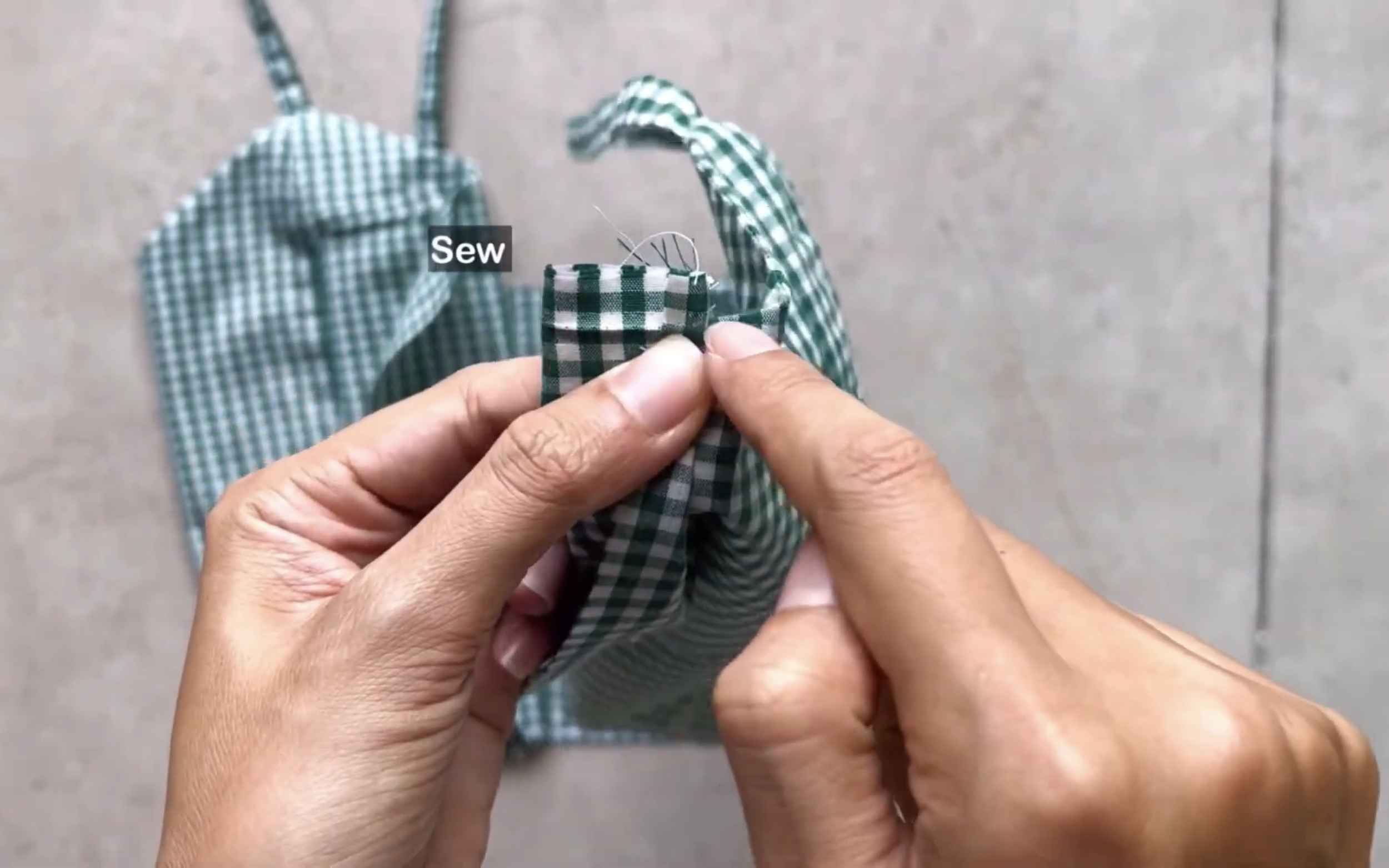
After that, fold the end of the neckline inside 1 cm first, then keep folding it to the end of the seam on the neckline and sew.
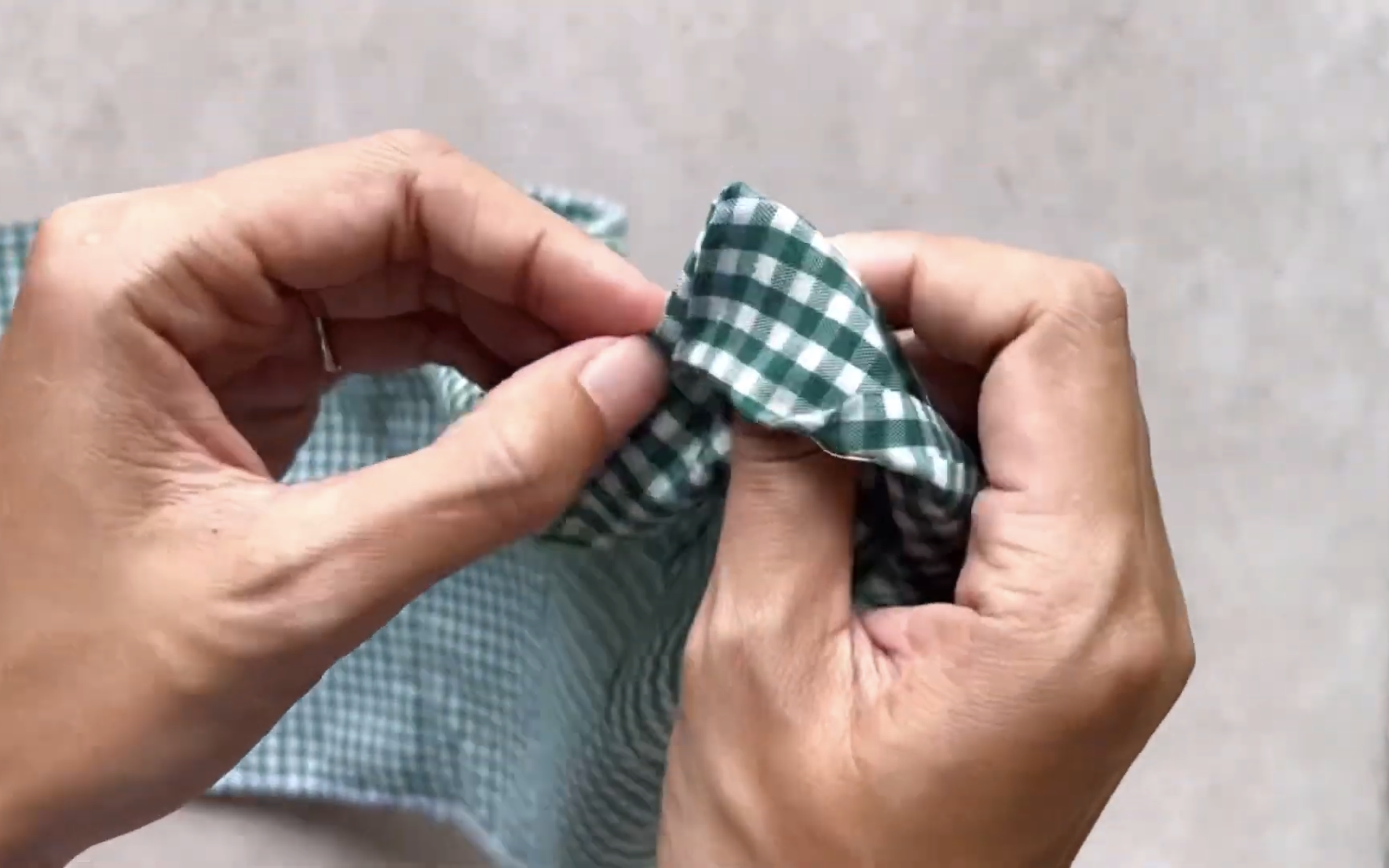
After that, turn it to hide the seam inside.
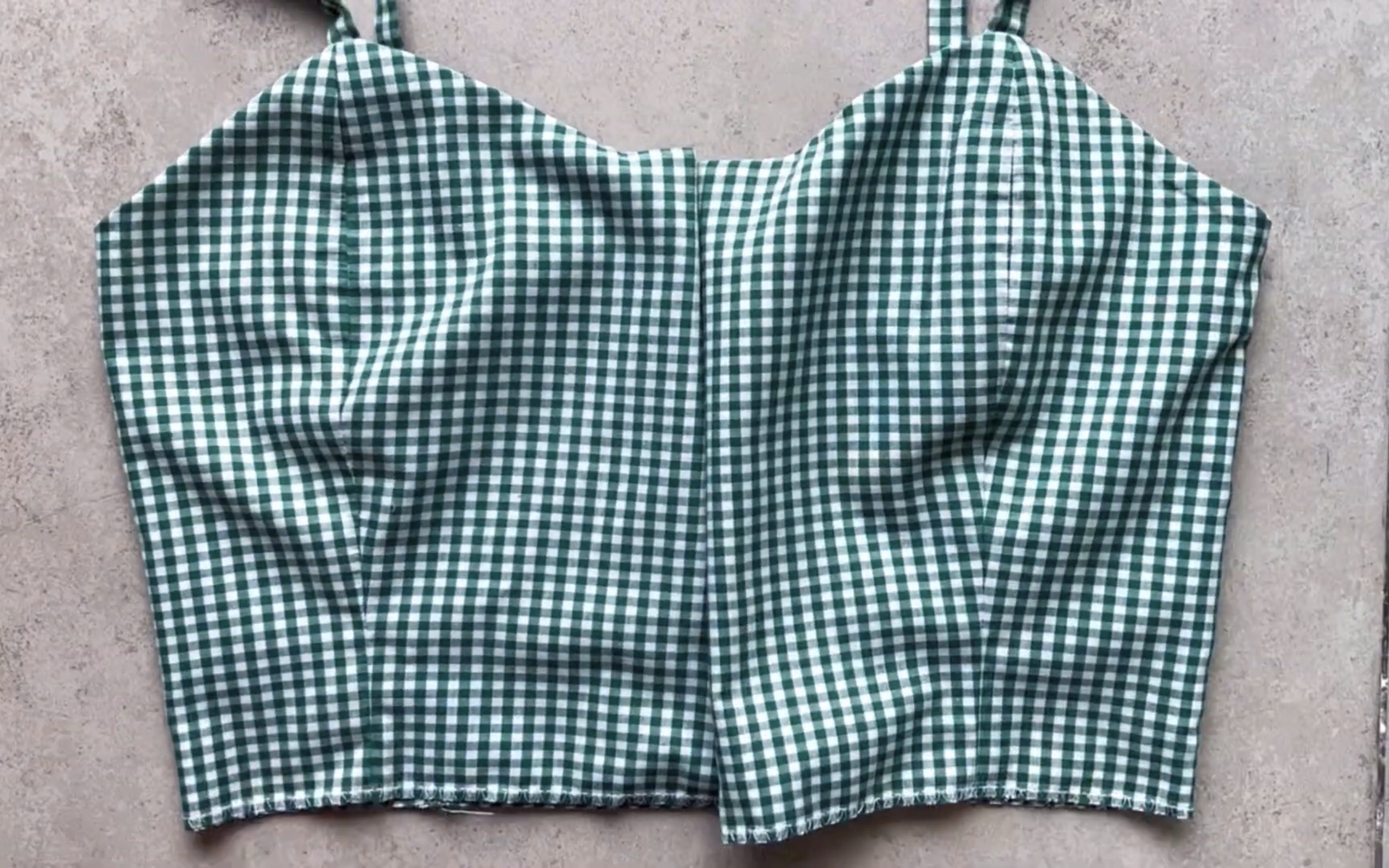
Do the same for the other side of the neck.
THE BOTTOM PART
THE BACK OF THE BOTTOM PART
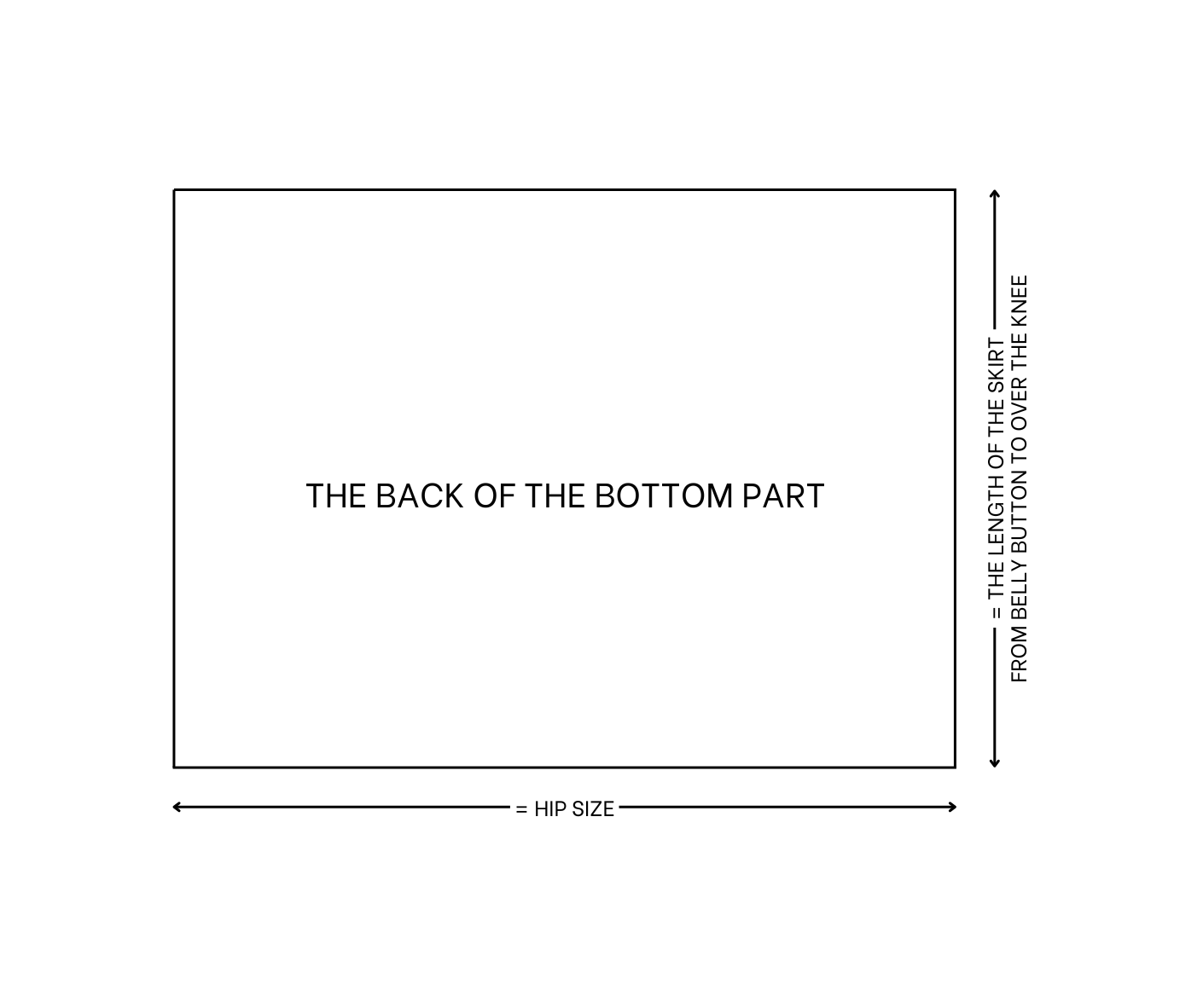
Cut a big rectangle with 85 cm length (a length from 3 cm above your belly button to over your knee plus 2 cm for seam allowance). It's the length of the dress that is wanted.
Also, a 92 cm width which is your hip size.
This rectangle will be the back of the bottom part.
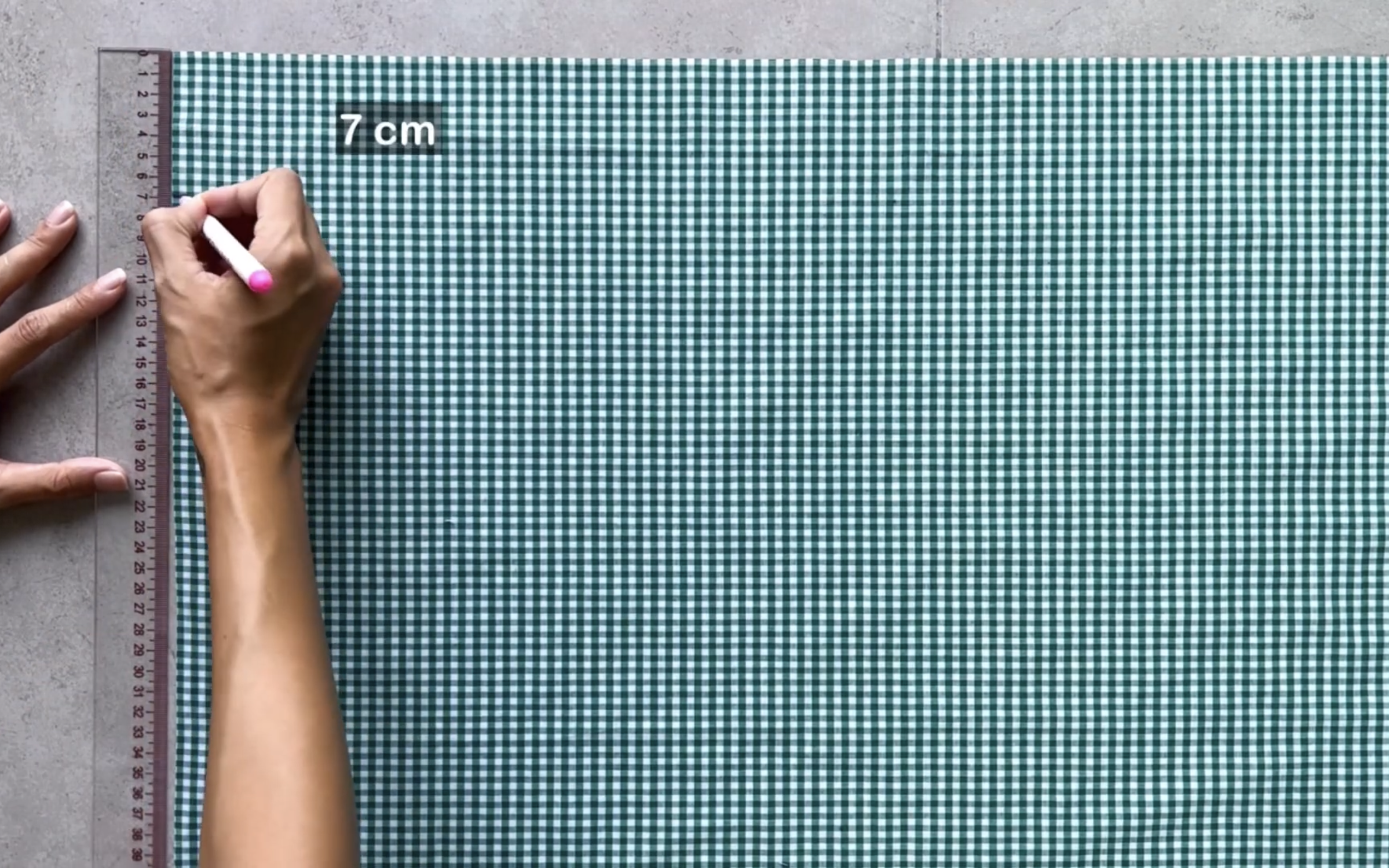
From the top width line, mark down 7 cm on the length line. This will be the position for the pocket.
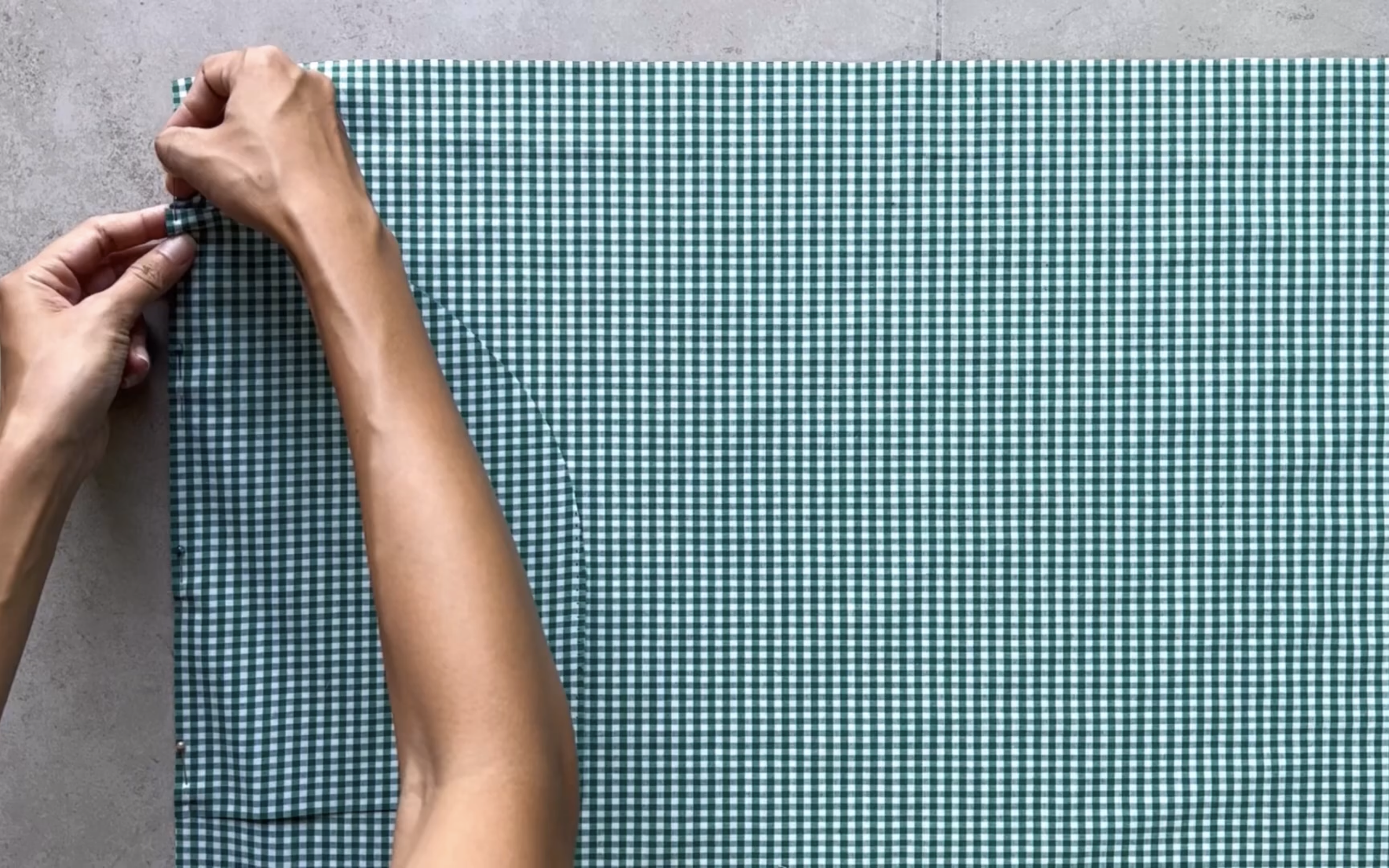
Then, add the pocket there and sew.
THE FRONT OF THE BOTTOM PART
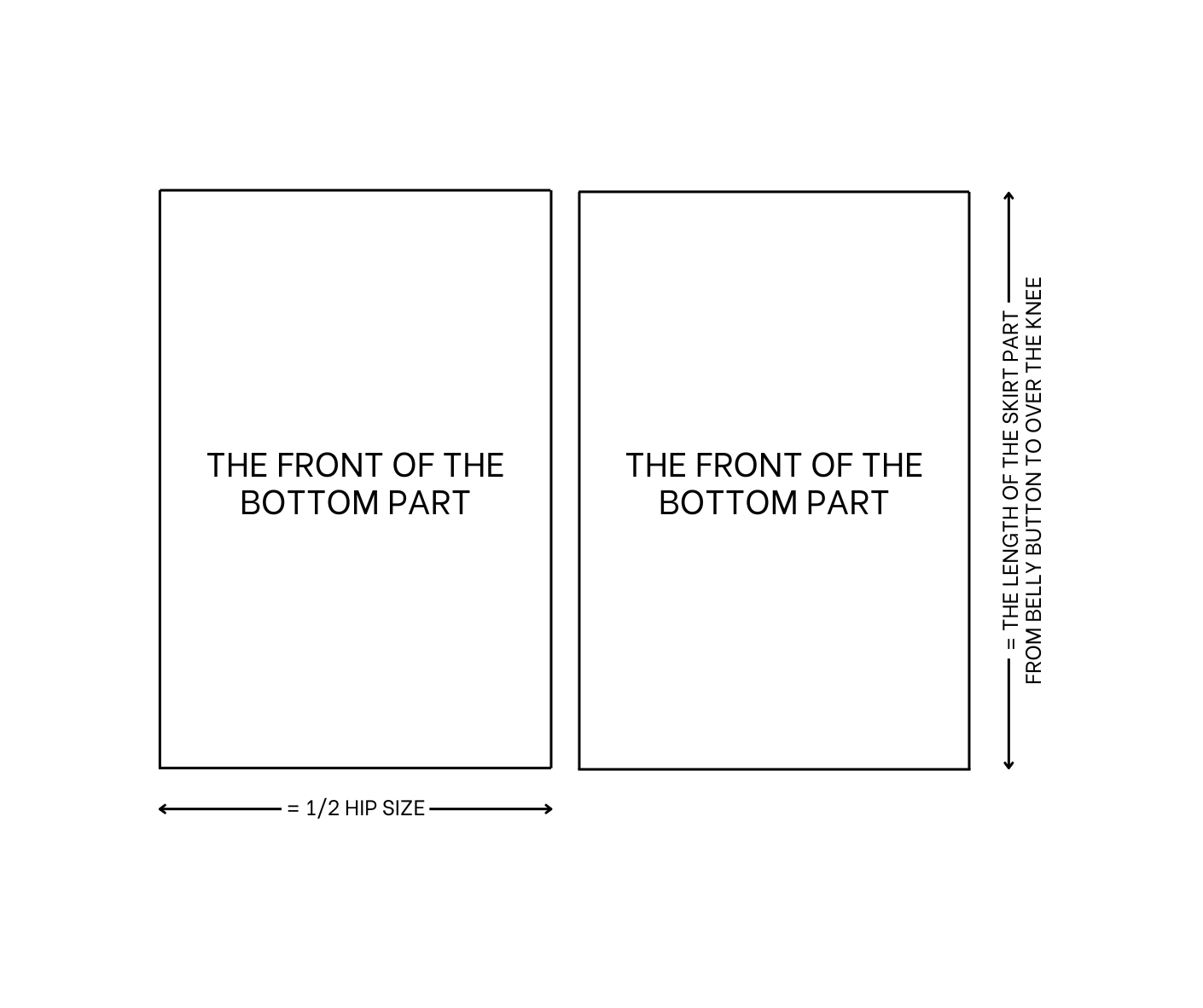
To make the front of the bottom part, cut a rectangle with 85 cm length (the same length as the back bottom part) and 46 cm width (a half of your bust size).
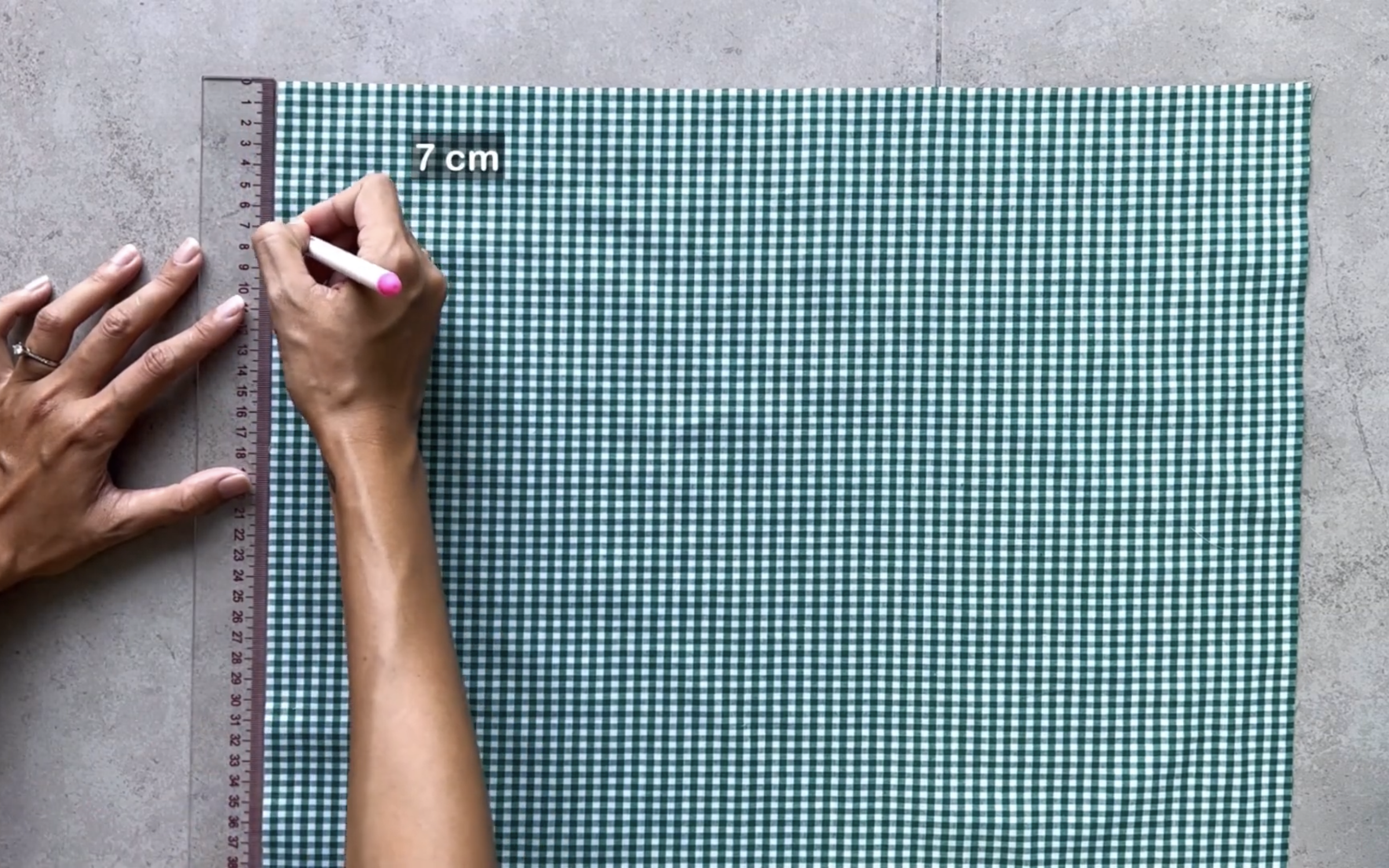
From the top width line, mark down 7 cm on the length line. This will be the position for the pocket.
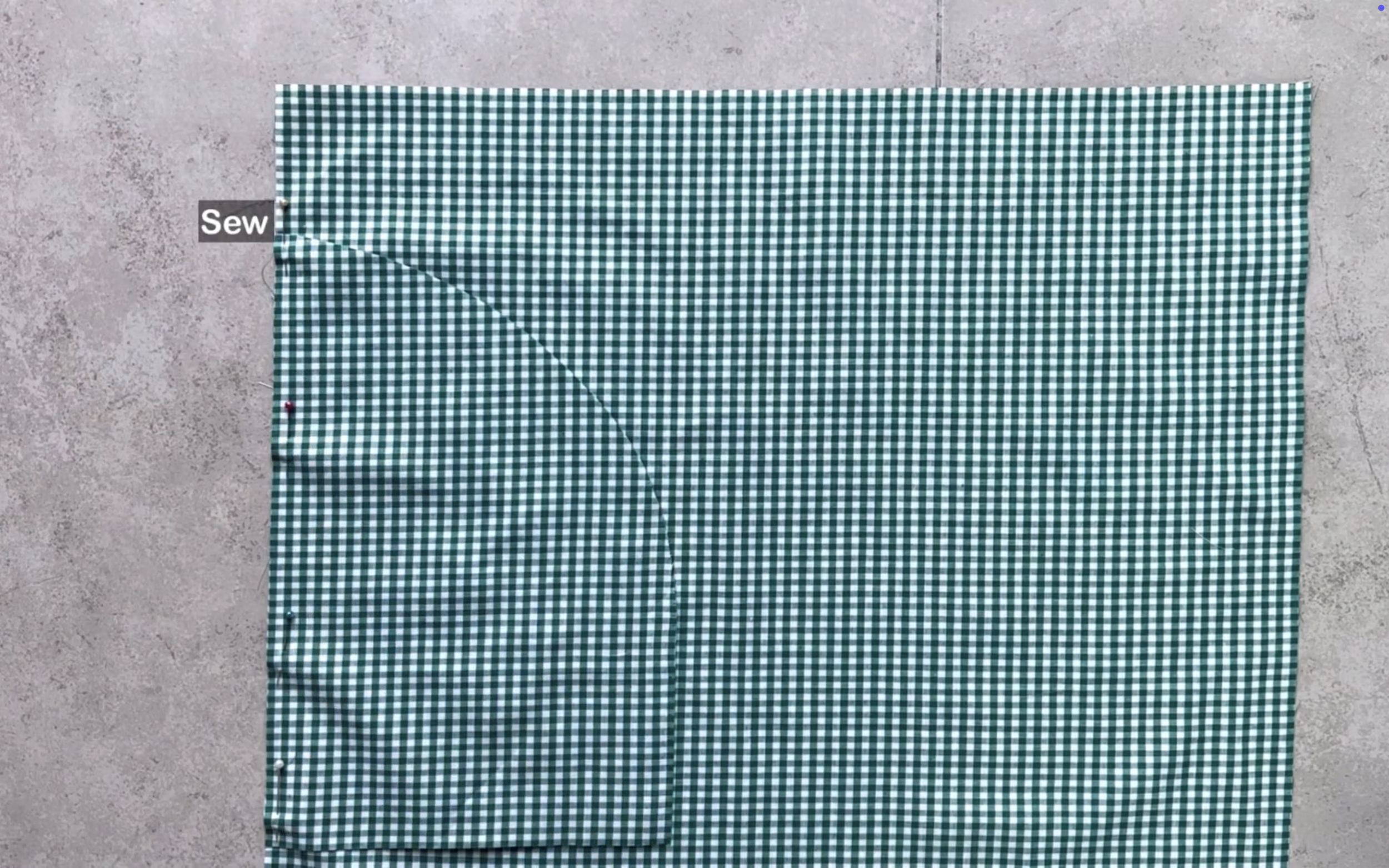
Then, add the pocket there and sew.
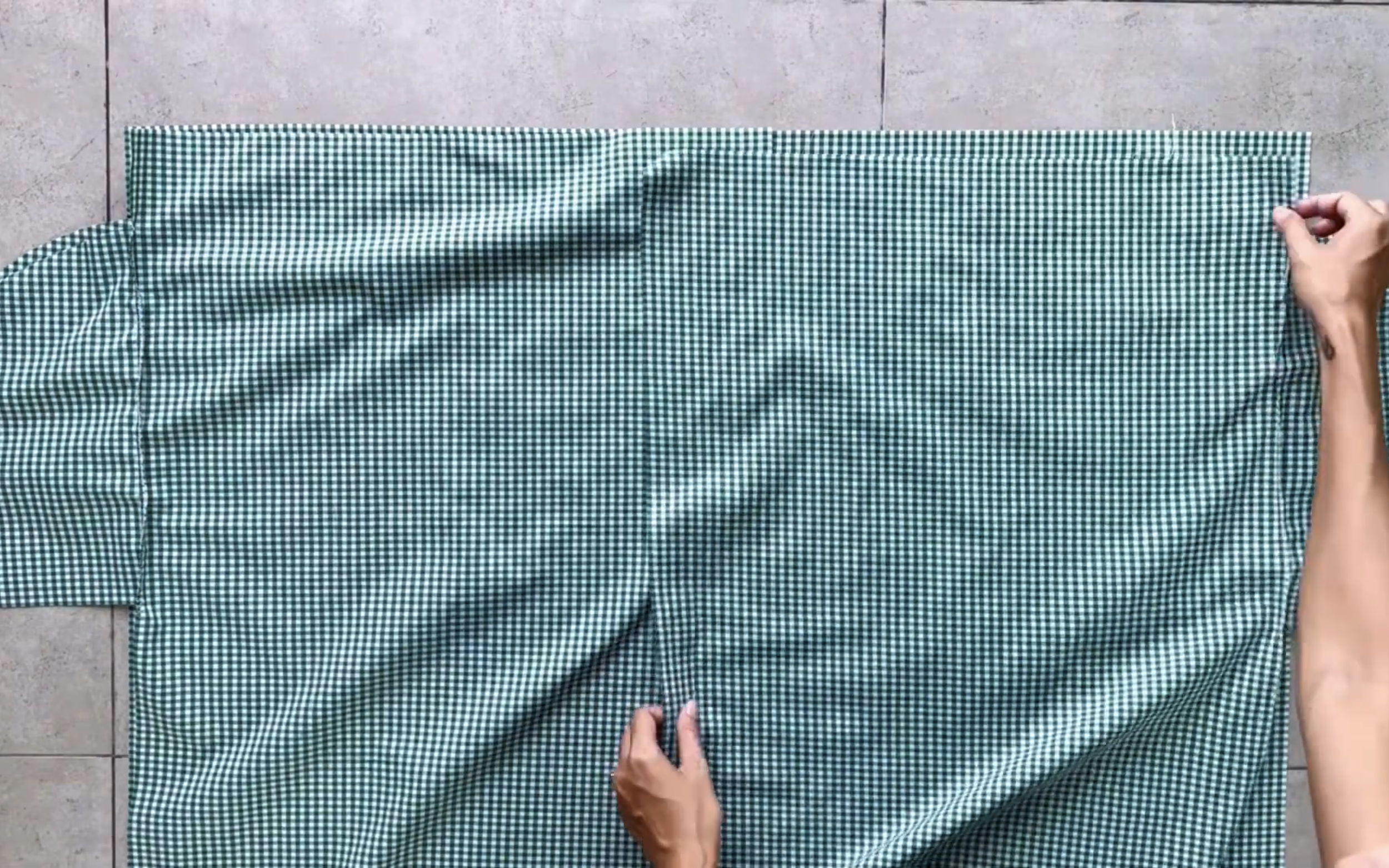
Make two pieces for the front part of the bottom dress.
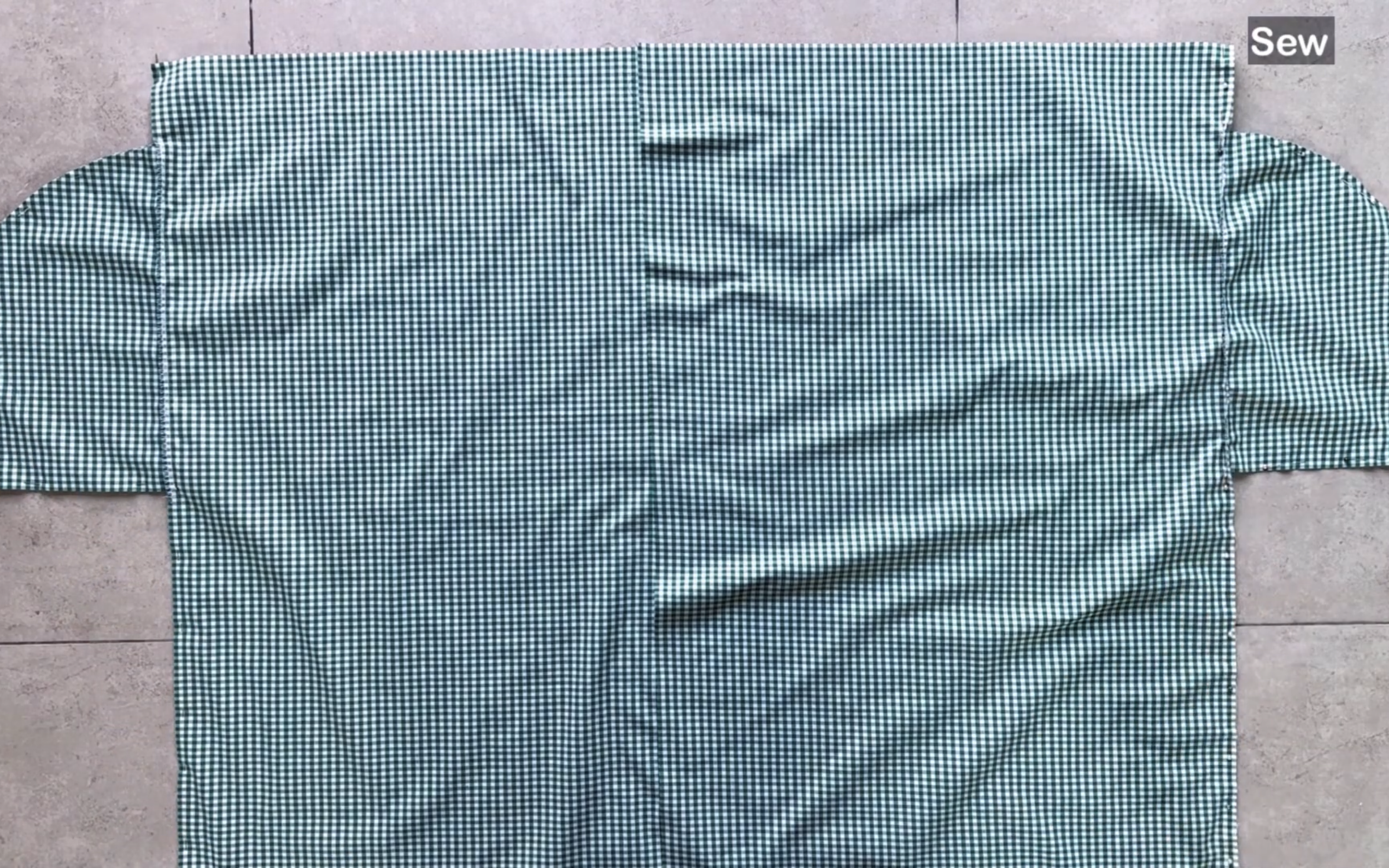
Now, connect two pieces of the front to the back part of the bottom dress at two sides and sew.
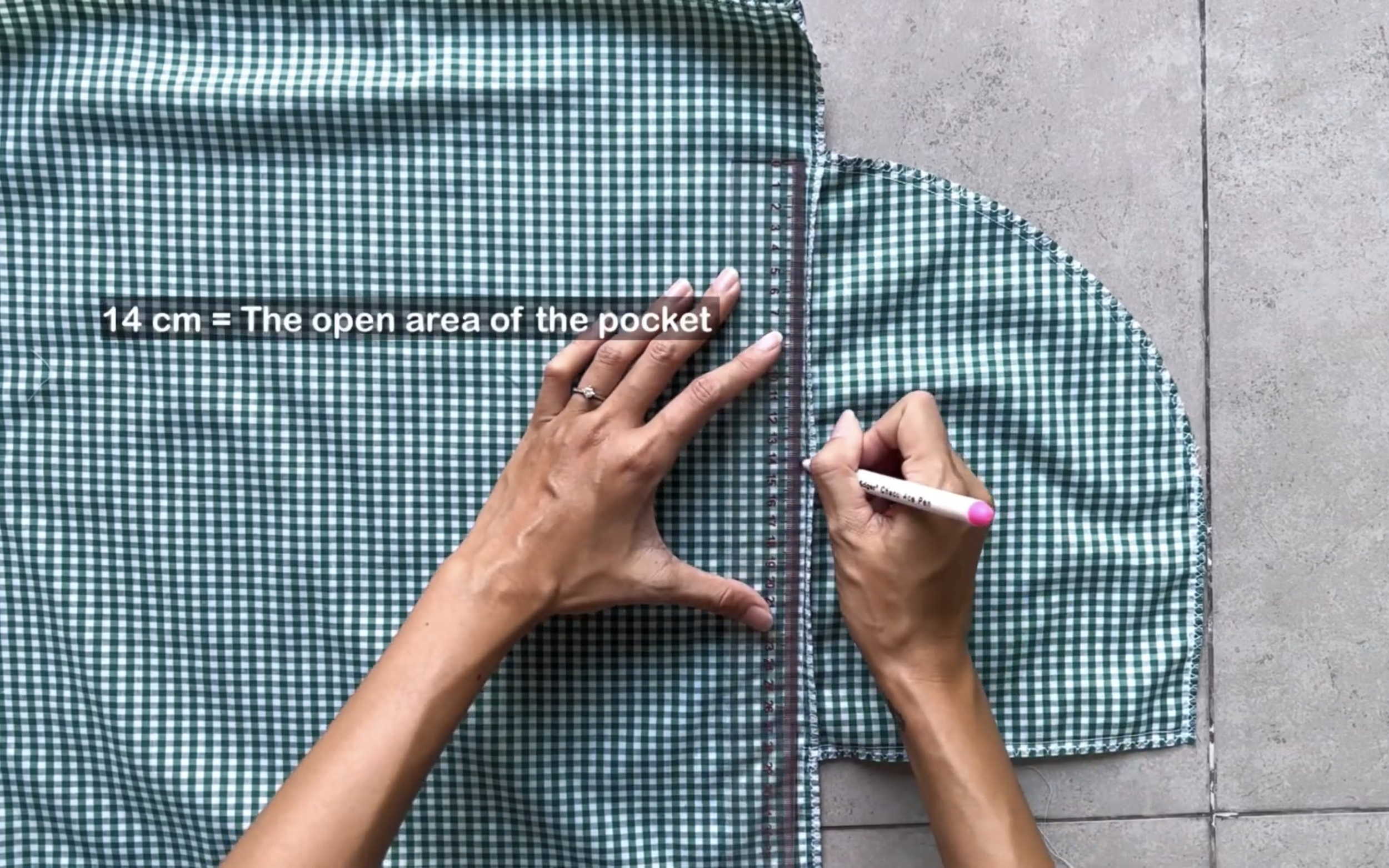
To make the depth for the pocket, mark down 14 cm from the top of the pocket. It is the width of the open area of the pocket where you can put your hand in.
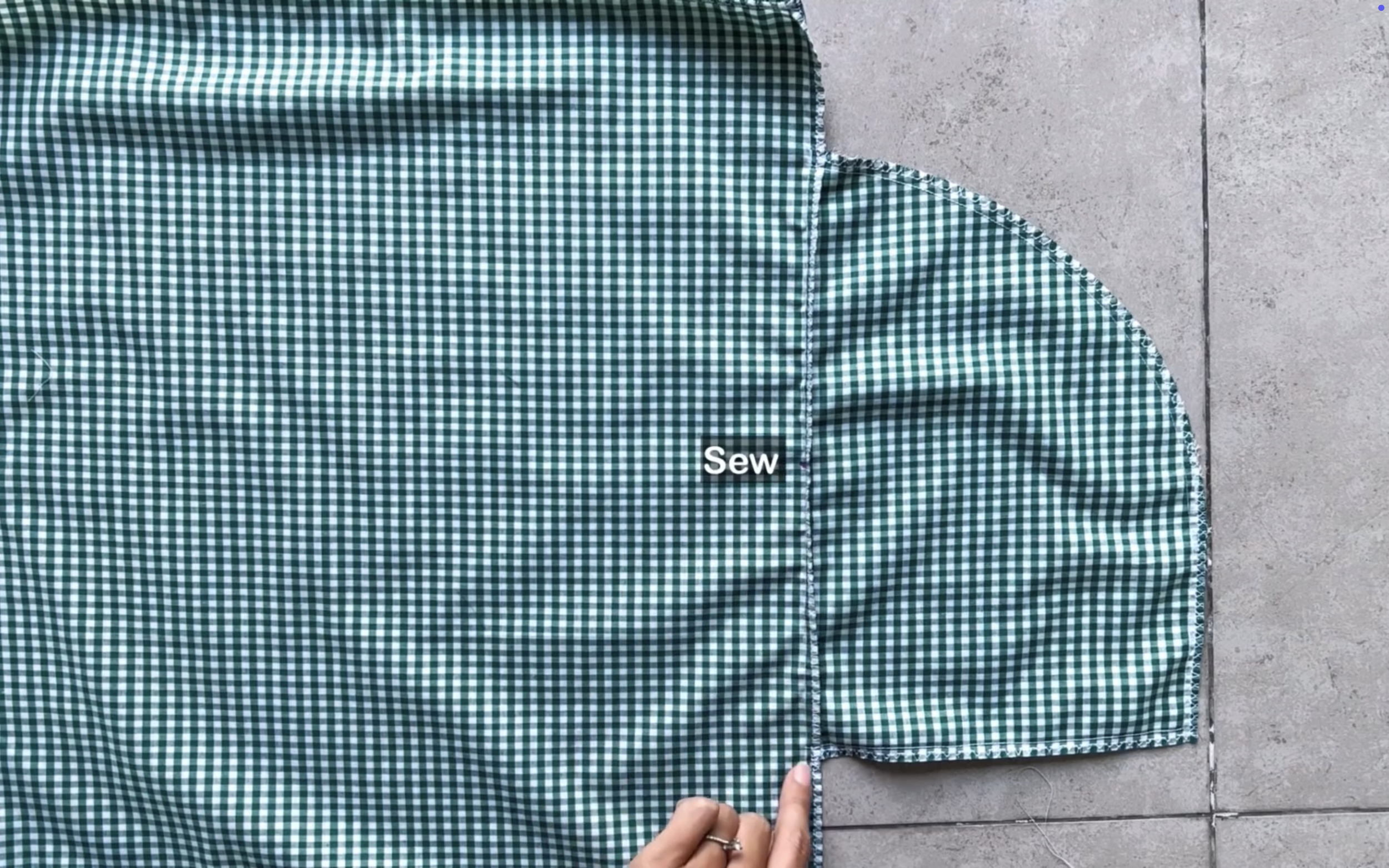
Then, sew the rest together.
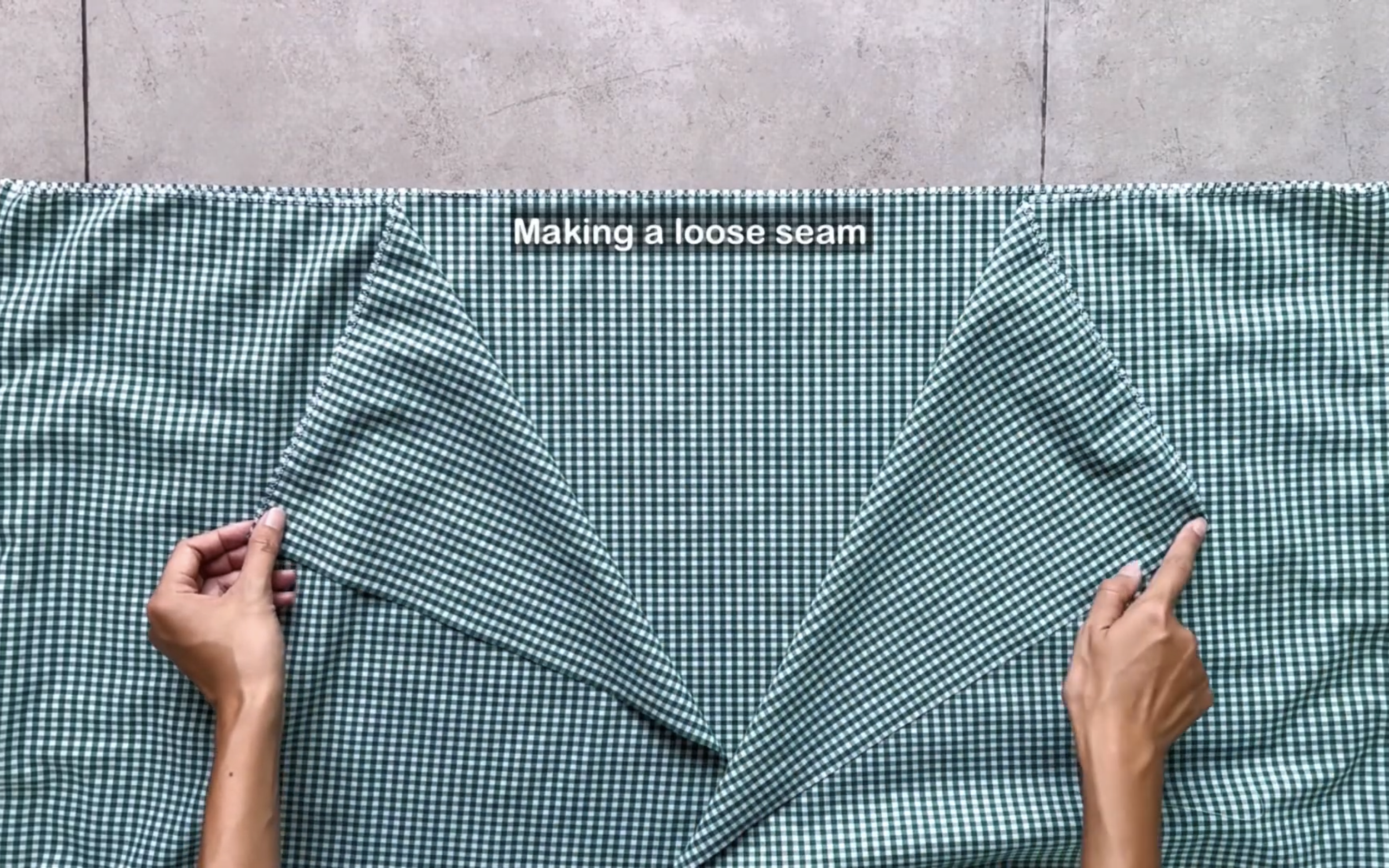
At the top of the bottom dress, make a loose seam first.
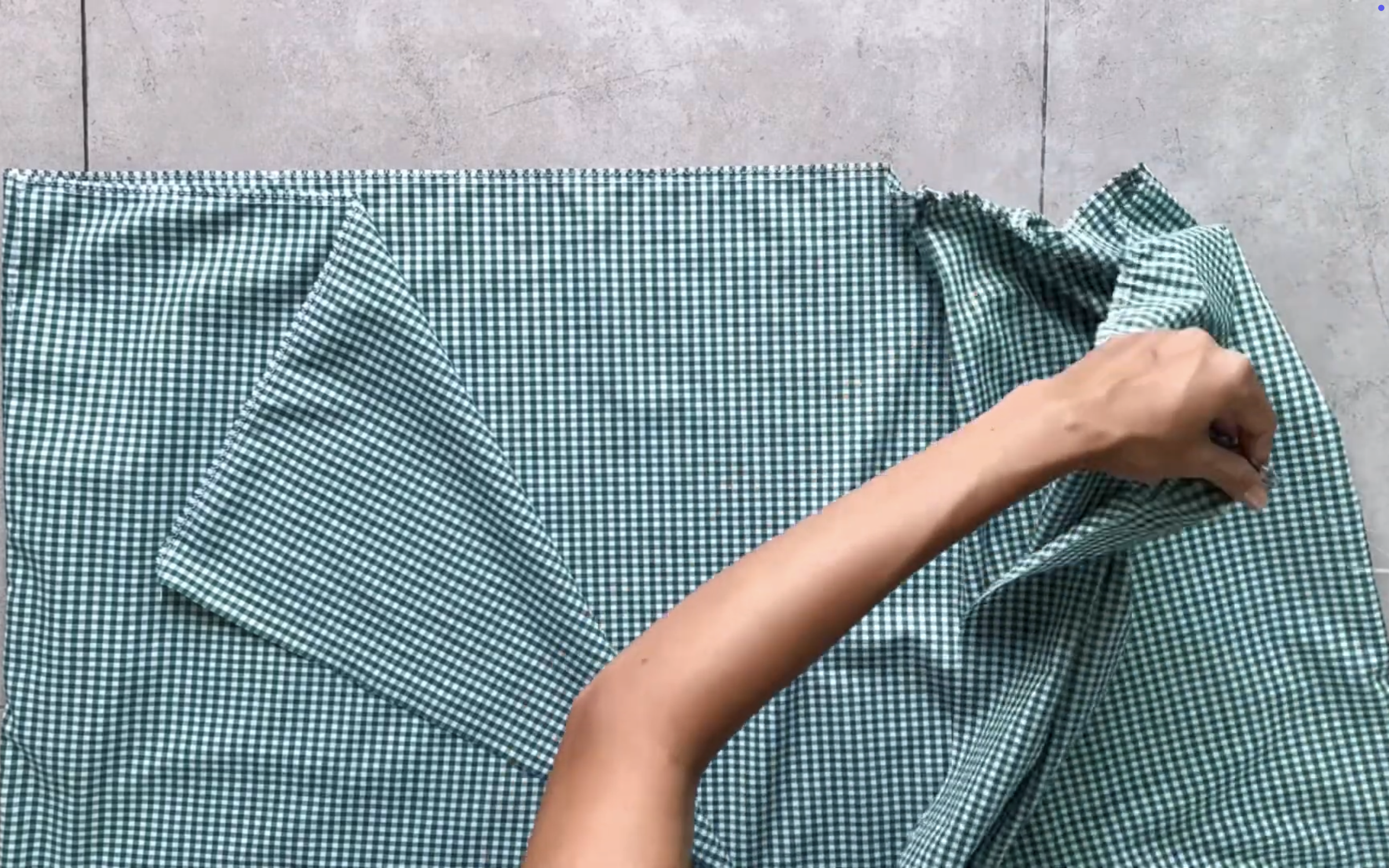
Then create a gathering fabric there.
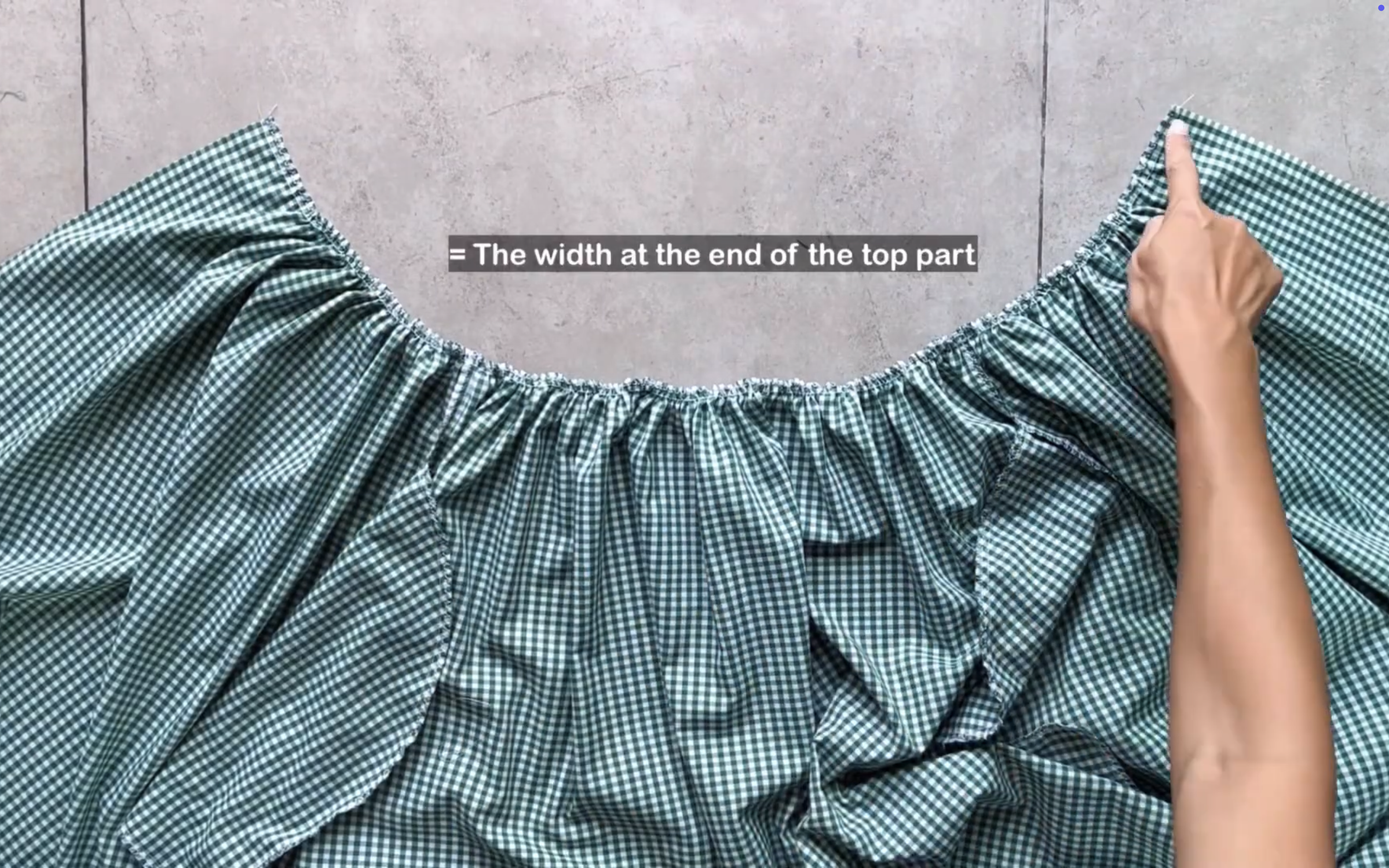
The final width of the gathering fabric will be the same at the end of the top bodice so you can connect them together later.
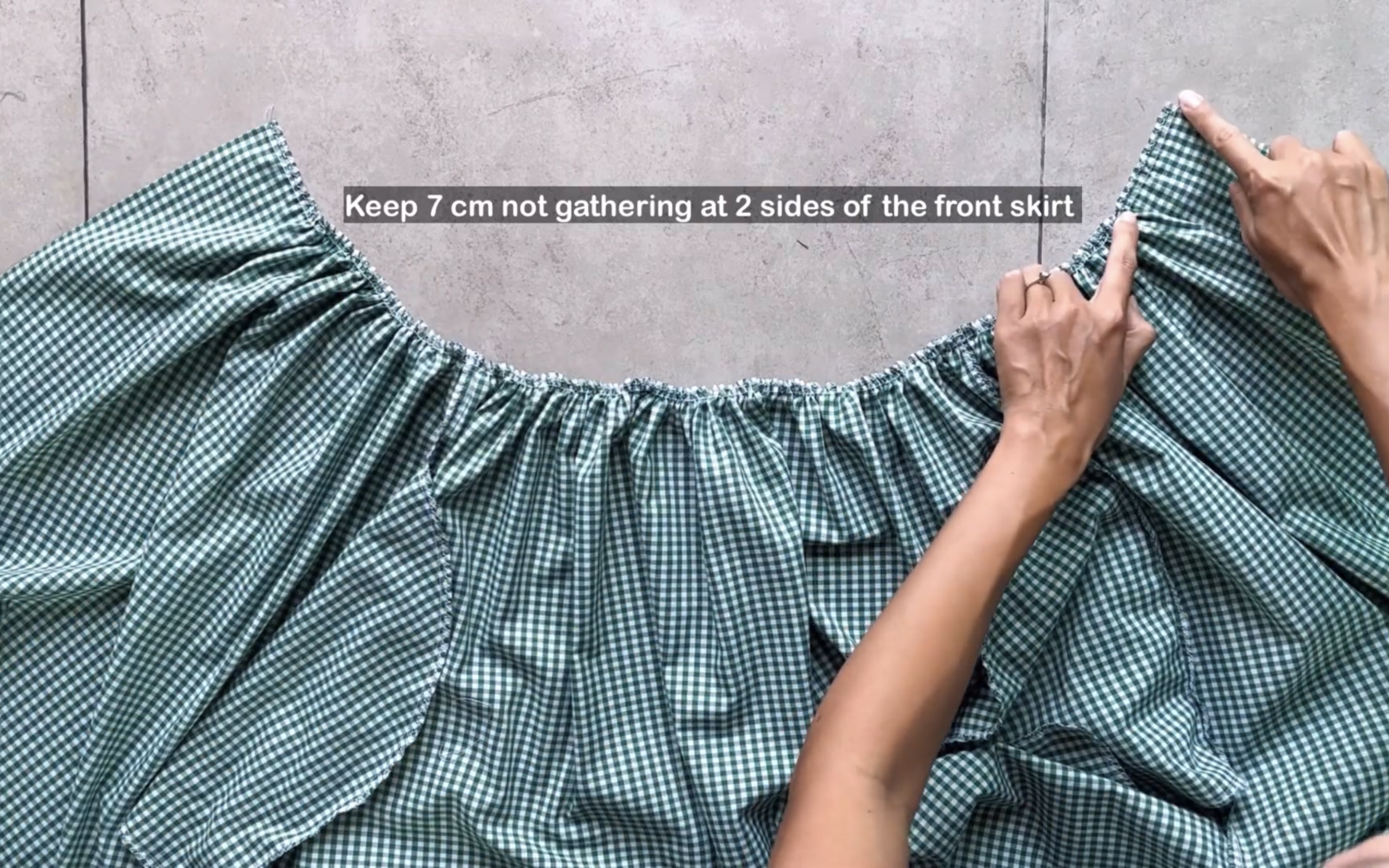
However, keep 7 cm without gathering fabric at two sides of the front part of the bottom dress to make the button area there later.
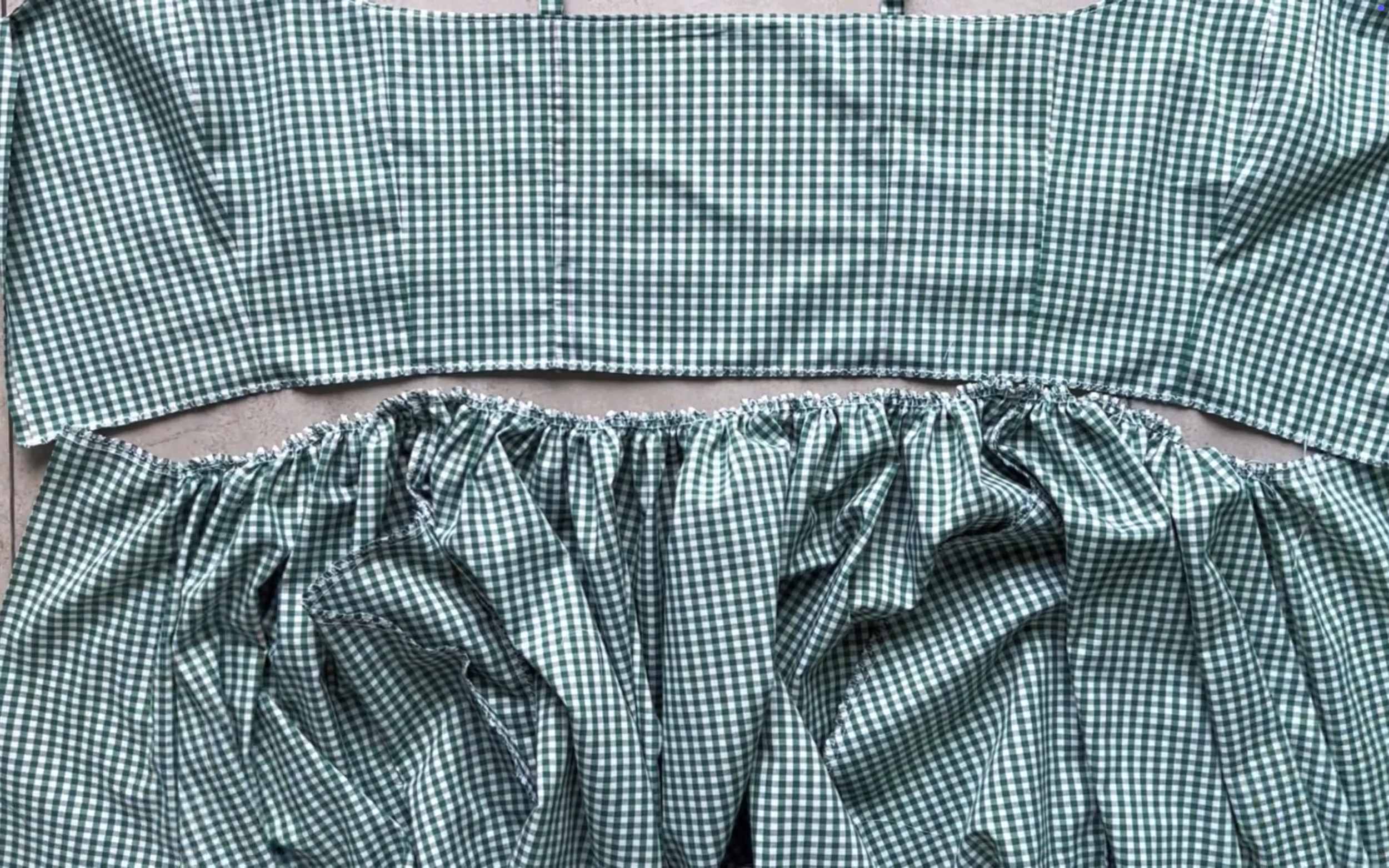
Then connect the top and the bottom of the dress together at the waist.
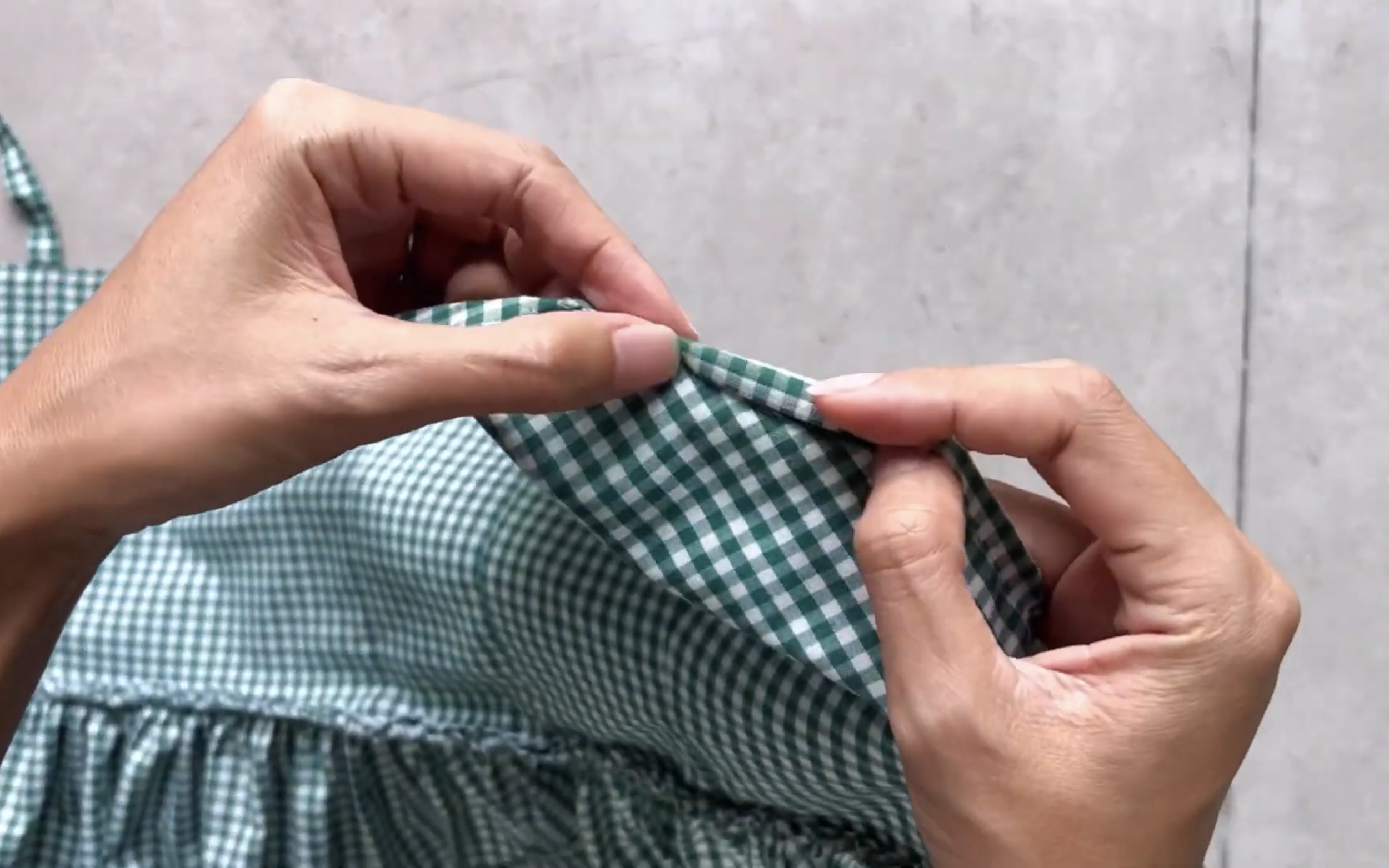
After that, finish the button area by folding the end fabric inside 1 cm first.
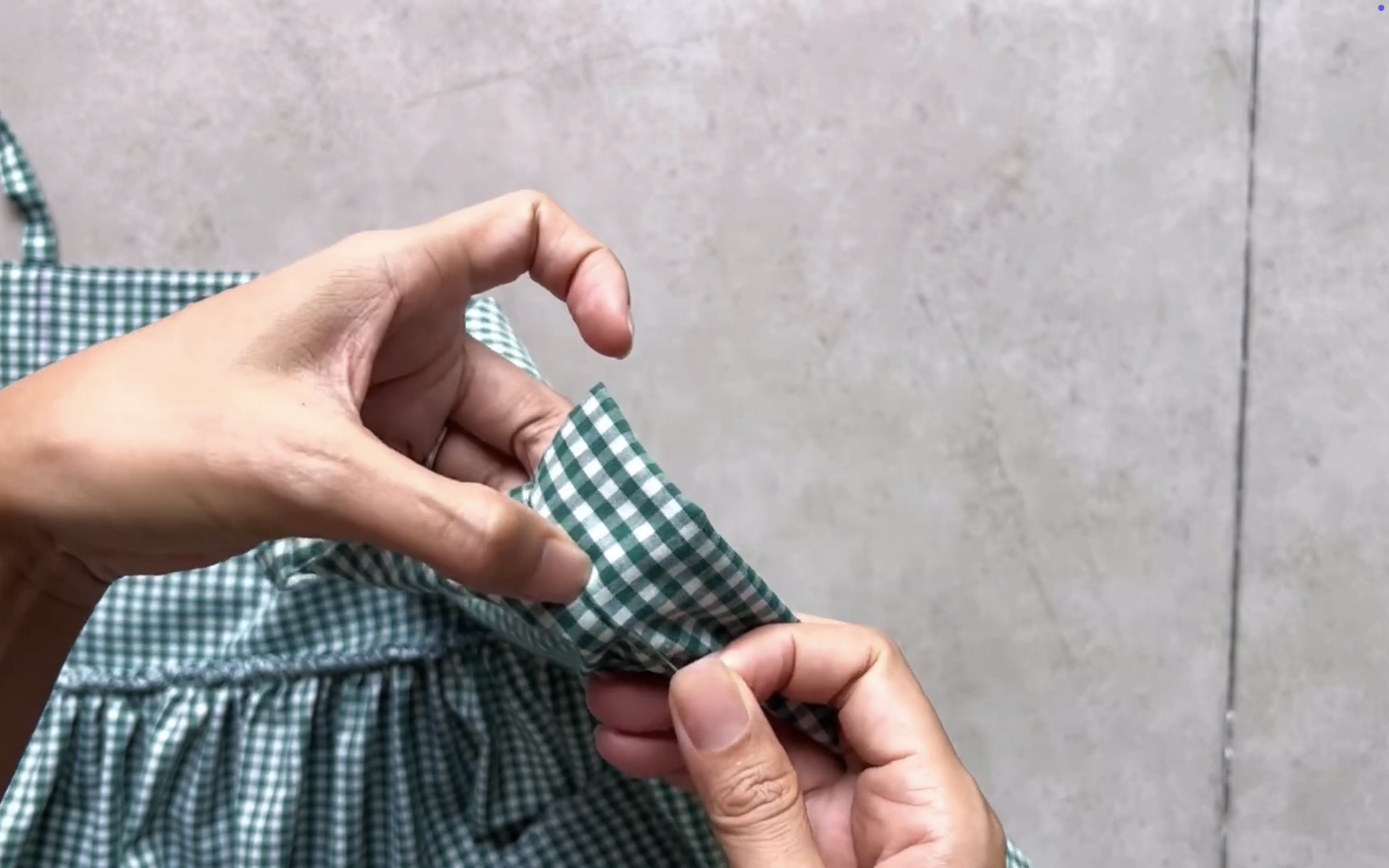
Then keep folding them in 3 cm which is the width of the button area that is wanted.
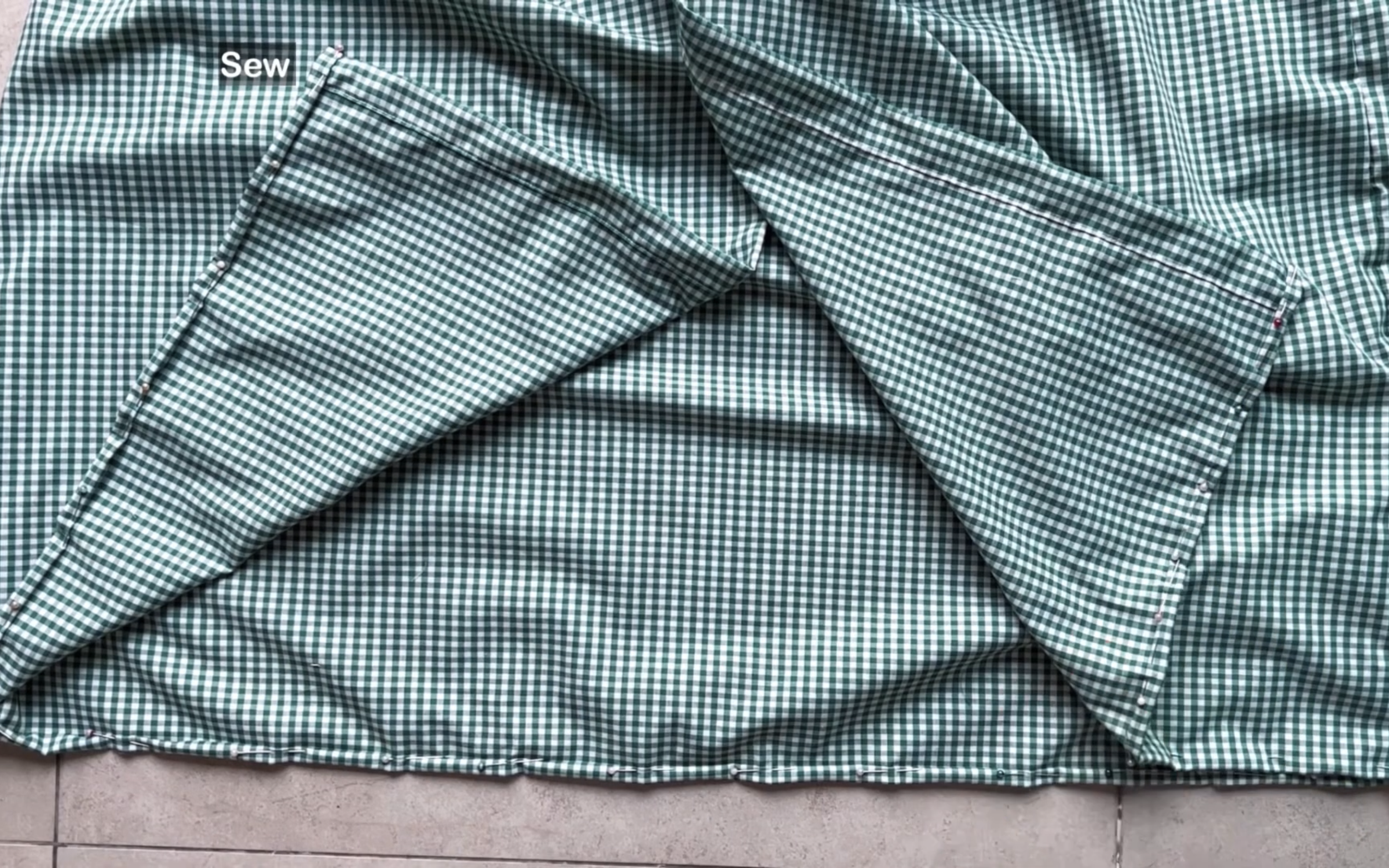
To finish the end of the dress, fold the end fabric inside two times with 1 cm each time and sew.
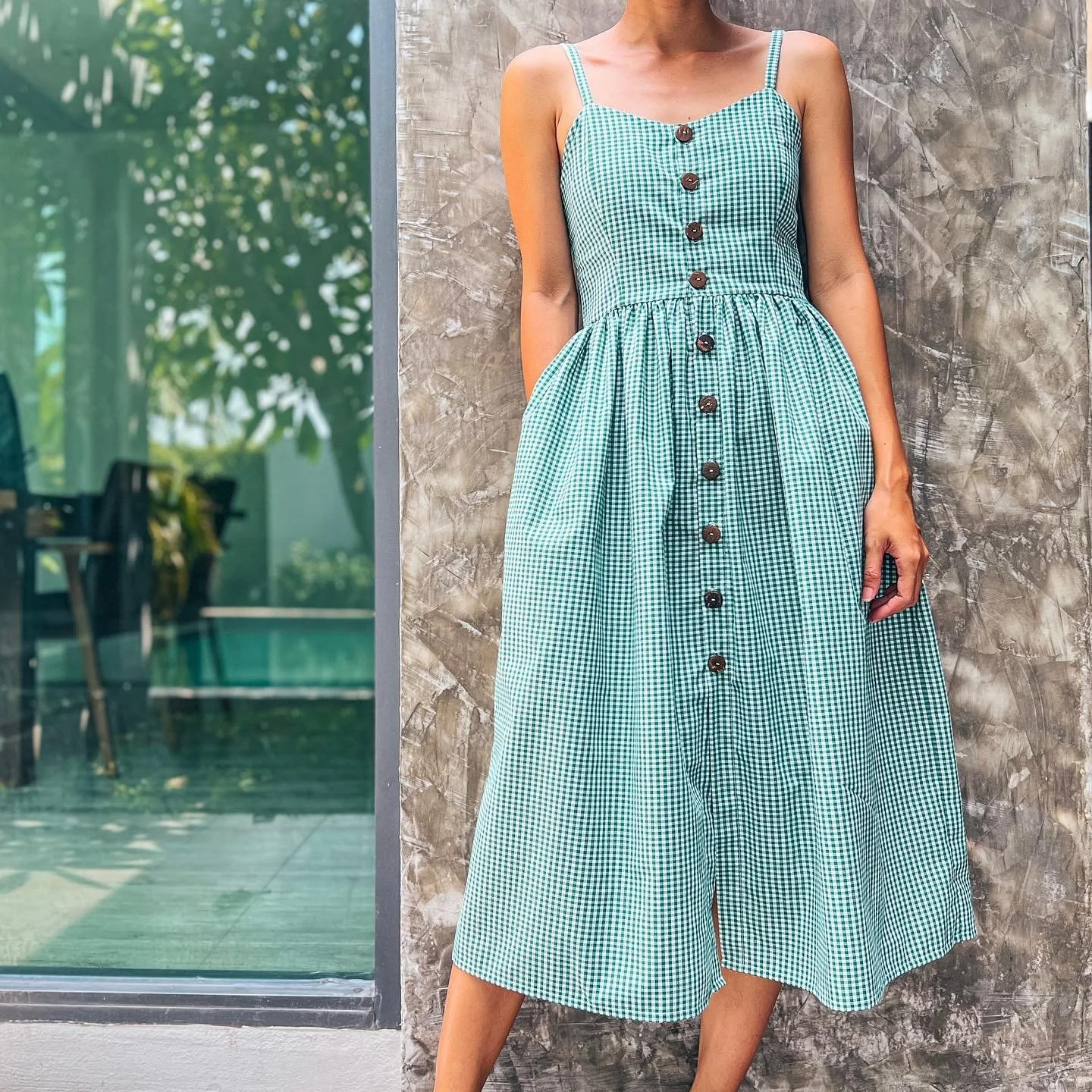
DIY Vintage dress | Sleeveless button down midi dress | Step by step sewing tutorial
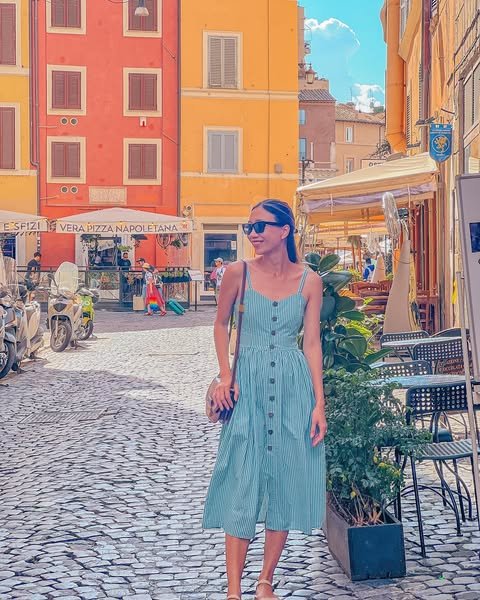
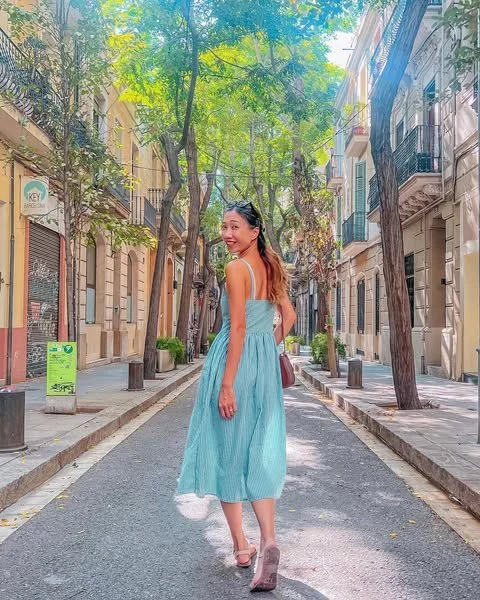
And I finished this DIY. Here’s my final result!
This is a super vintage dress that’s not only pretty but also elegant.
I hope you found my step-by-step guide helpful and inspiring.
If you’re interested in making your own, give it a try and let me know how it goes!
Until then, happy sewing!