DIY Party dress | Puff sleeve bustier mini dress - Step by step sewing tutorial (beginner friendly)

DIY Party dress | Puff sleeve bustier mini dress - Step by step sewing tutorial (beginner friendly)
Welcome or welcome back to my channel. My name is Jess and I love doing DIY, making clothes in a "simply but pretty" way.
In today's tutorial, I'm going to share with you how I made my Christmas party dress. In the vibe of this holiday season, I can't stop myself from making a party outfit. I hope it will give you some inspiration to make your own clothes.
So let's try it out. Let’s get started!
WHAT YOU’LL NEED
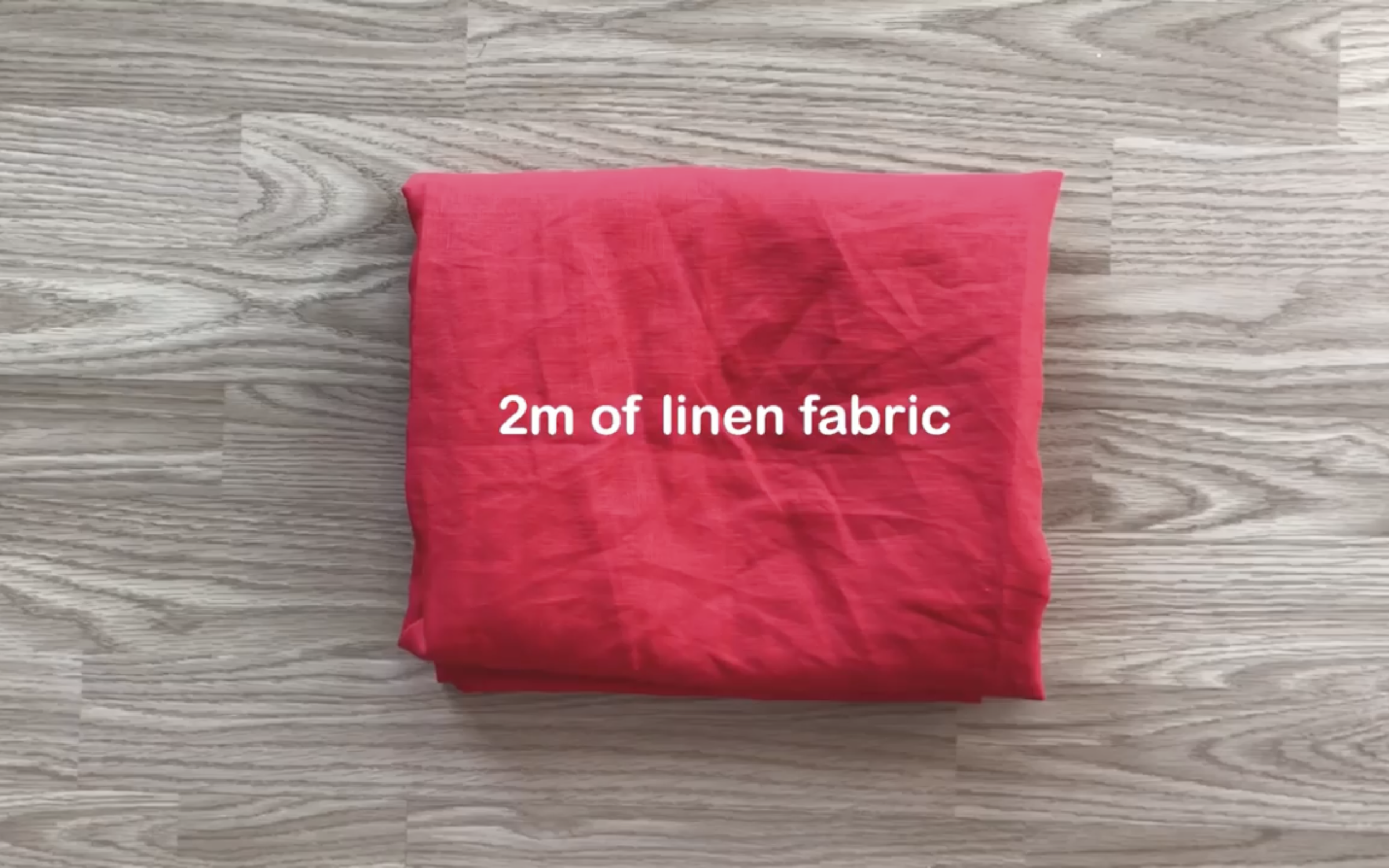
2m of pure linen fabric in red color
Pattern paper
Sewing machine
Pins
Scissors
Ruler
Long stick
Zipper
Buttons
MAKING THE PATTERNS
Here’s the pattern for the project. To get a clear understanding of all the measurements needed for the pattern, watch the video from 0:35 to 6:55.
Remember, you can adjust these measurements to fit your own dimensions!

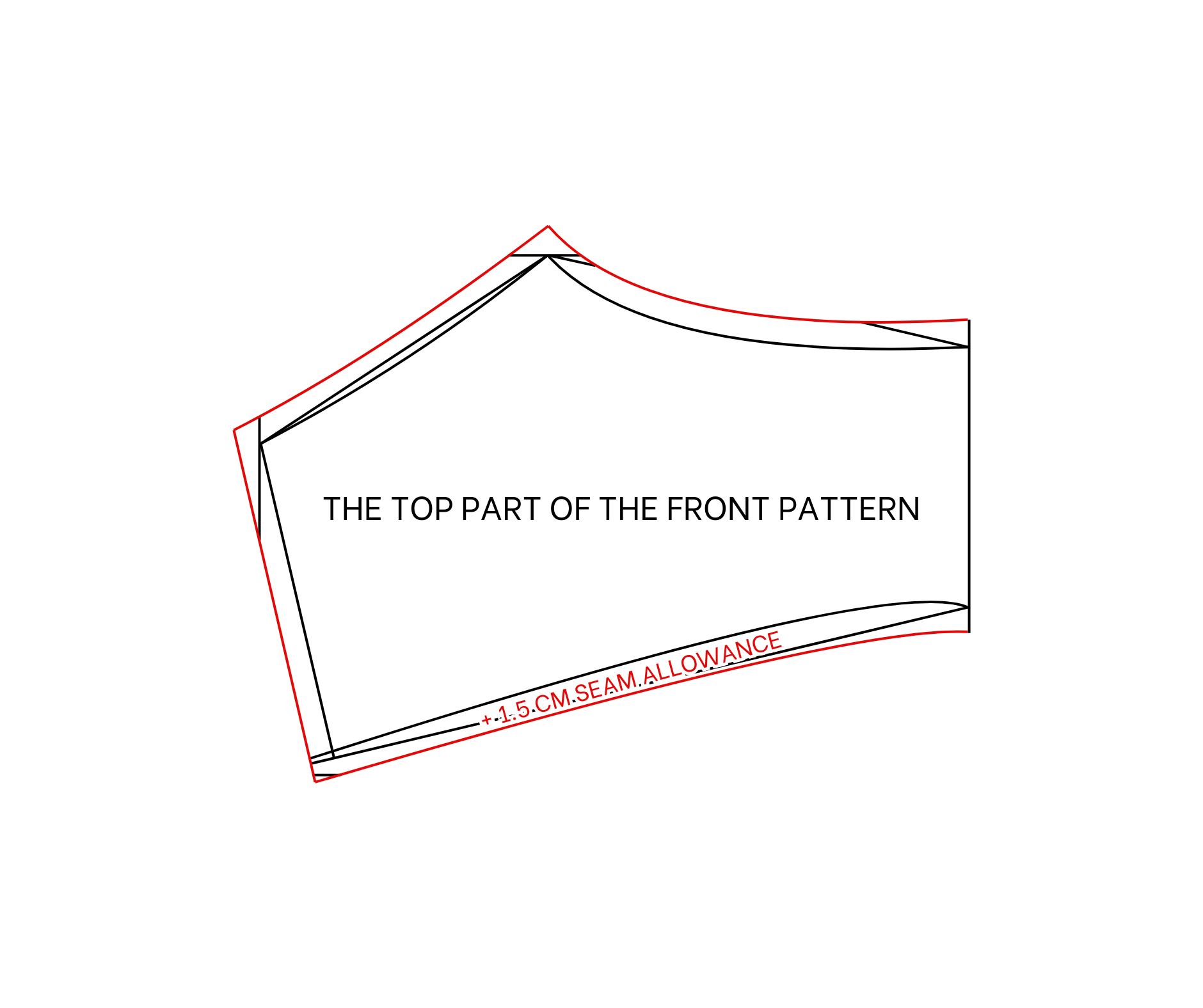
THE TOP PART OF THE FRONT PATTERN
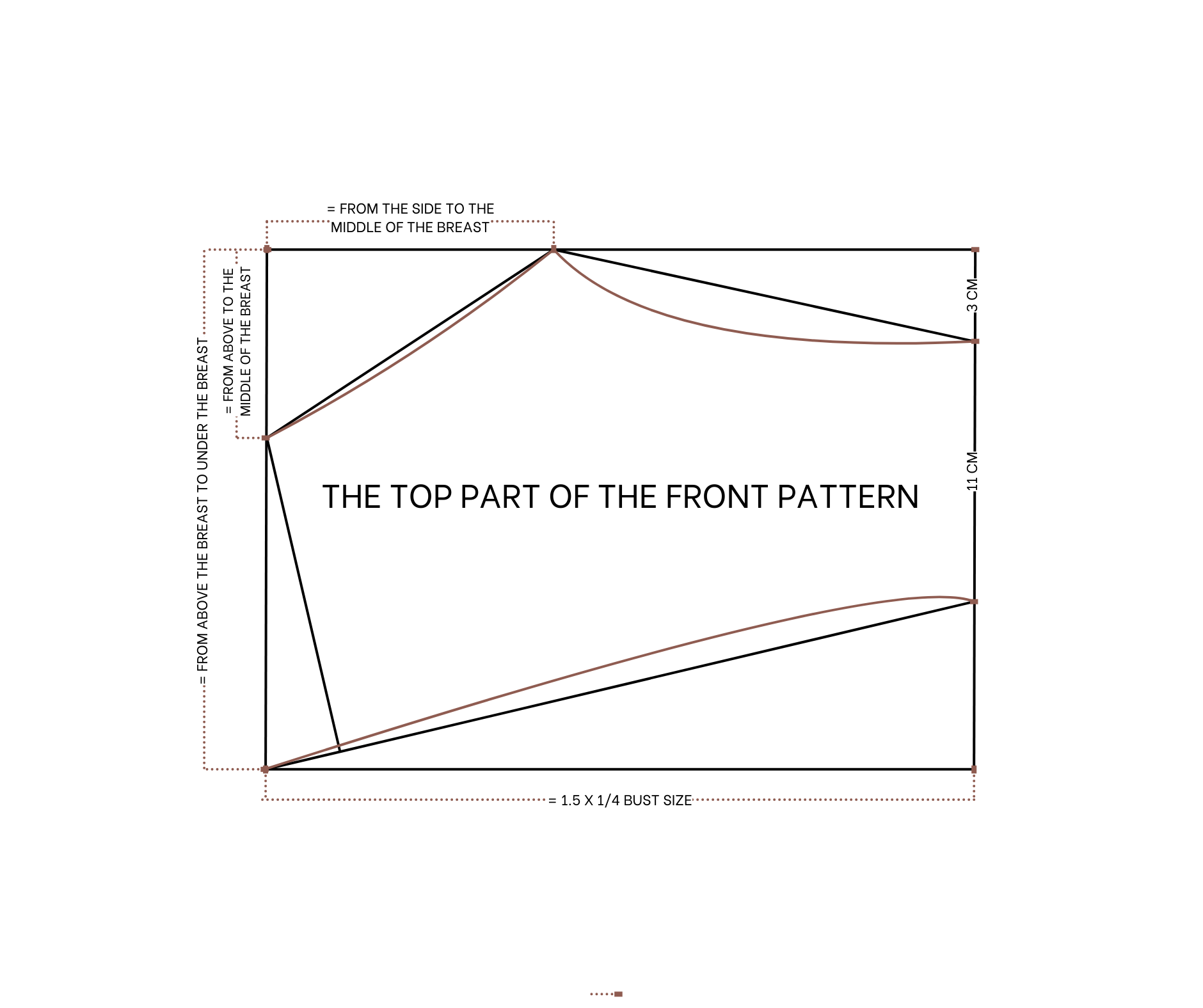
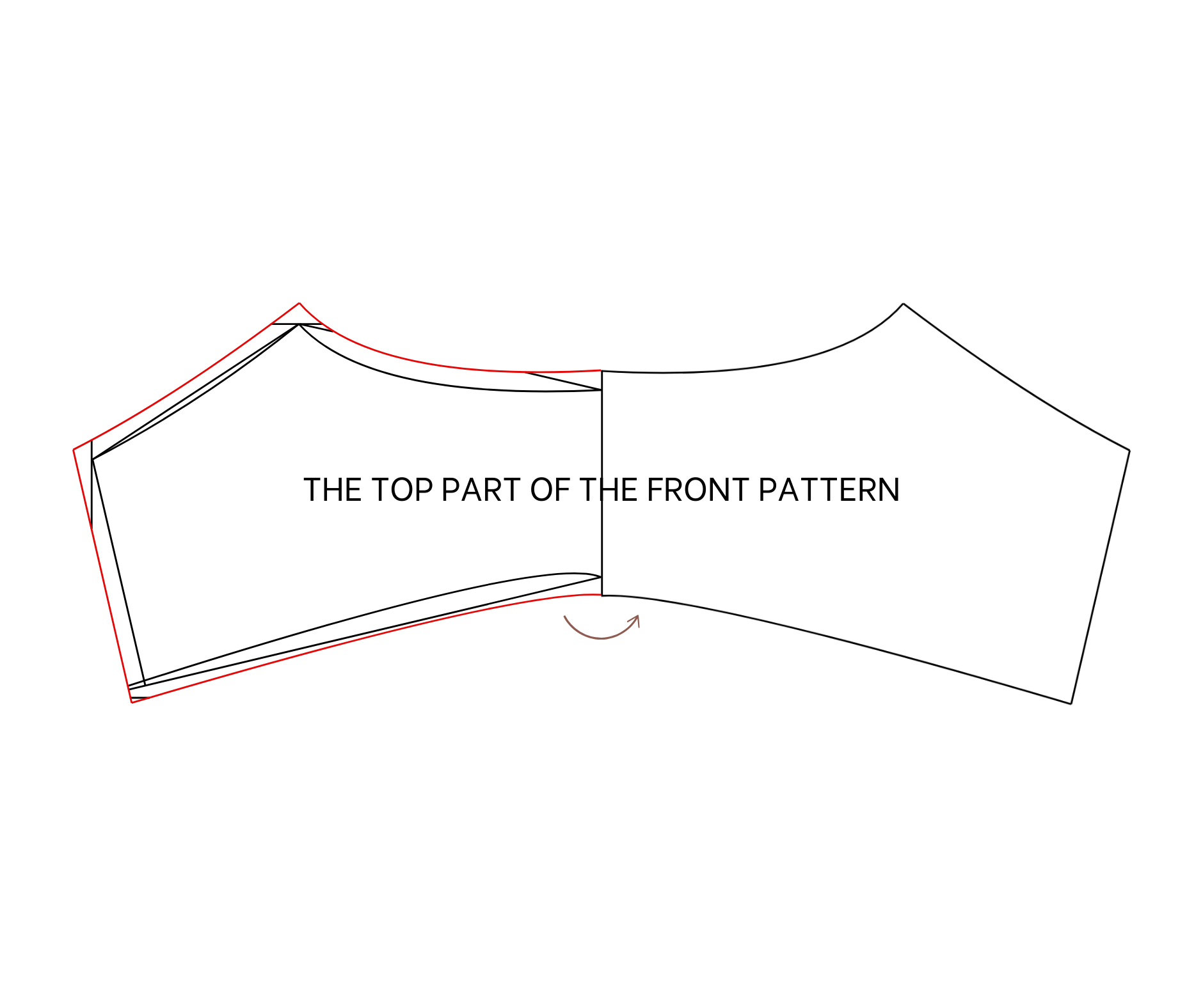
Fold the paper in half, then draw a rectangle with 25 cm length, which is the length from above the breast to above the belly button. It's a length that covers the butt, and 30 cm width, which is 1.5 times a quarter of the bust size.
At one edge of the rectangle, mark 12 cm on the width line—this is the shoulder position for the dress.
Mark 8 cm on the length line, which is the length from above the butt to the middle of the bust.
Connect these two marks to create the sleeve line for the front pattern of the dress.
At the top of the folding line, mark down 3 cm, then connect this mark to the mark on the width line.
Based on this line, draw a slightly curved line to complete the top line of the front pattern.
From the mark on the folding line, continue marking down 11 cm—this is the length from the top of the dress to the middle of the chest.
Connect this mark to the end of the other length line. Based on this line, draw a slightly curved line to complete the under-bust line of the front pattern.
At the end of this curved line, draw a perpendicular line to connect to the end of the sleeve line.
Redraw the sleeve line slightly to adjust the shape.
Then, add 1.5 cm of seam allowance to the pattern.
THE BOTTOM PART OF THE FRONT PATTERN
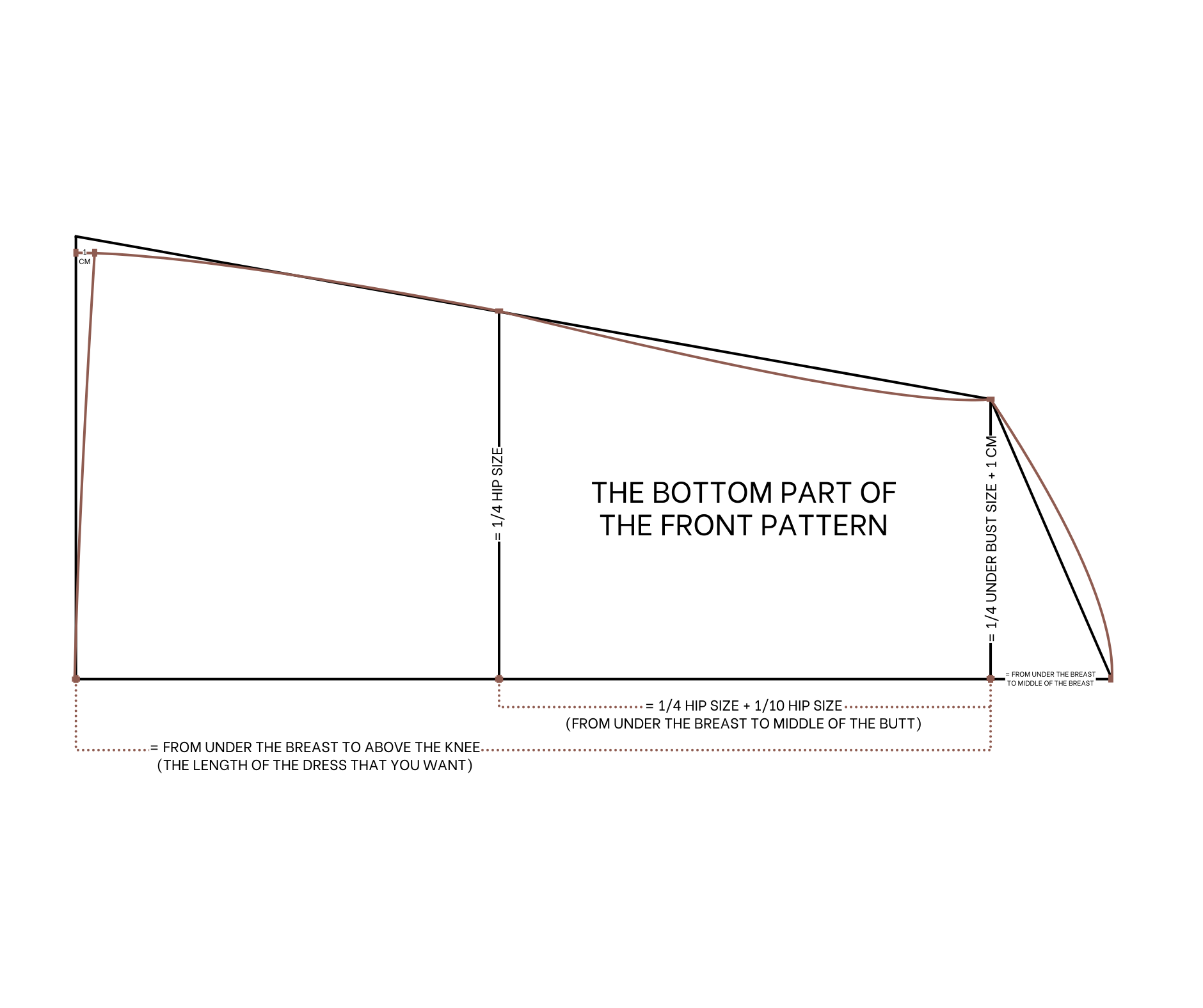
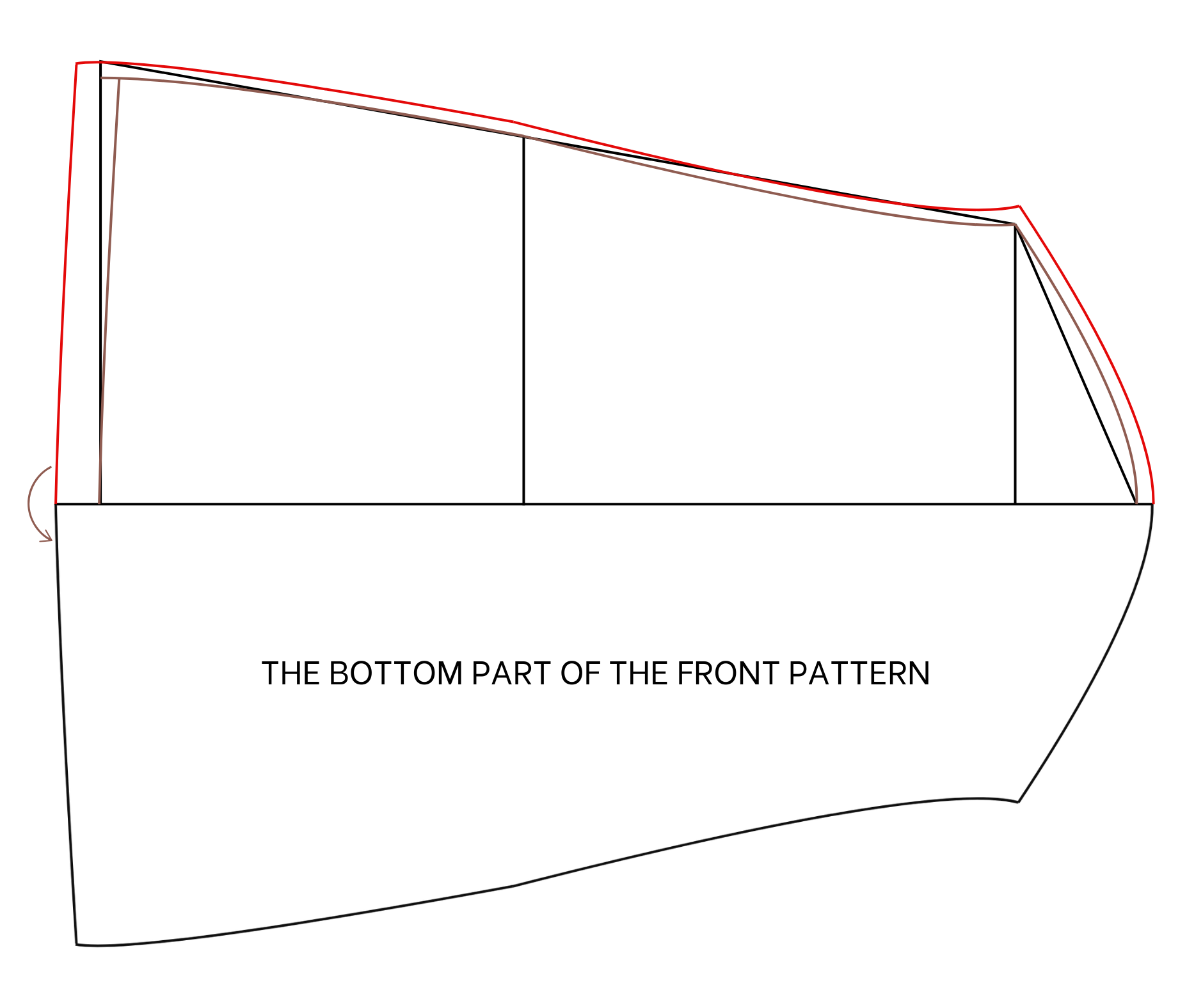
To make the bottom part of the front pattern, fold the paper in half first.
Draw a perpendicular line with 18 cm length. It is the quarter of the under-bust size plus 1 cm.
From this line, draw another line 32 cm from it. It is the quarter of the hip size plus 1/10 of the hip size. It is also the length from under the breast to the middle of the butt. The length of this line is 23 cm, which is the quarter of the hip size.
From the first perpendicular line, make another one 60 cm from it. This is the length from under the butt to above the knee, where the dress length will be.
Connect the two ends of the first two lines together. This line will intersect the last one at a point, forming the side line of the front pattern.
Because the bottom of the dress is not meant to be wider, curve the end of the sideline inward.
From the end of the sideline, mark up 1 cm first, then connect this mark to the other end of the folding line to complete the bottom line of the front pattern. Make this line a big curve for a smoother shape.
At the top of the pattern, mark up 7 cm on the folding line. This is the length from the middle of the chest to the end of the top pattern made earlier. Connect this mark to the top of the sideline.
Based on this line, draw a slightly curved line to finish the top of the pattern. Because of this curved line, make the top of the sideline a big curve as well.
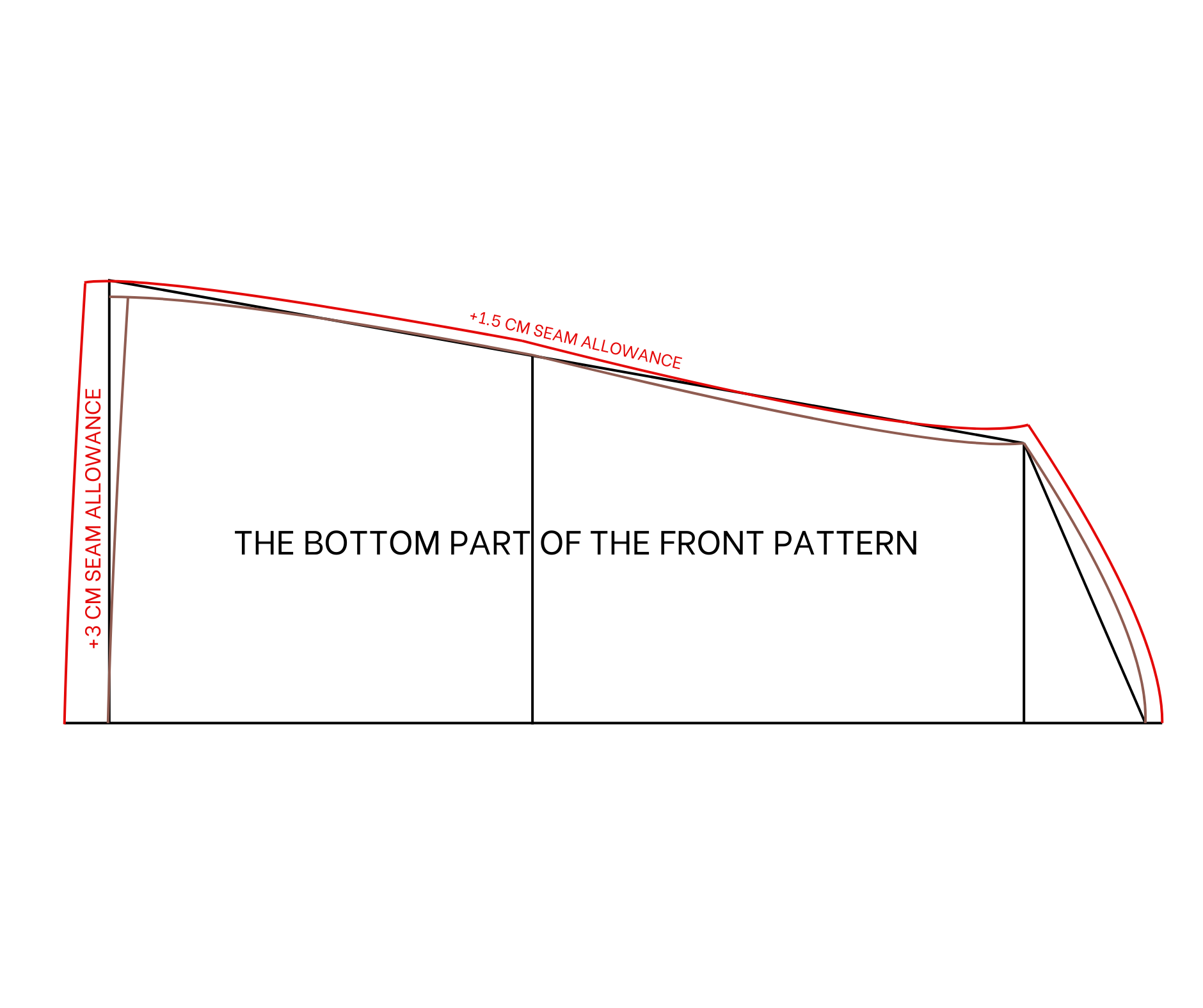
Add a 1.5 cm seam allowance, except for the bottom line, which gets 3 cm.
THE BACK PATTERN
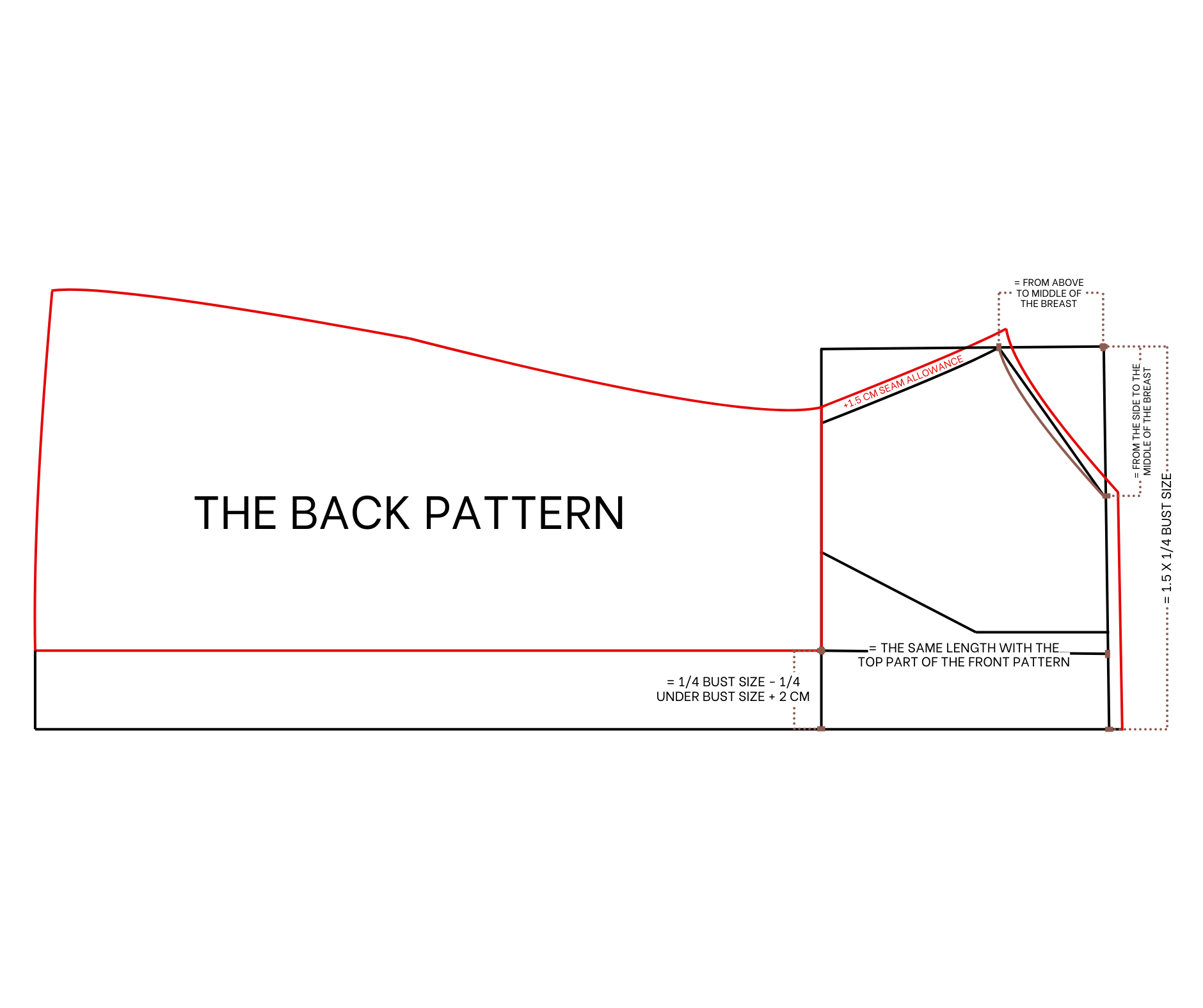
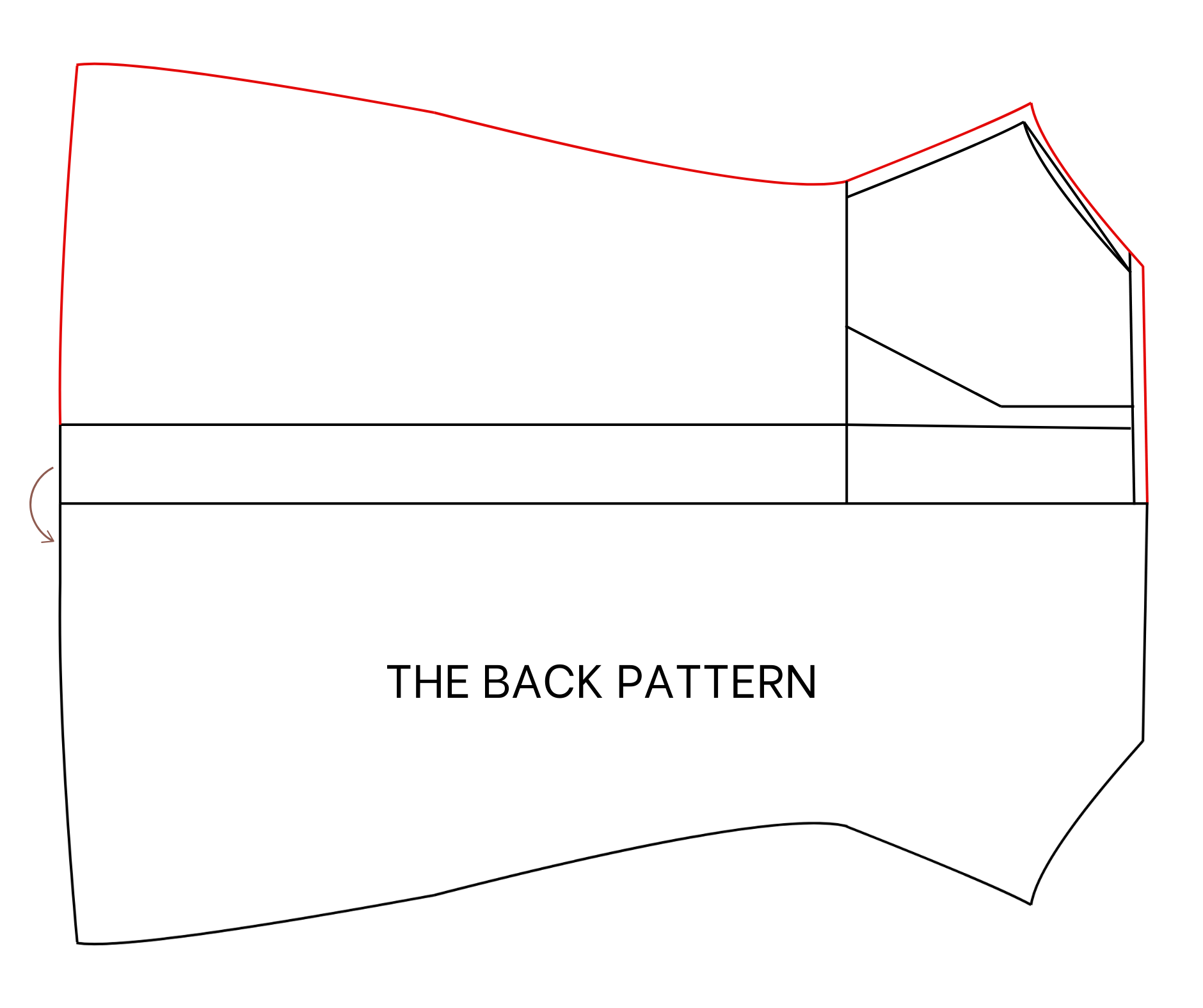
To make the back pattern of the dress, use the front pattern.
From the folding line, draw a horizontal line 6 cm away first.
Apply the front pattern to this line and copy it onto the paper, but only up to the under-bust line of the front pattern.
The width of the under-bust line on the back pattern will be 24 cm, which is a quarter of the bust size plus 7 cm. This means the total under-bust line of the dress will be 84 cm, which is the bust size plus 2 cm, allowing for easy wear.
From the top line of the back pattern, draw another straight line 25 cm away. This matches the length of the top part of the front pattern.
Mark at 30 cm on this line—this is 1.5 times a quarter of the bust size.
Draw a perpendicular line from that mark.
From this mark, measure 12 cm along the straight line, positioning the sleeve of the dress.
On the perpendicular line, mark 8 cm, which is the length from above the breast to the middle of the breast.
Connect these two marks to complete the sleeve line for the back pattern.
Connect the end of the sleeve line to the top of the sideline. Slightly curve the sleeve line to make it smoother.
Add a 1.5 cm seam allowance.
THE SLEEVE PATTERN
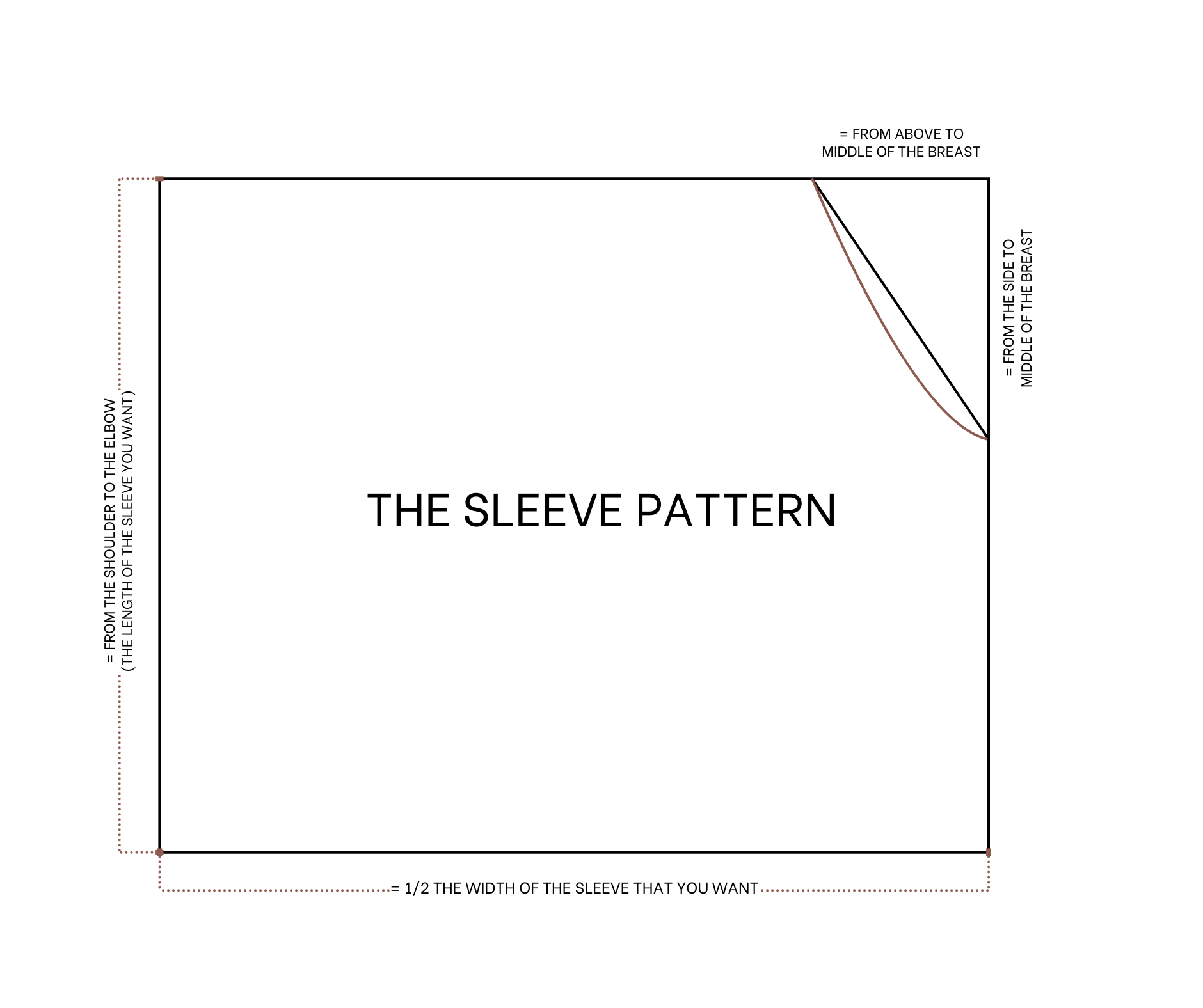
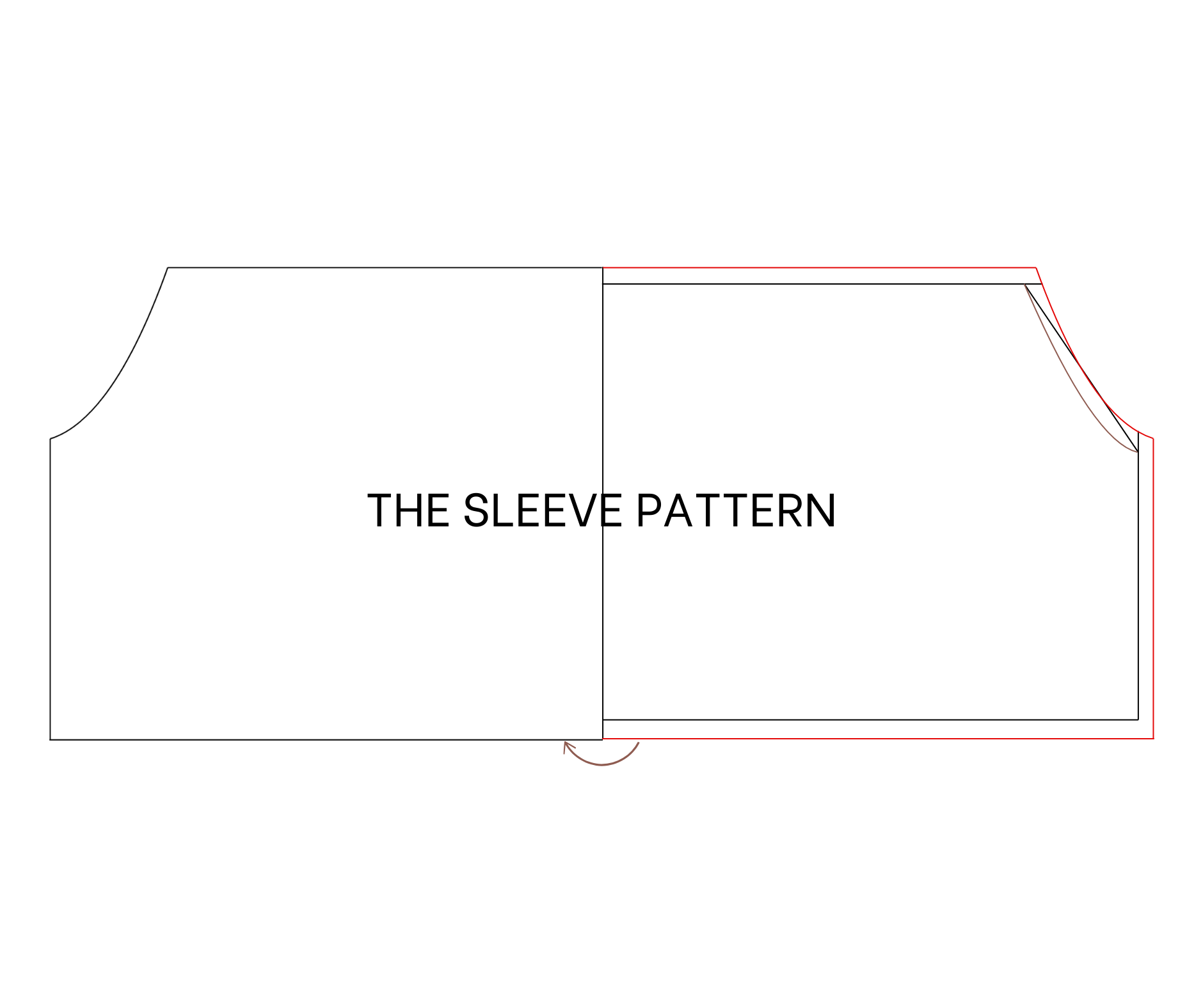
To make the sleeve pattern, fold the paper in half first.
Draw a rectangle with a 35 cm length, which is the desired sleeve length, and a 40 cm width, which is half the total sleeve width.
At one edge of the rectangle, mark 12 cm on the width line—this is the sleeve position for the dress.
On the length line, mark 8 cm, which is the length from above the breast to the middle of the breast.
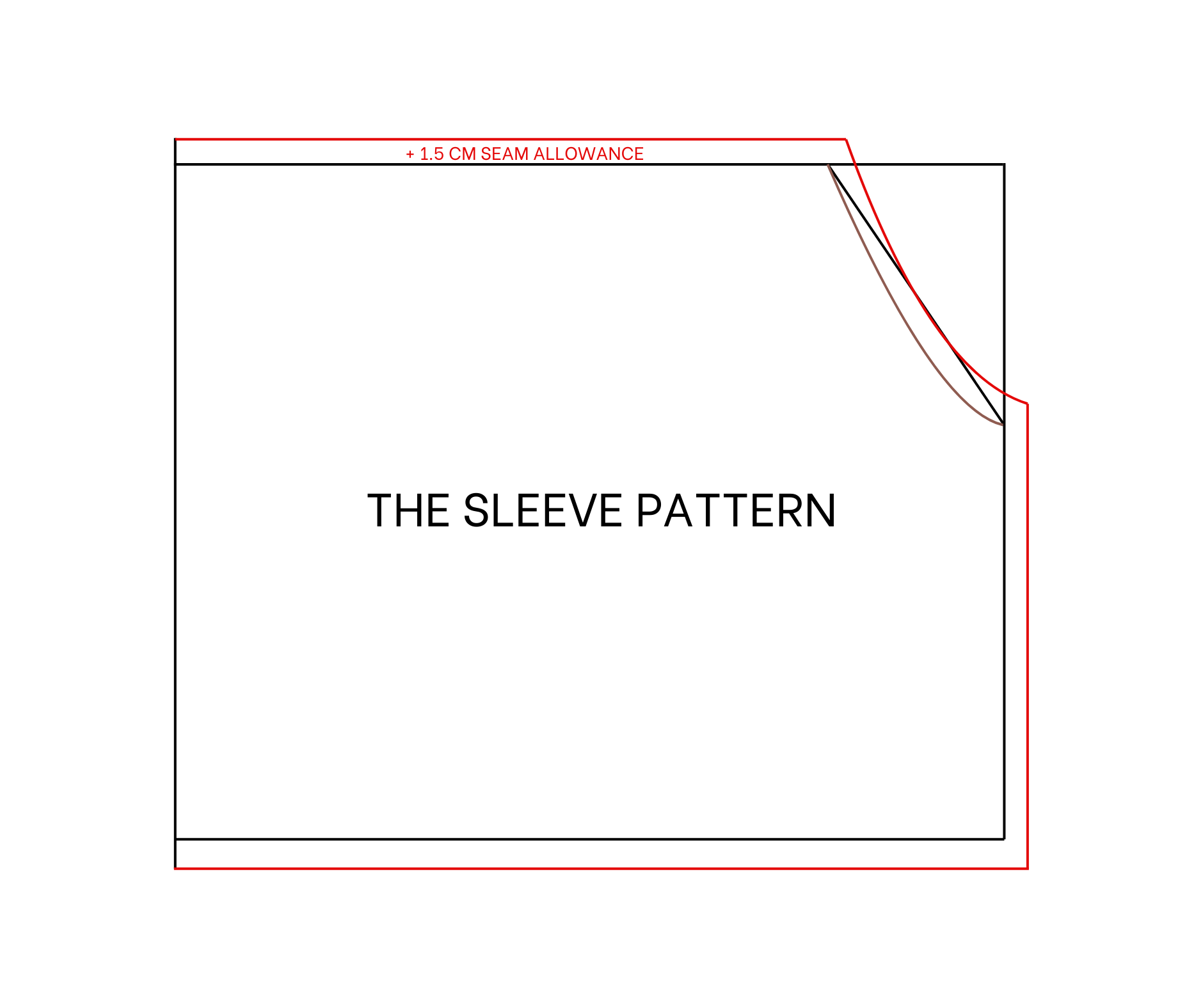
Connect these two marks together. Make this line a big curve to complete the sleeve line for the sleeve pattern.
Add a 1.5 cm seam allowance.
SEWING THE DRESS
THE FRONT OF THE DRESS
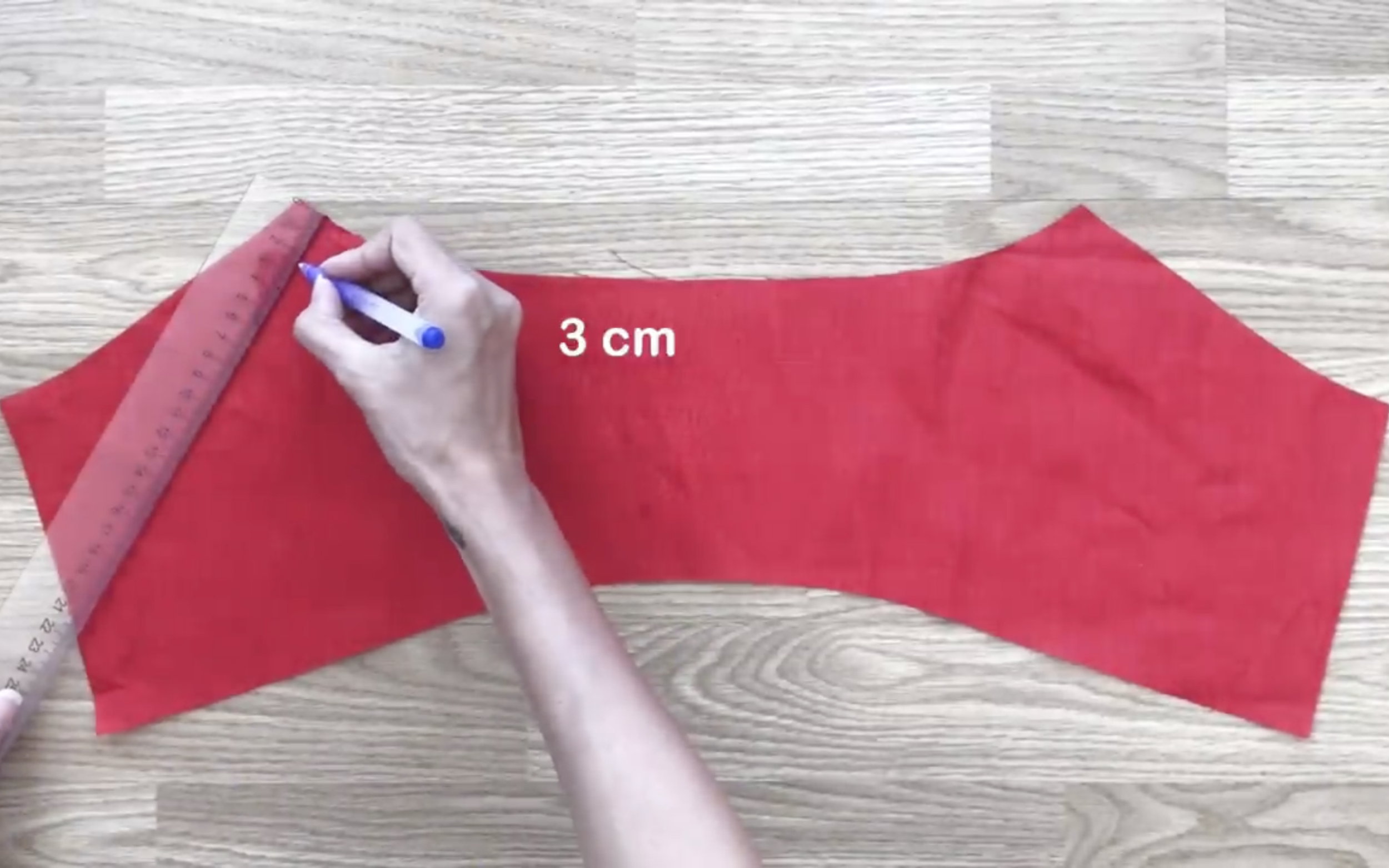
At the top of the front piece, draw a curved line 3 cm inside.
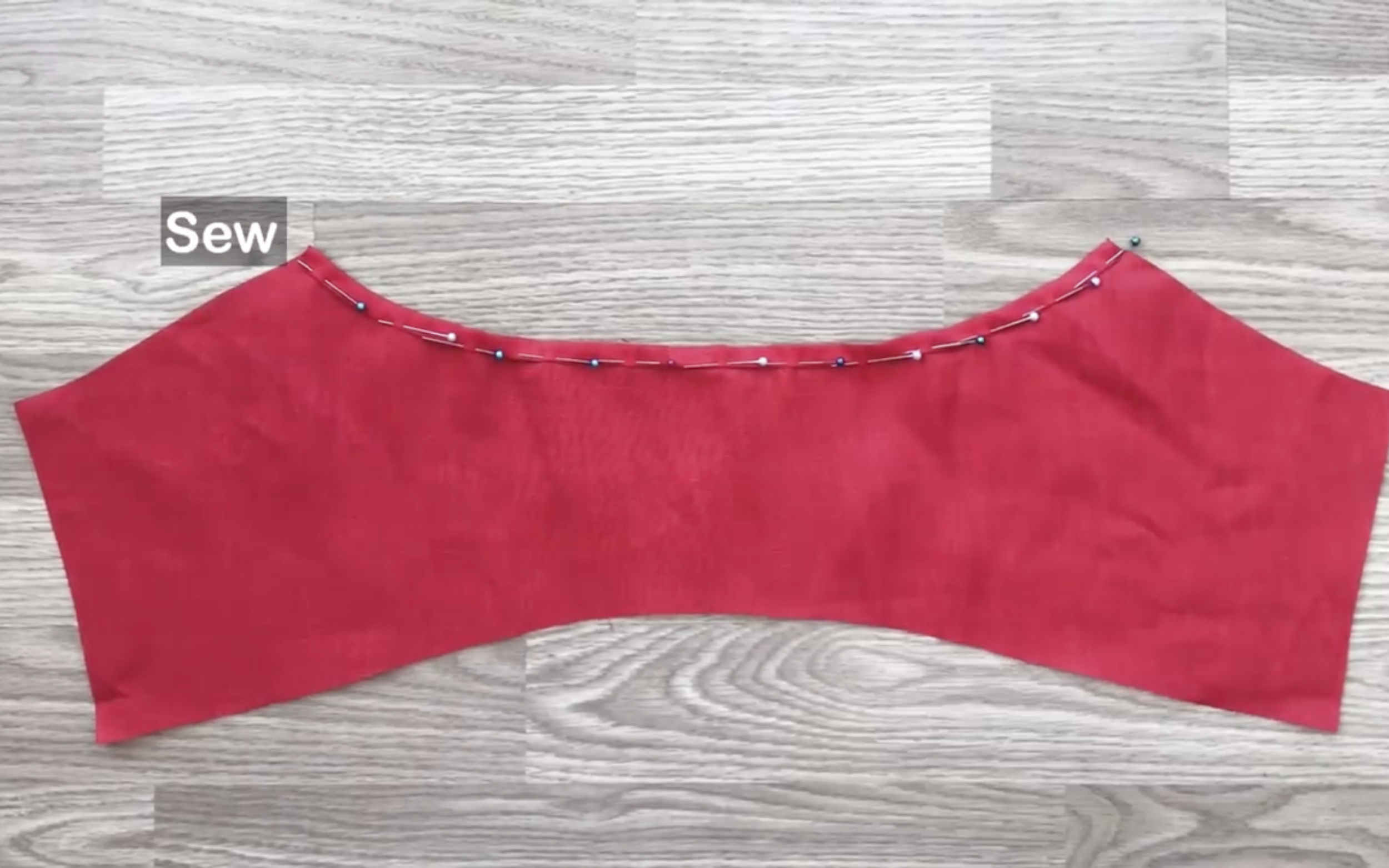
Fold the end of the top line inside around 0.5 cm, then fold again to the curved line to create a fabric hole with 1 cm width for the elastic band.
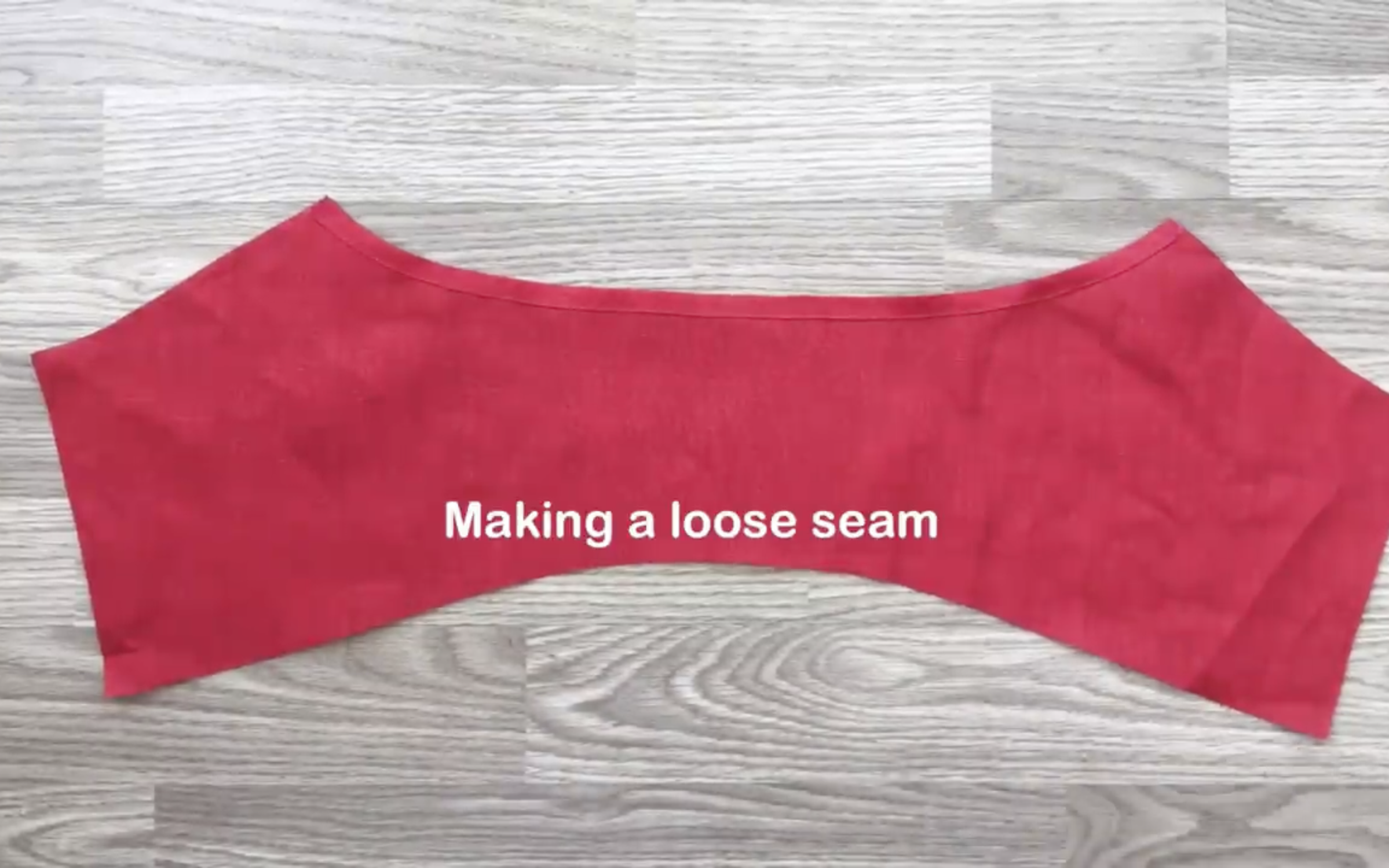
At the bottom of the top front piece, make a loose seam first, then create a gathering fabric around the bust area.
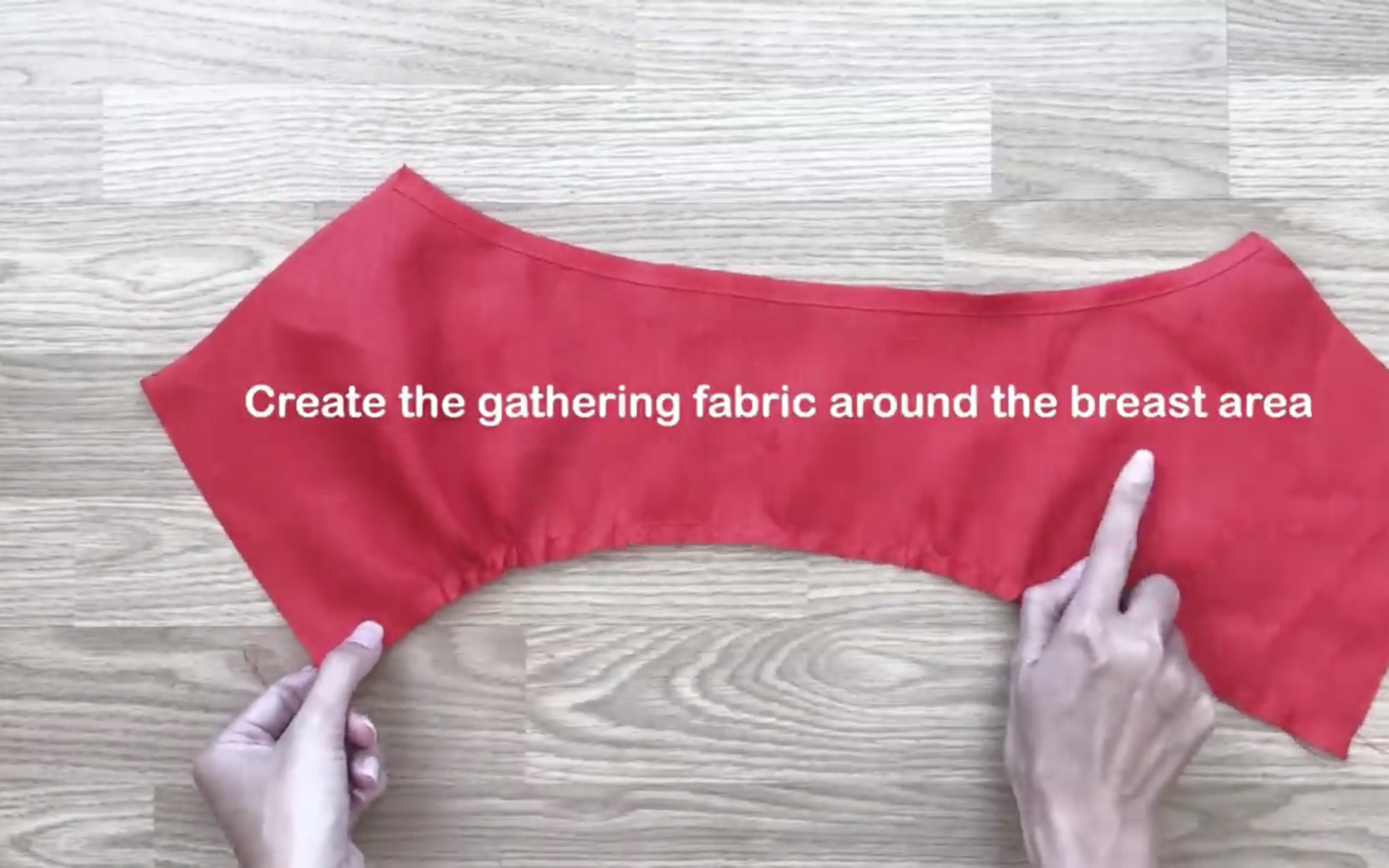
However, the gathering fabric is only around the bust area.
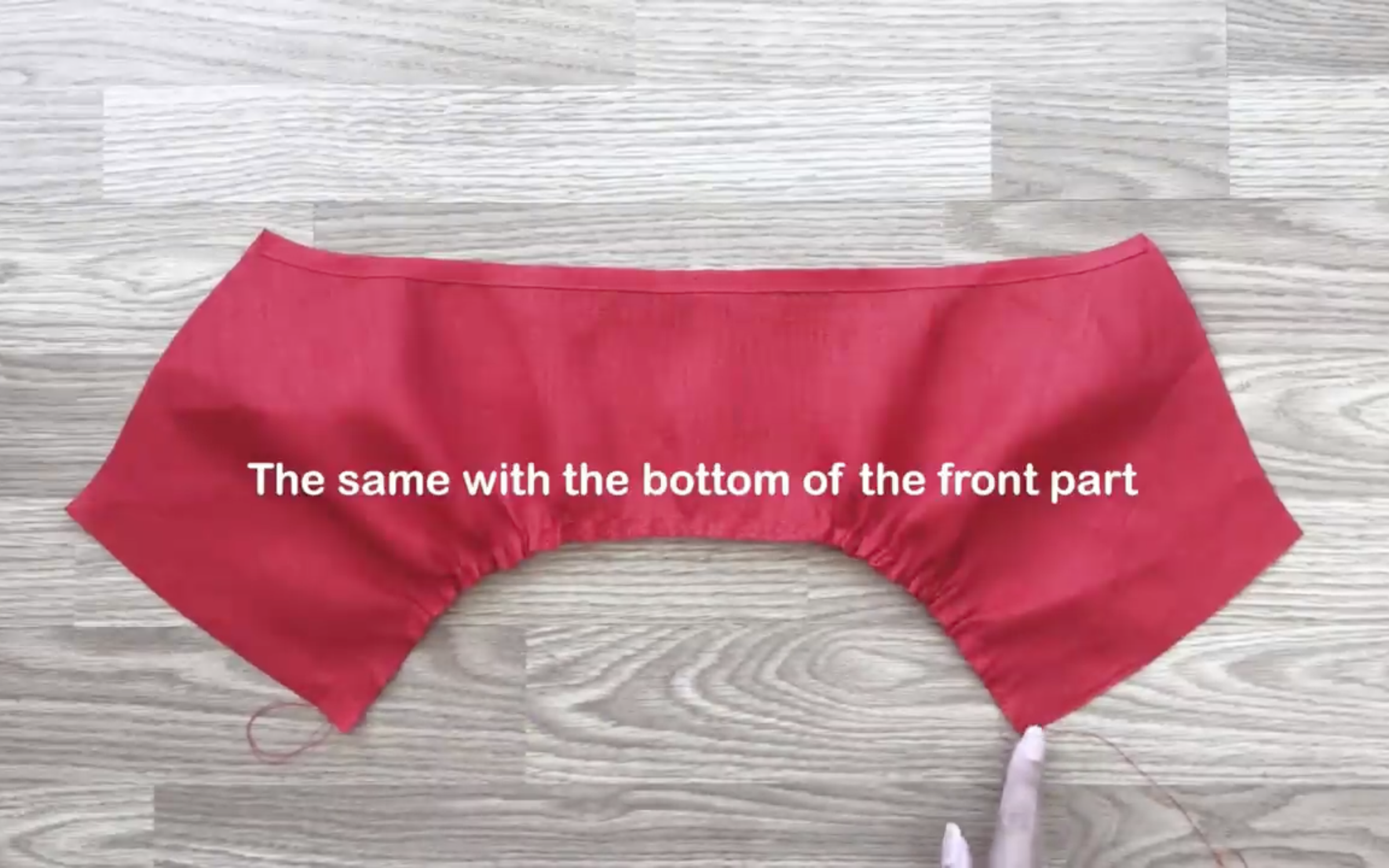
Make sure the final width of the ending line is 36 cm, matching the top line of the bottom front piece.
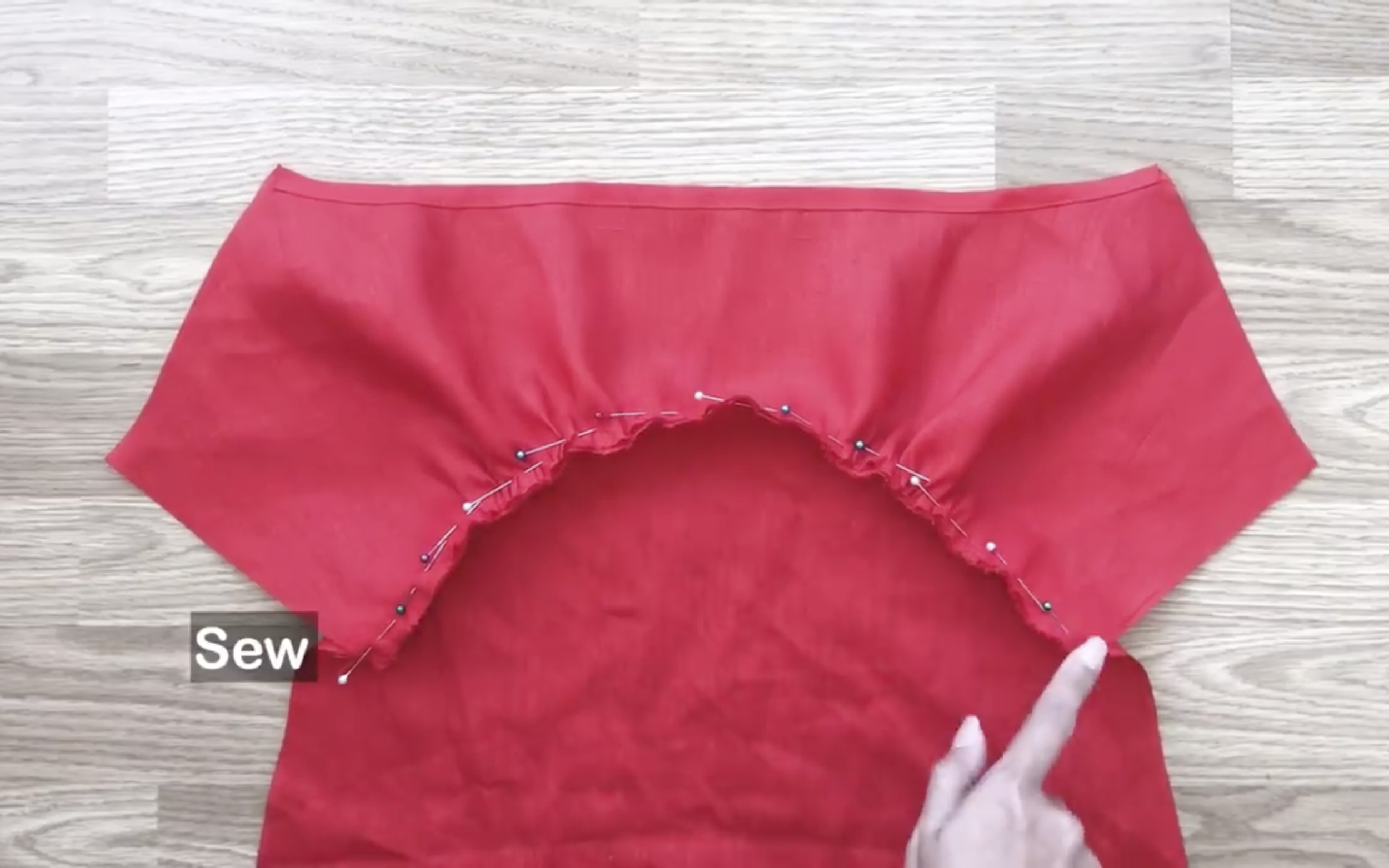
Then, connect the top of the front piece and the top line of the bottom front piece together.
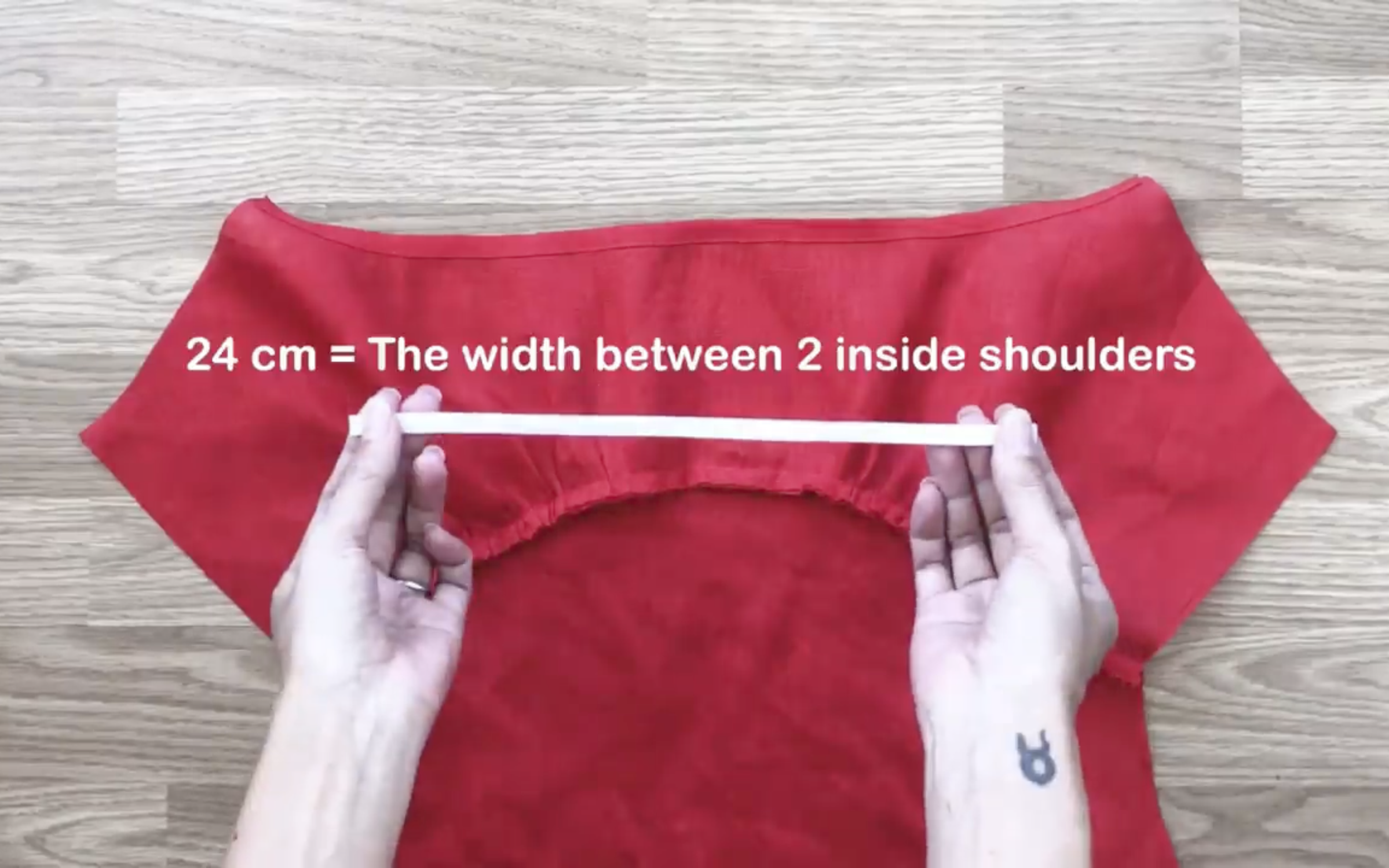
Cut a 24 cm elastic band, which matches the width between two inside shoulders for the sleeve placement.
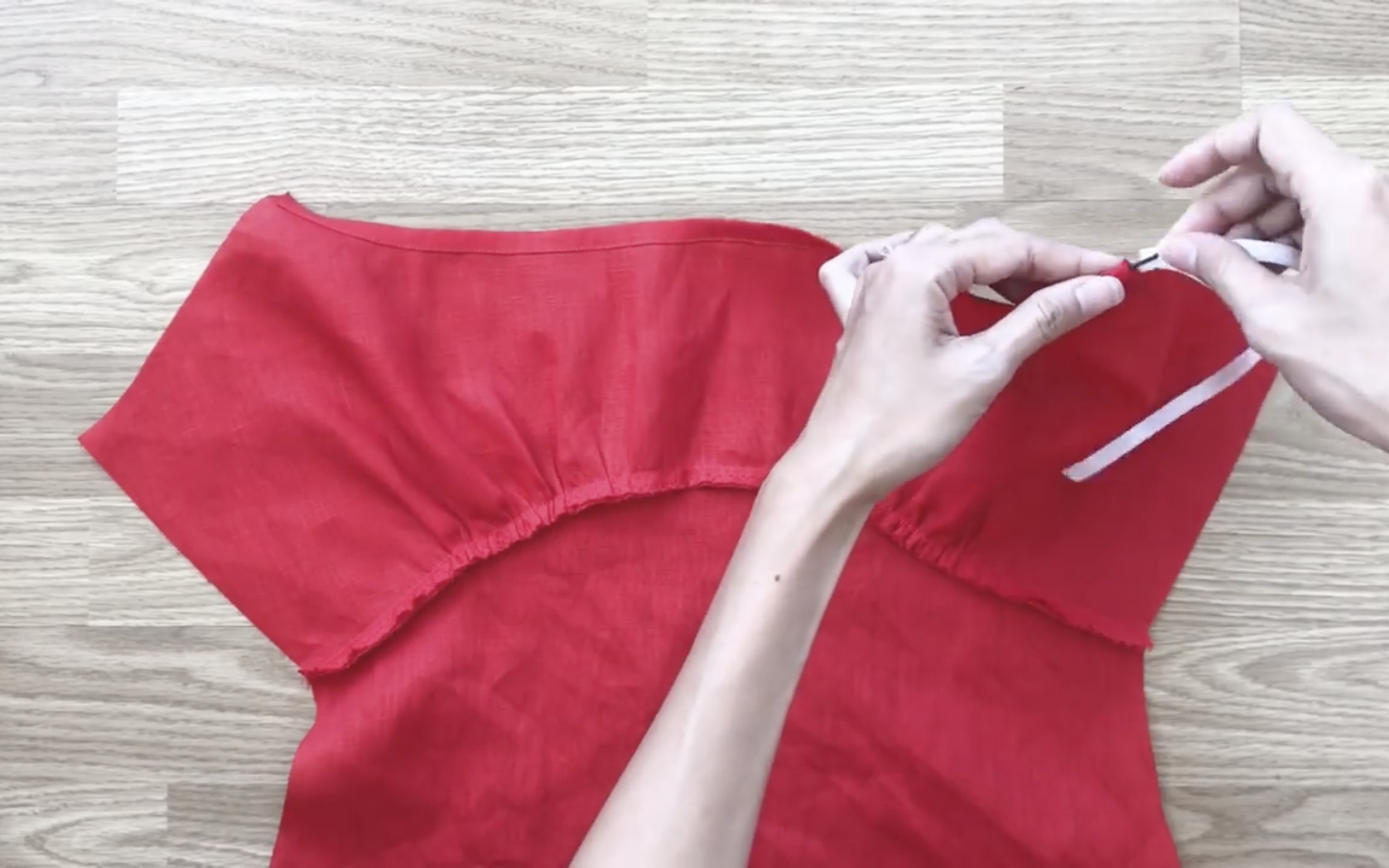
Thread the elastic band through the fabric hole.
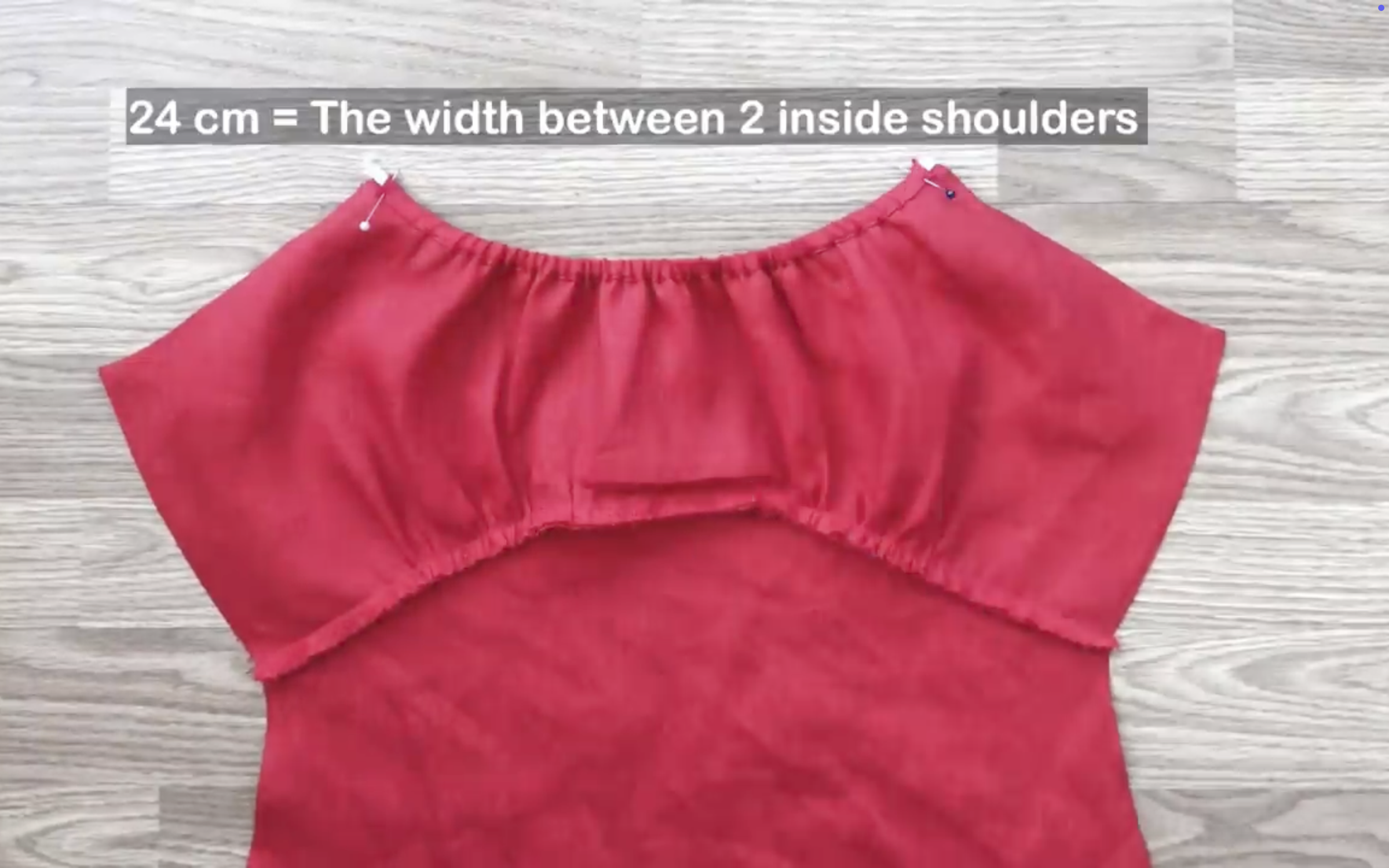
After that, sew the two ends of the elastic band to secure it.
THE BACK PART OF THE DRESS
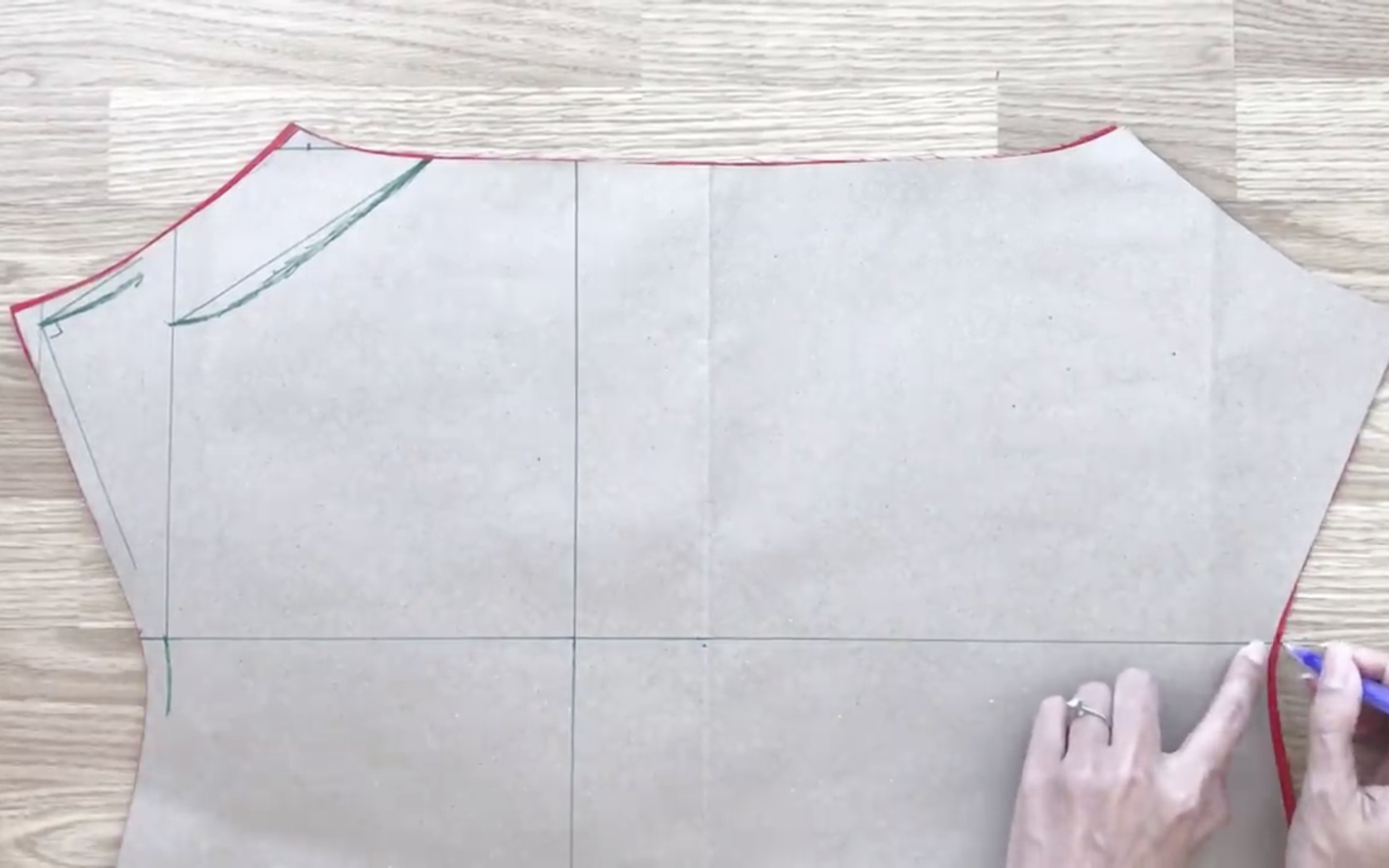
Moving to the back of the dress, mark the position of the under-bust line from the pattern to the fabric.
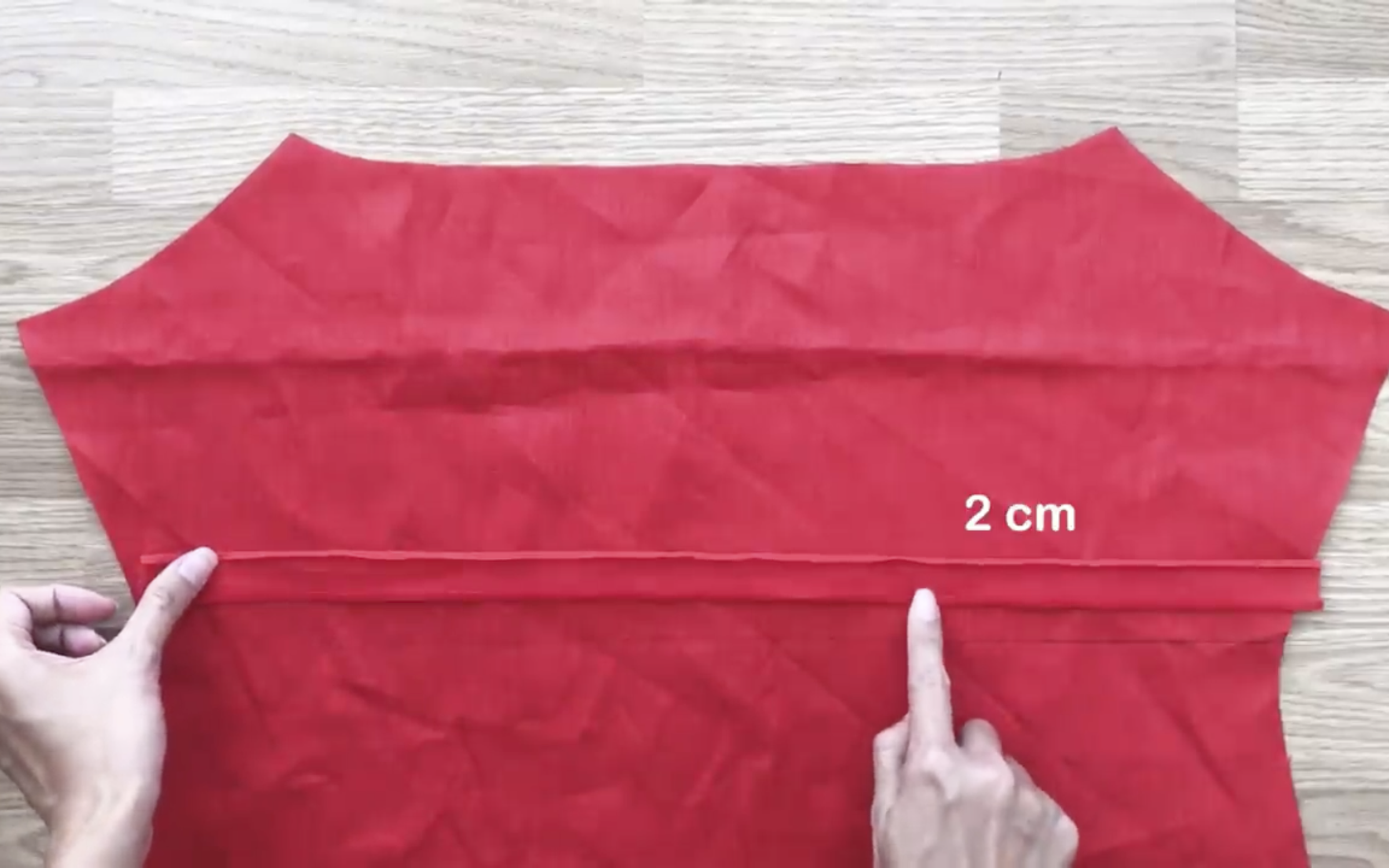
Cut a rectangle with 2 cm width and slightly longer than the under-bust line to create a fabric hole.
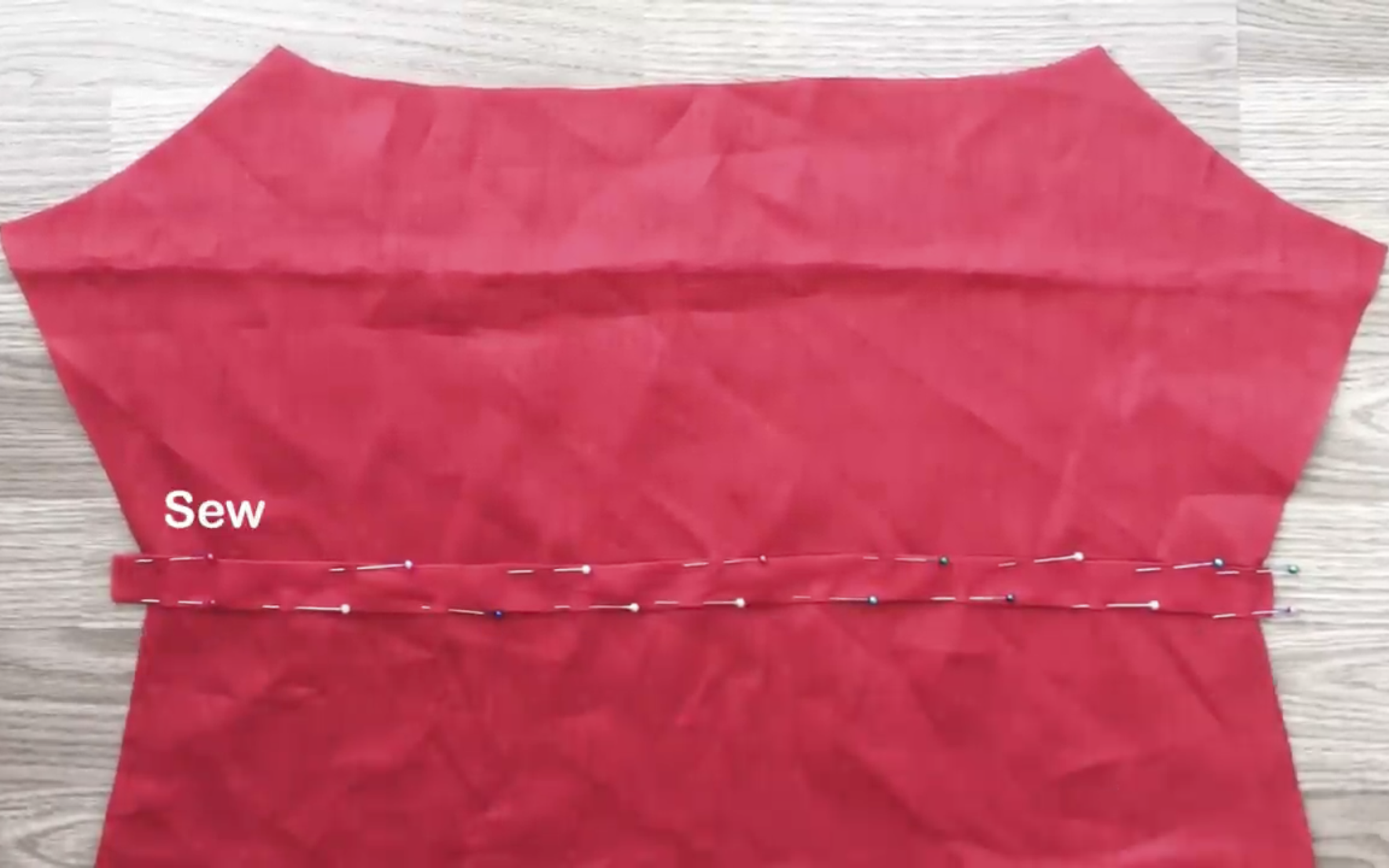
Then, attach it to the line drawn before.
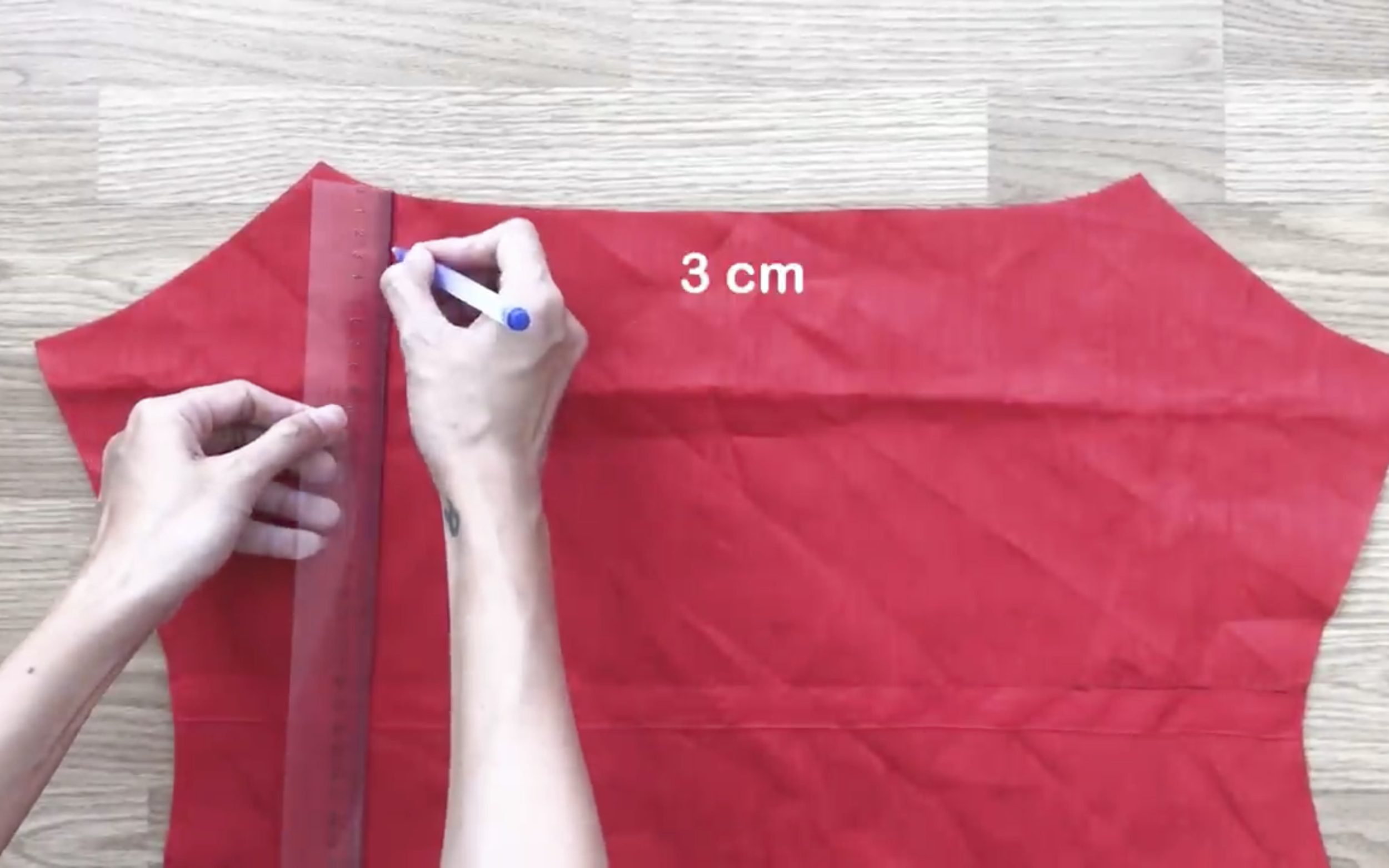
At the top of the back piece, draw a curved line 3 cm inside.
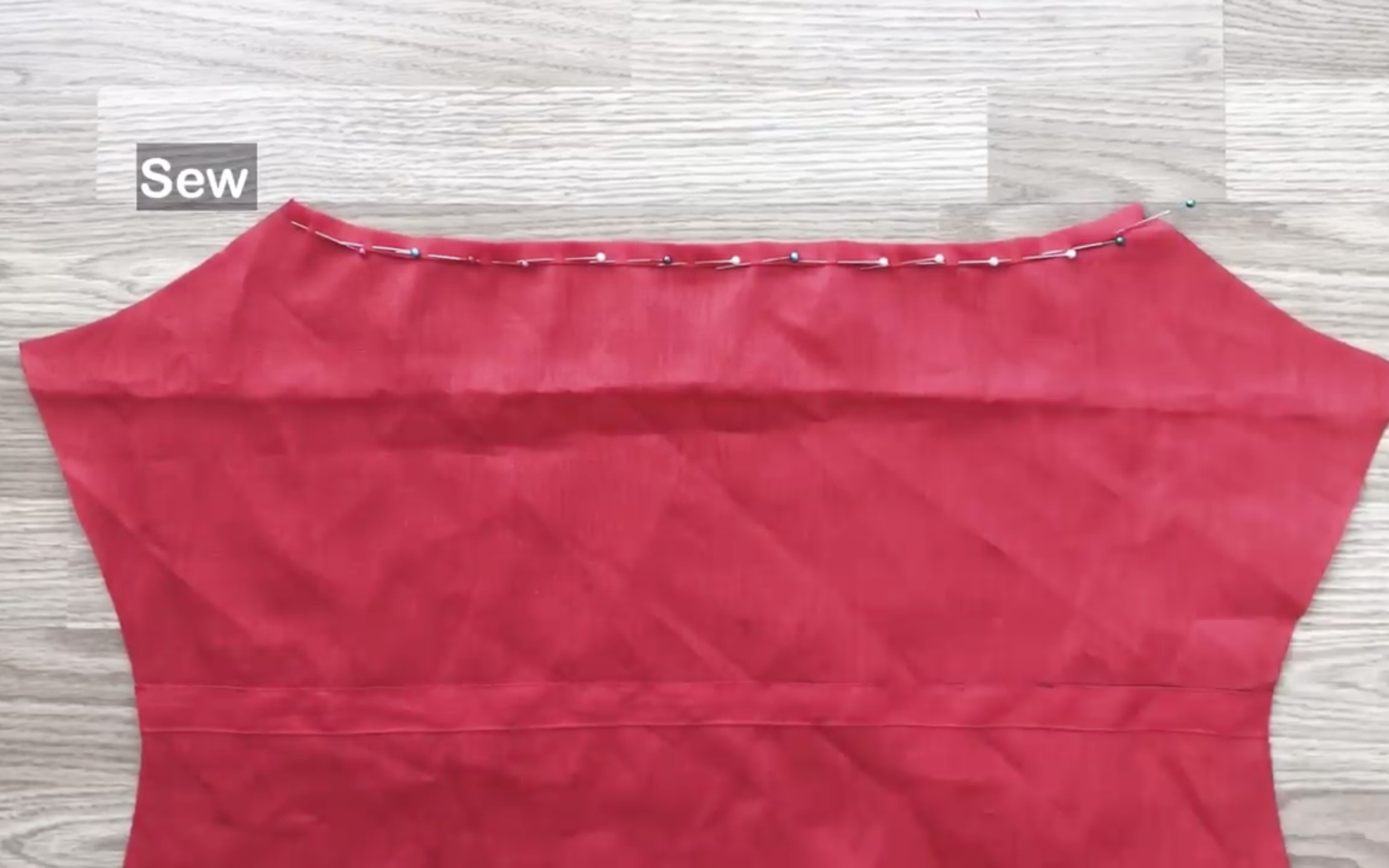
Fold the end of the top line inside around 0.5 cm, then fold again to the curved line to create a fabric hole for the elastic band.
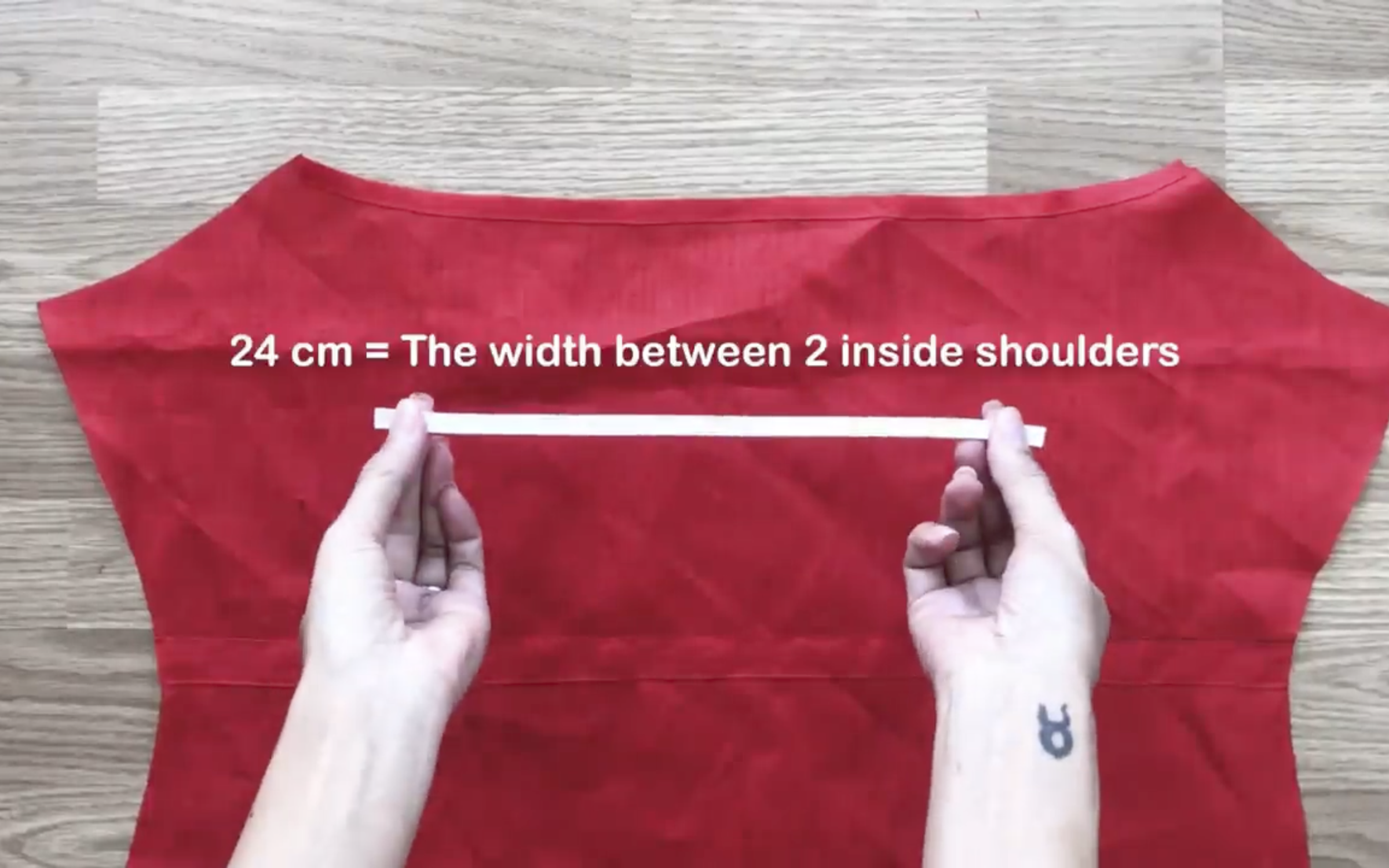
After sewing, cut a 24 cm elastic band, matching the width between two inside shoulders for sleeve placement.
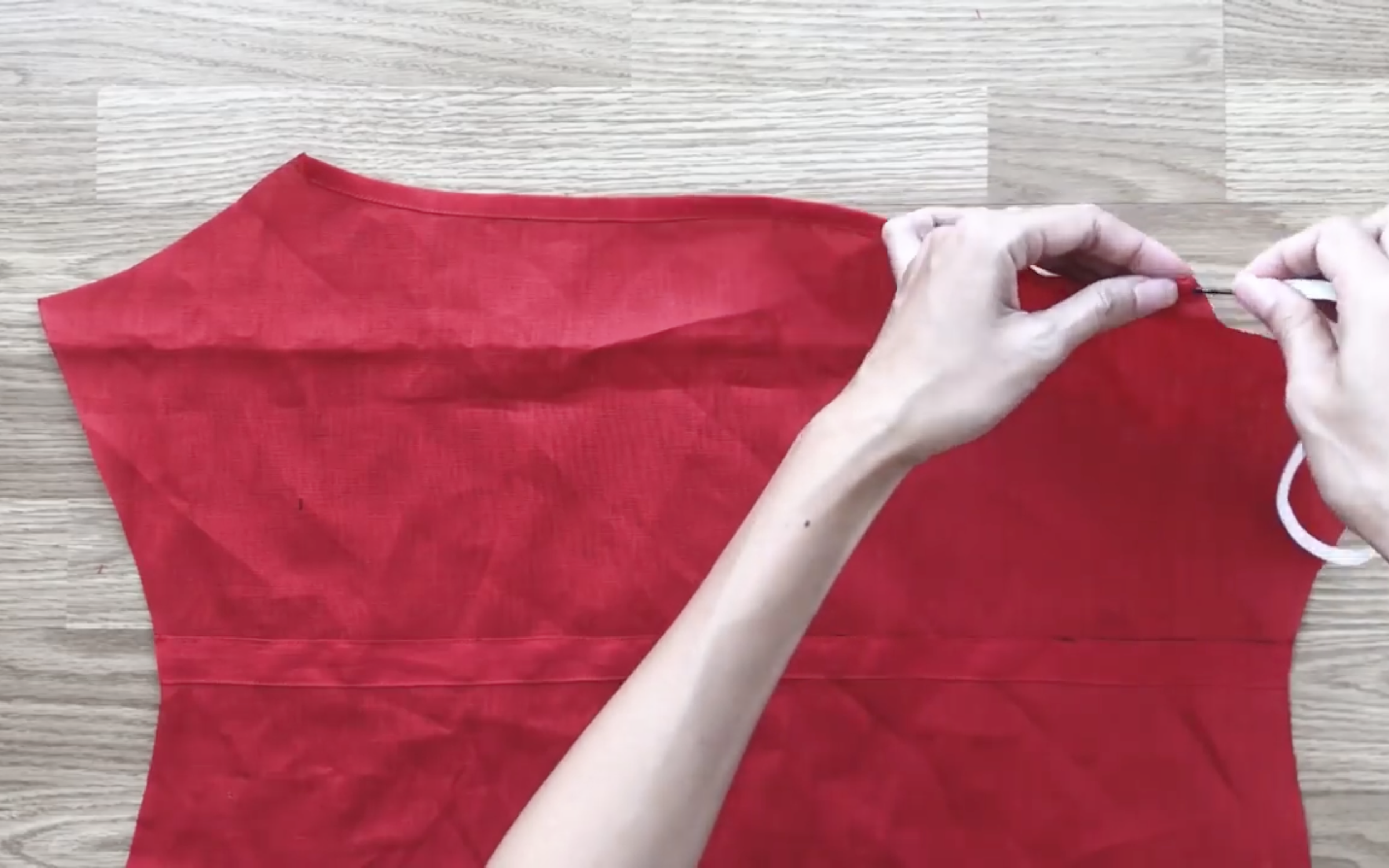
Thread the elastic band through the fabric hole.
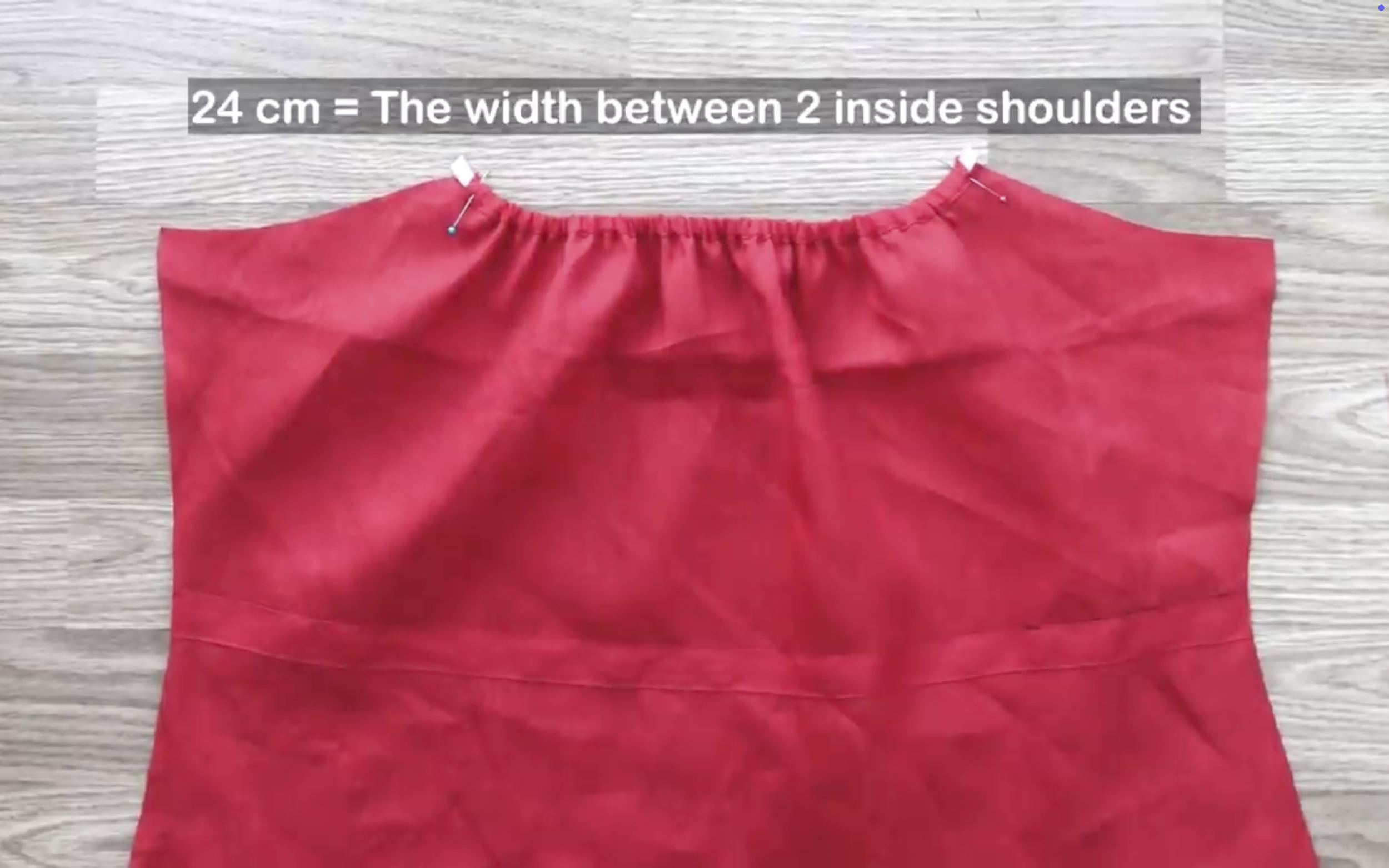
After that, sew the two ends of the elastic band to secure it.
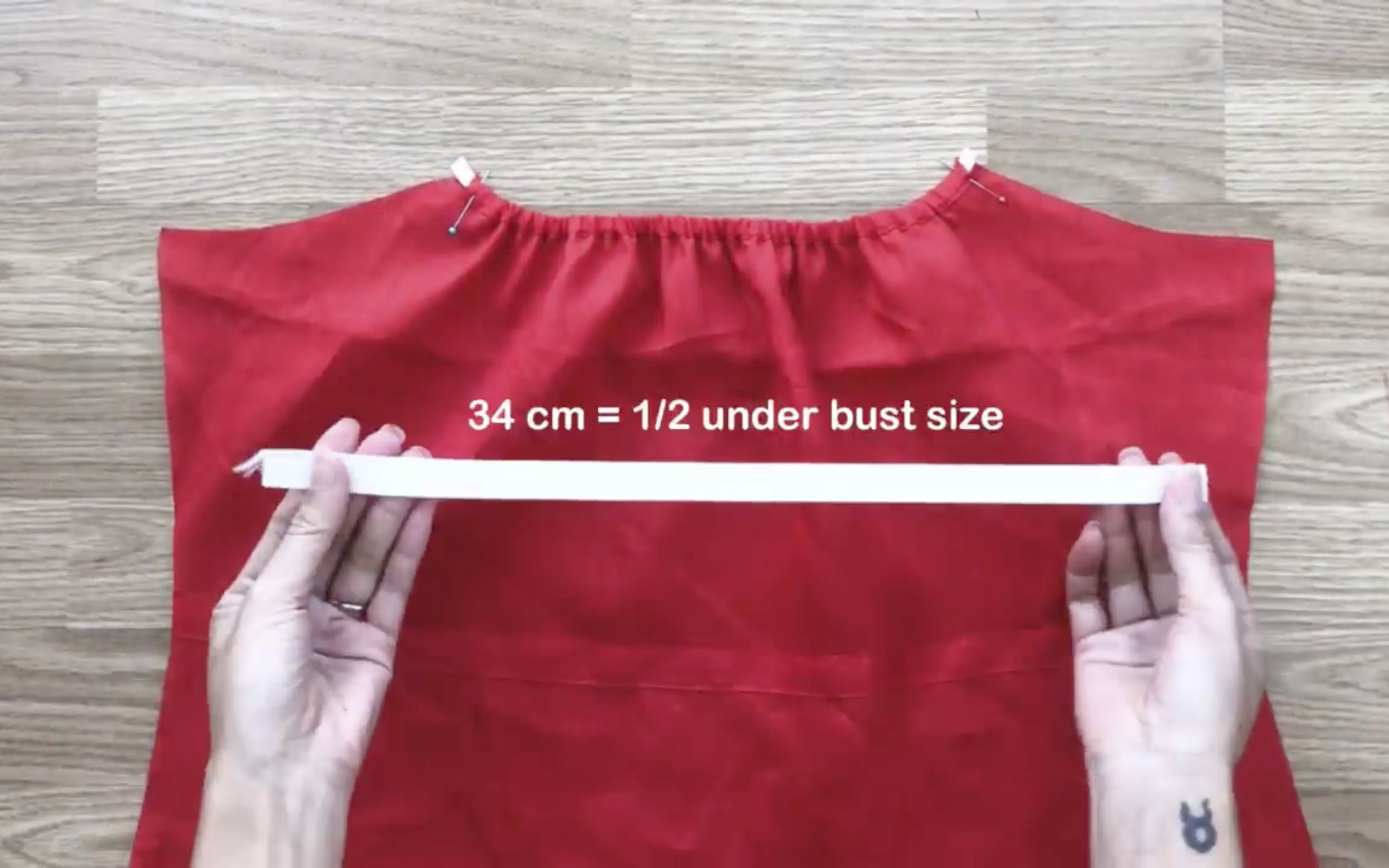
For the fabric hole at the under-bust line, cut a 34 cm elastic band, which is half of the under-bust size.
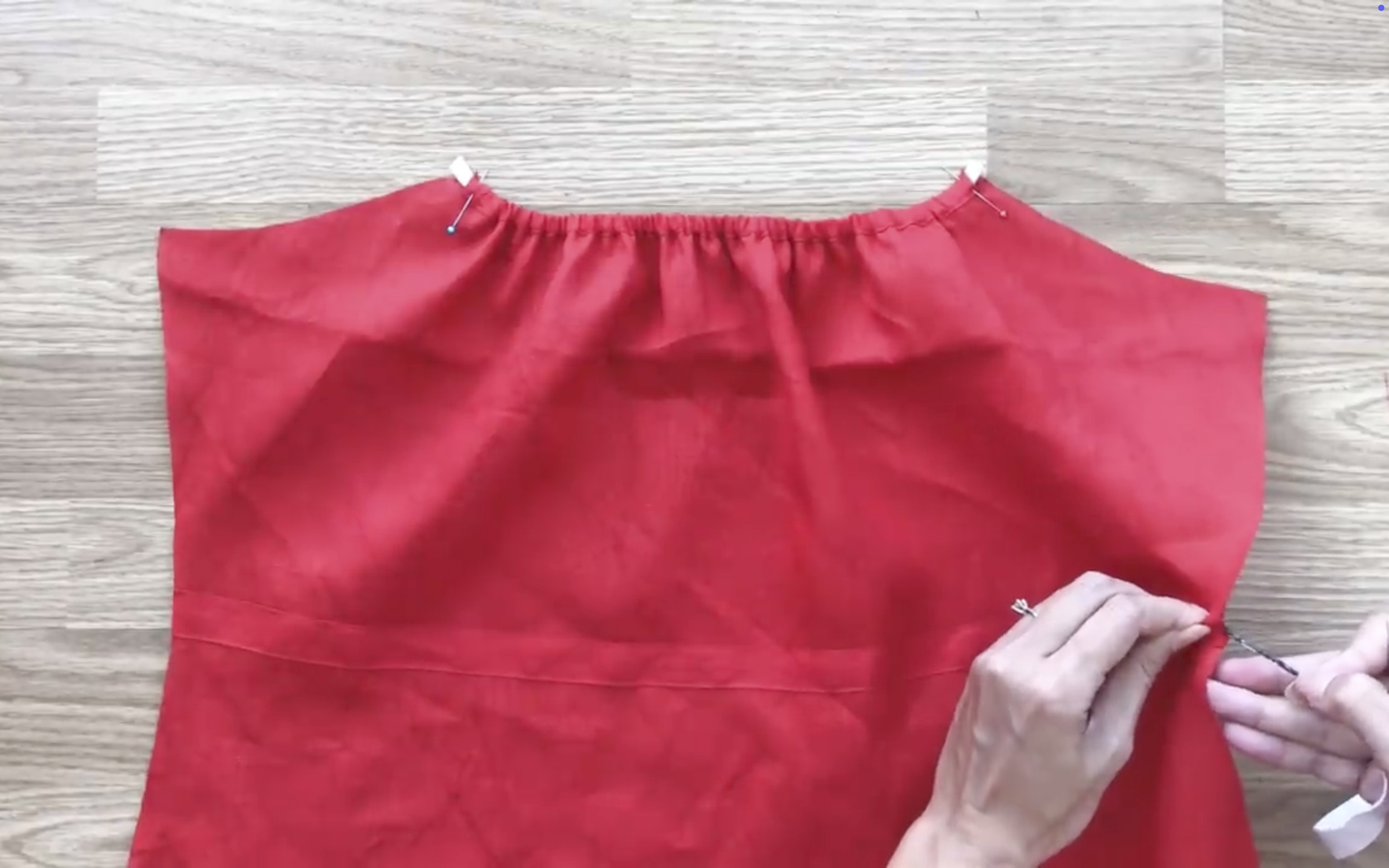
Thread the elastic bands through the fabric holes.
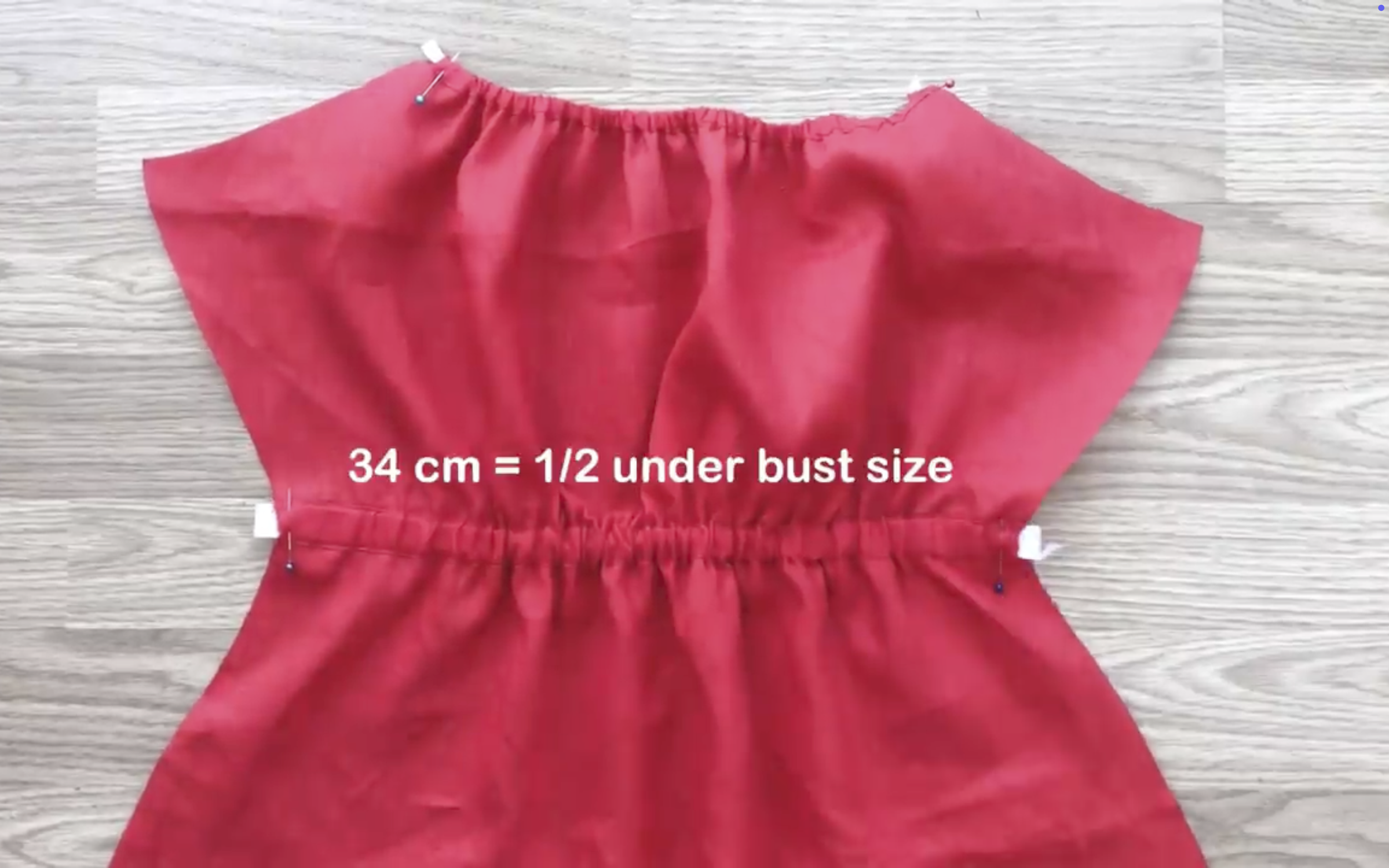
Then, sew the ends to secure them.
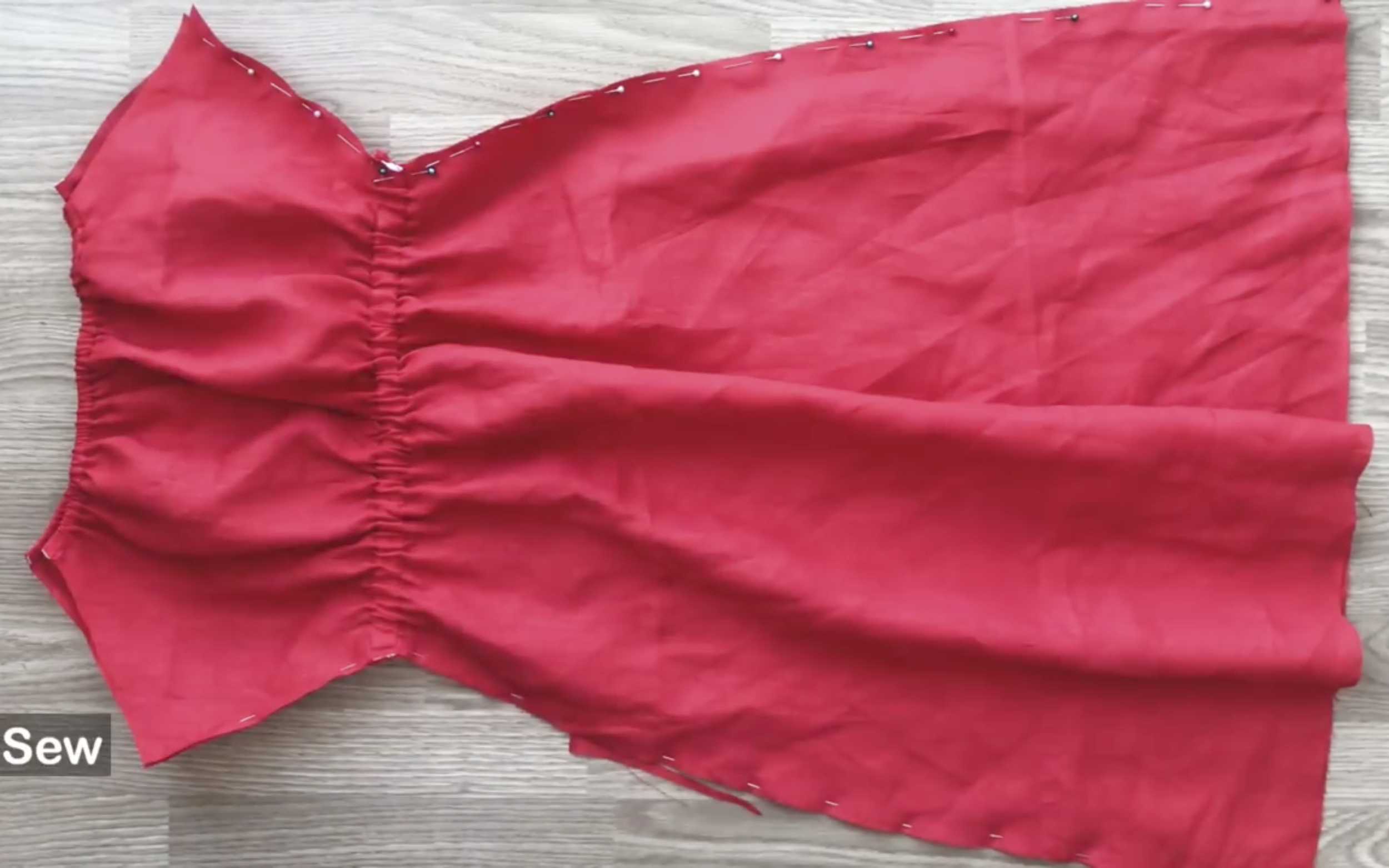
Connect the front and back of the dress at both sides and sew.
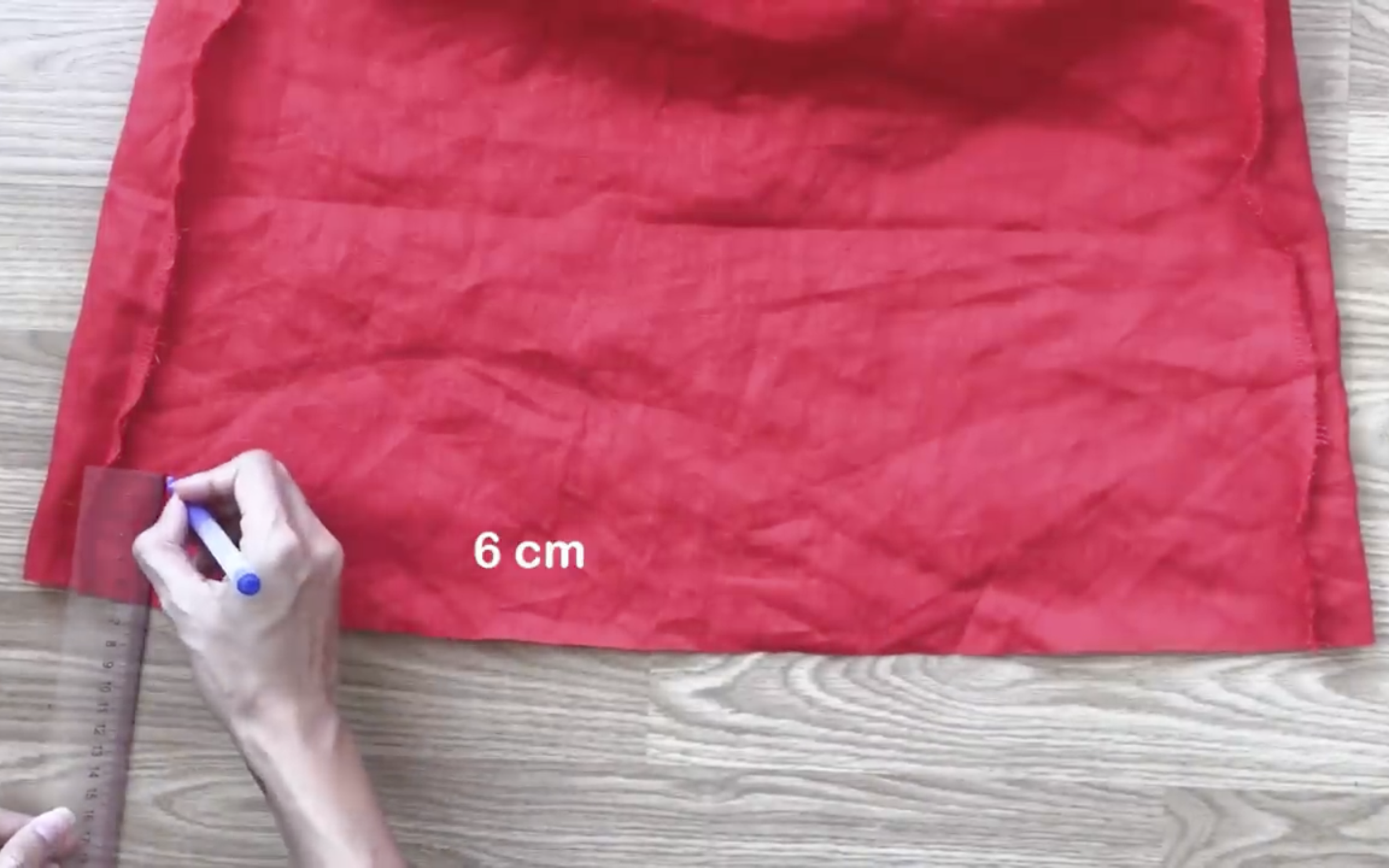
At the bottom of the dress, draw a line 6 cm inside the ending line.
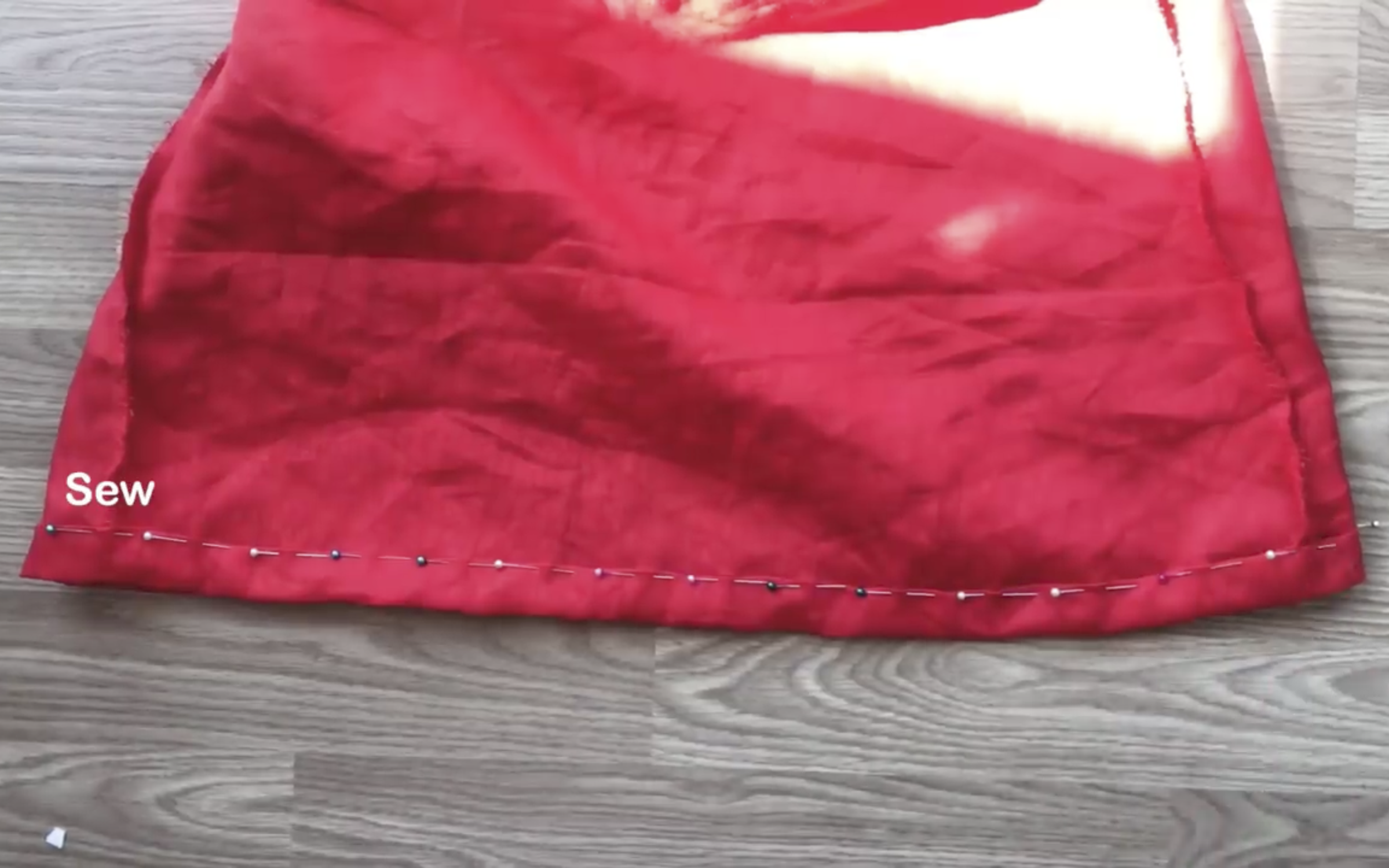
Fold the fabric end inside around 1 cm, then fold again over the line and sew to finish the hem.
THE SLEEVE
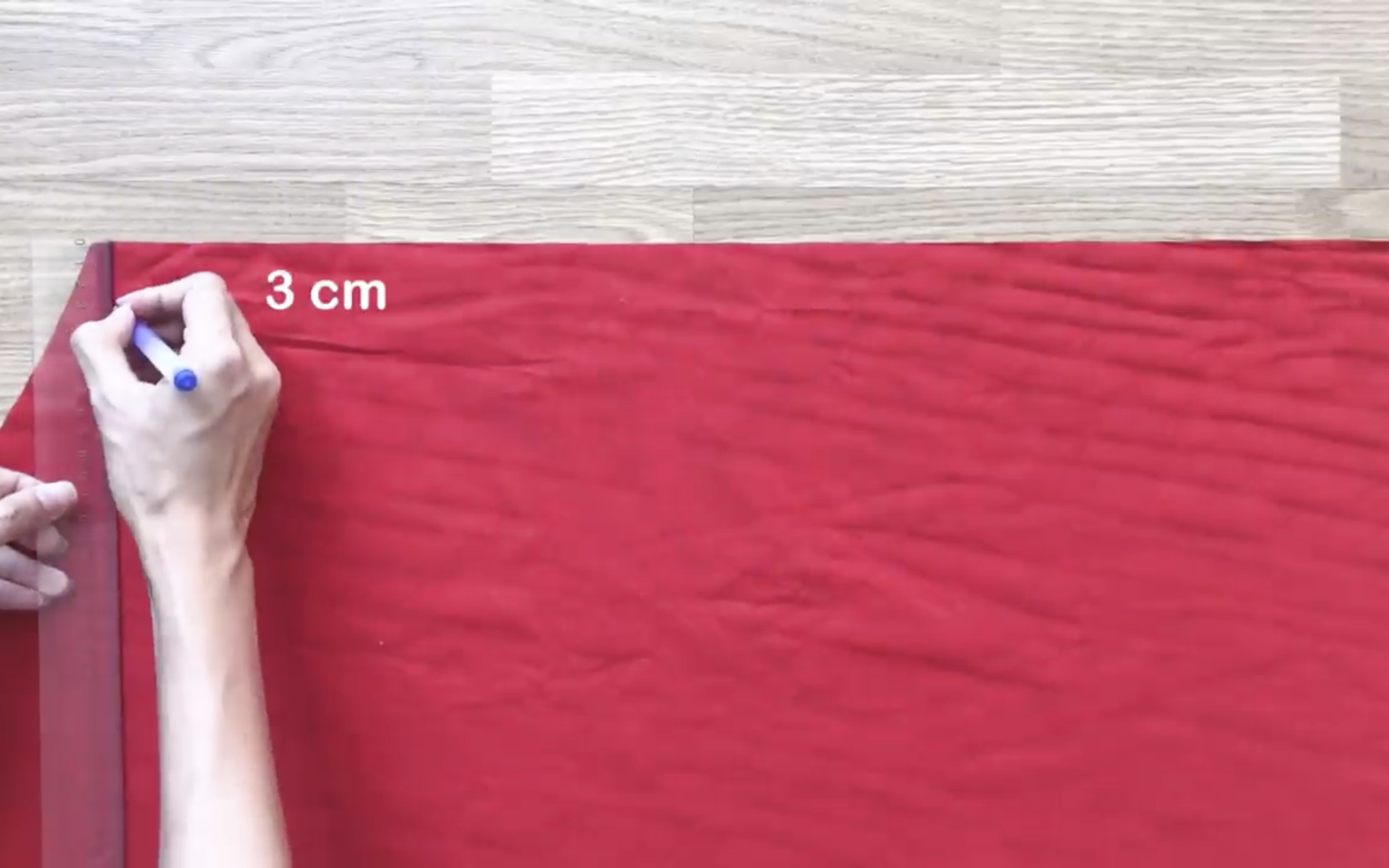
Moving to the sleeves, draw a line 3 cm inside the top edge of the sleeve.
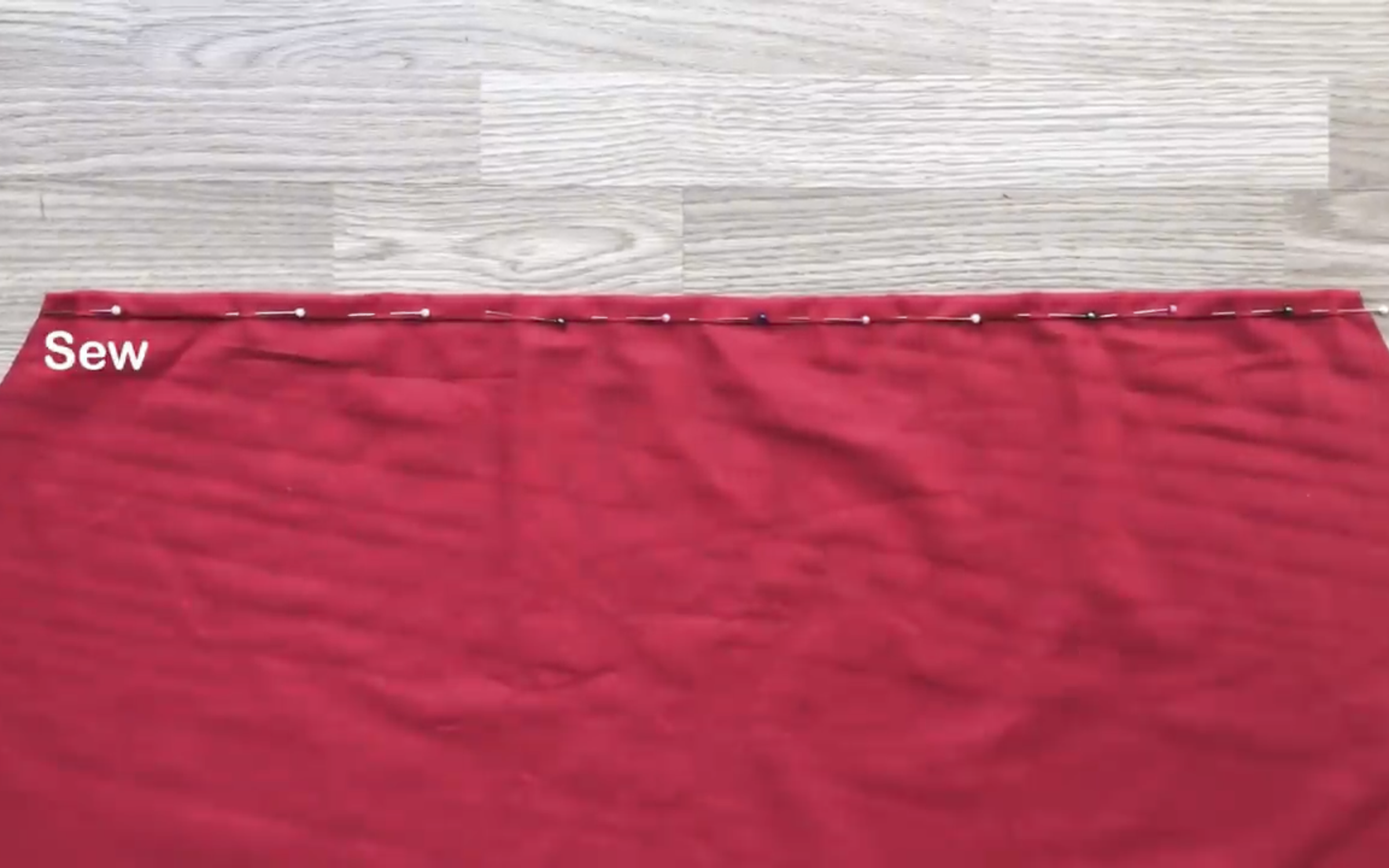
Fold the end fabric inside around 0.5 cm, then fold again to the line and sew to create a fabric hole.
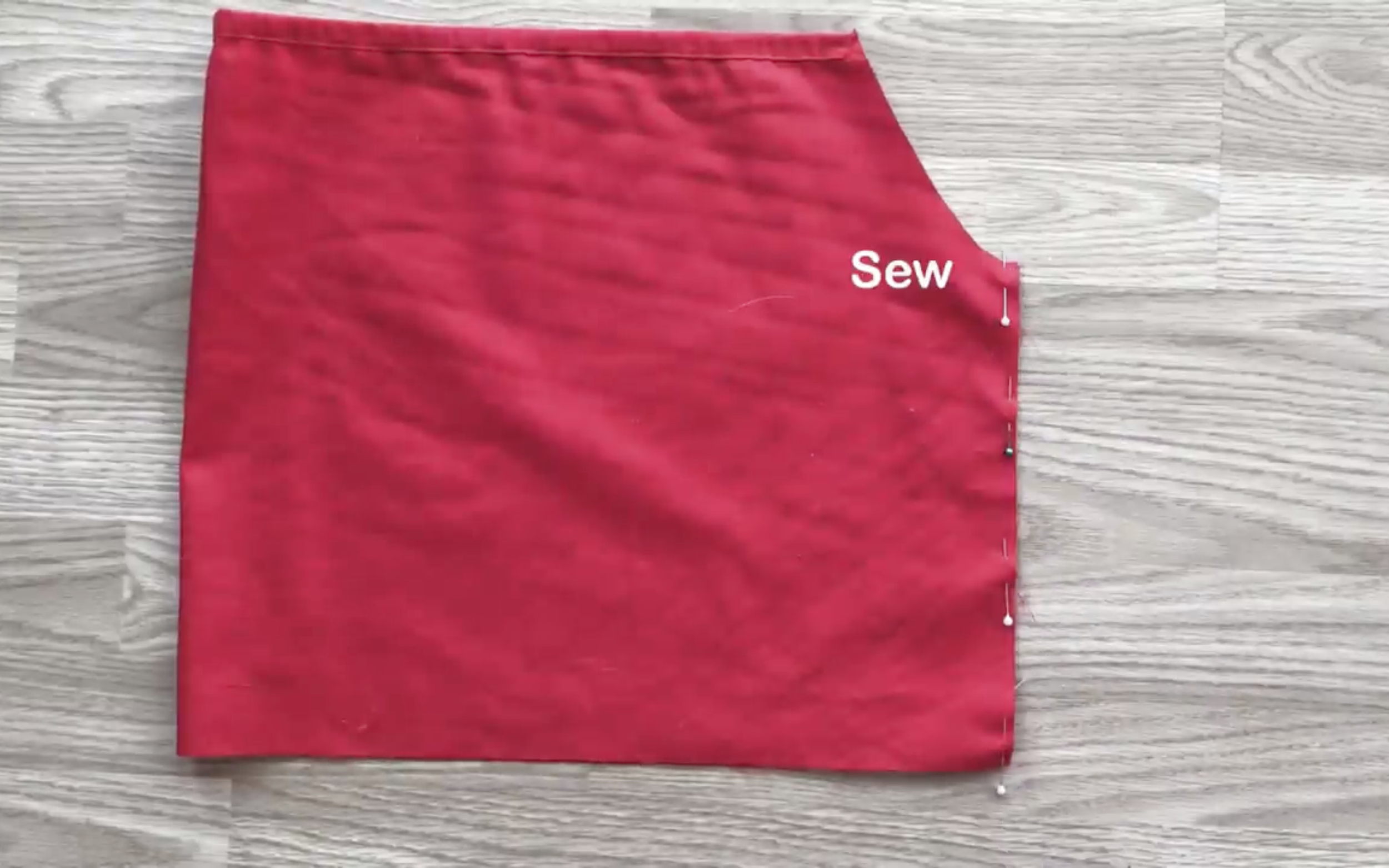
Sew the underarm seam of the sleeve.
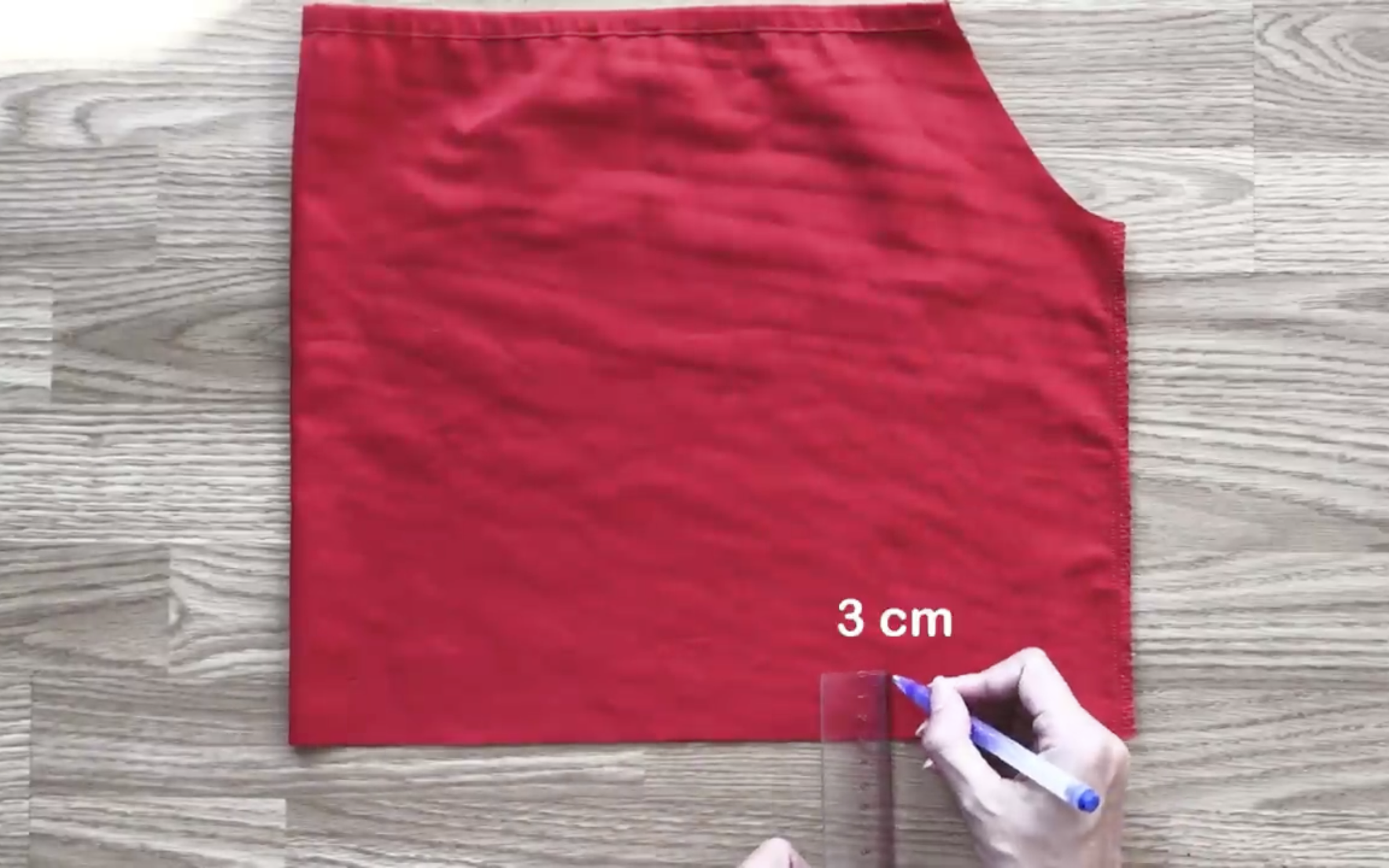
At the bottom of the sleeve, draw a line 3 cm inside.
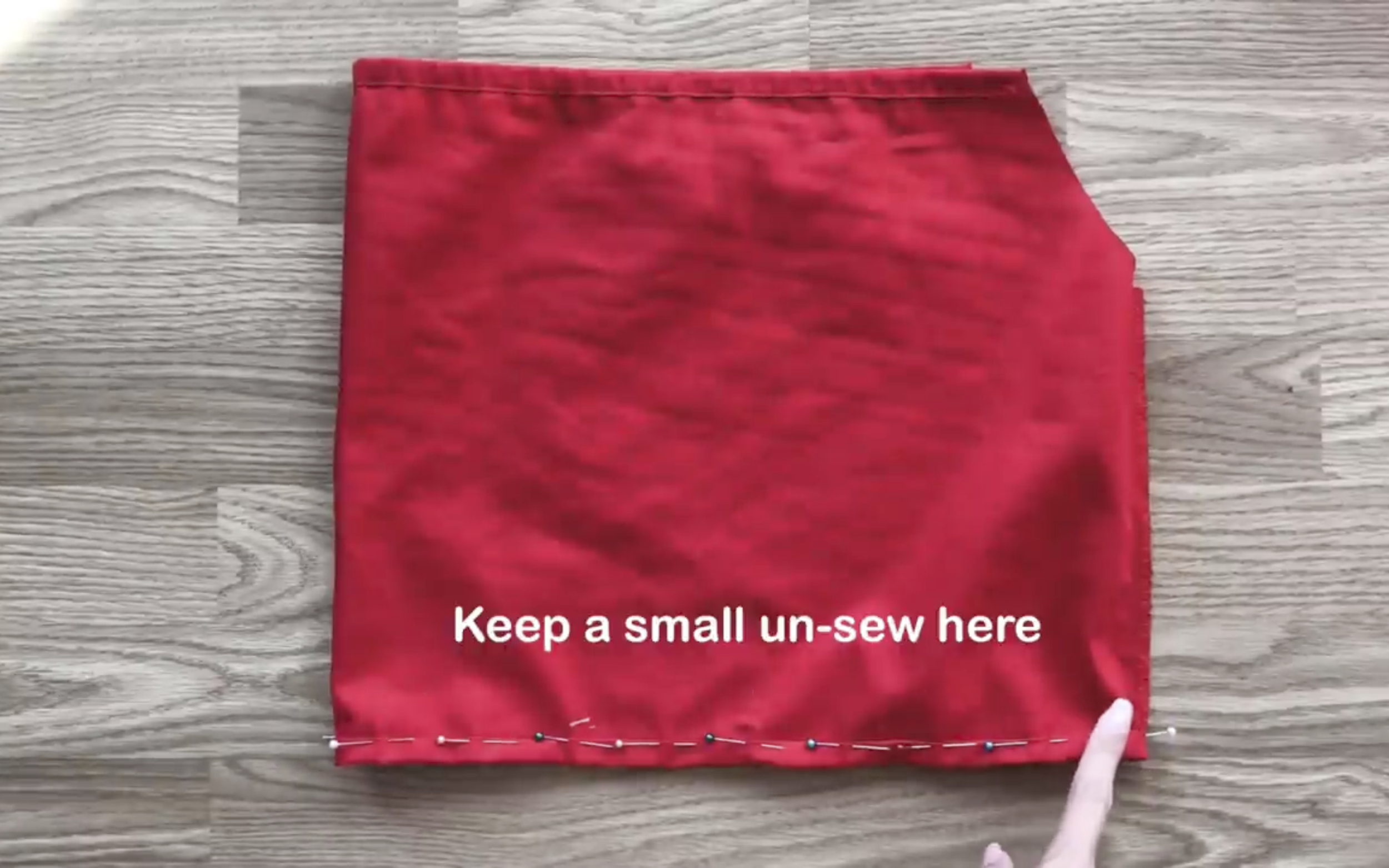
Fold the fabric end inside 0.5 cm, then fold again to the line and sew to create a fabric hole.
Remember to keep a small un-sew space to put the elastic band through later.
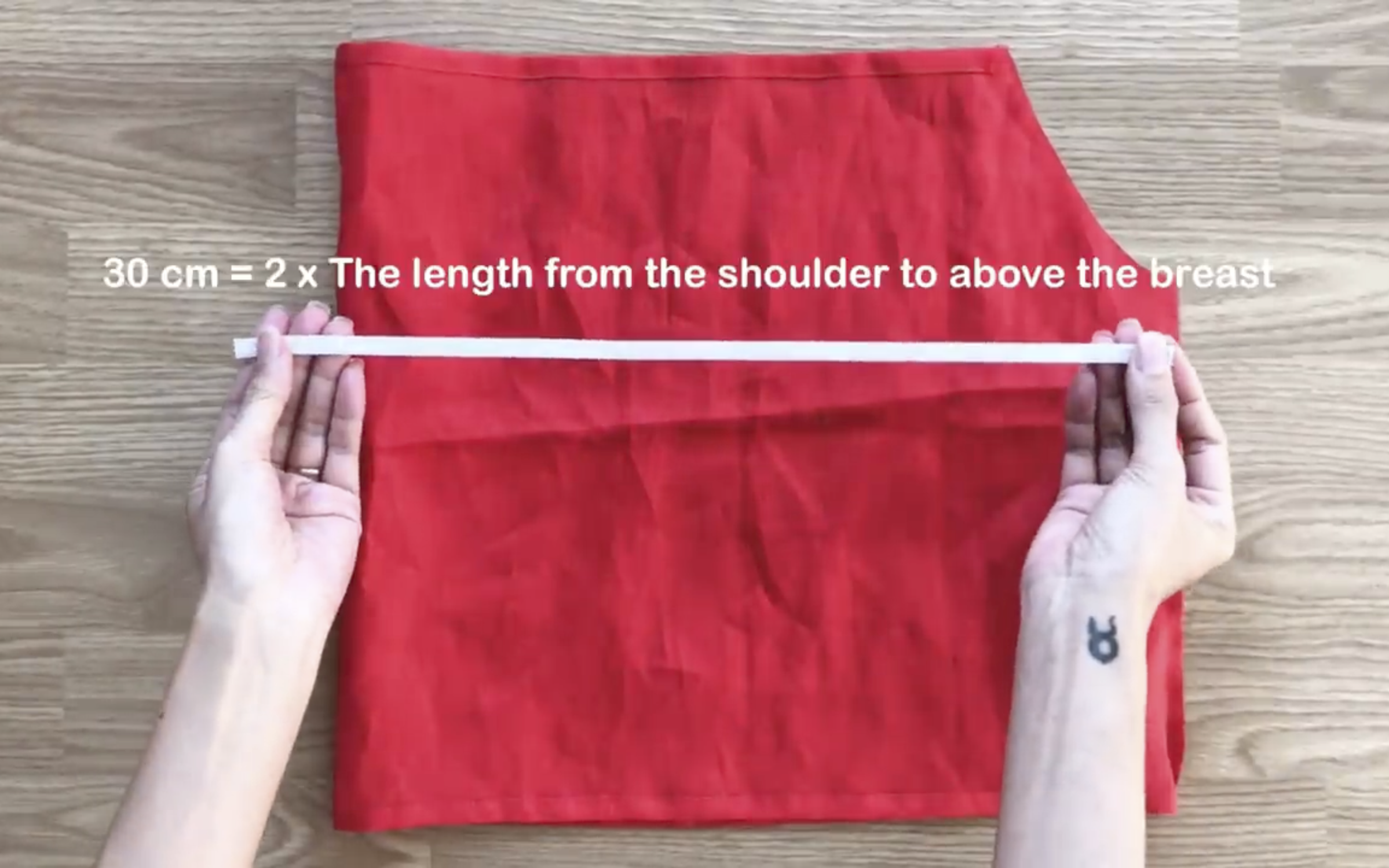
Insert a 30 cm elastic band at the top of the sleeve, which is twice the length from the shoulder to above the breast.
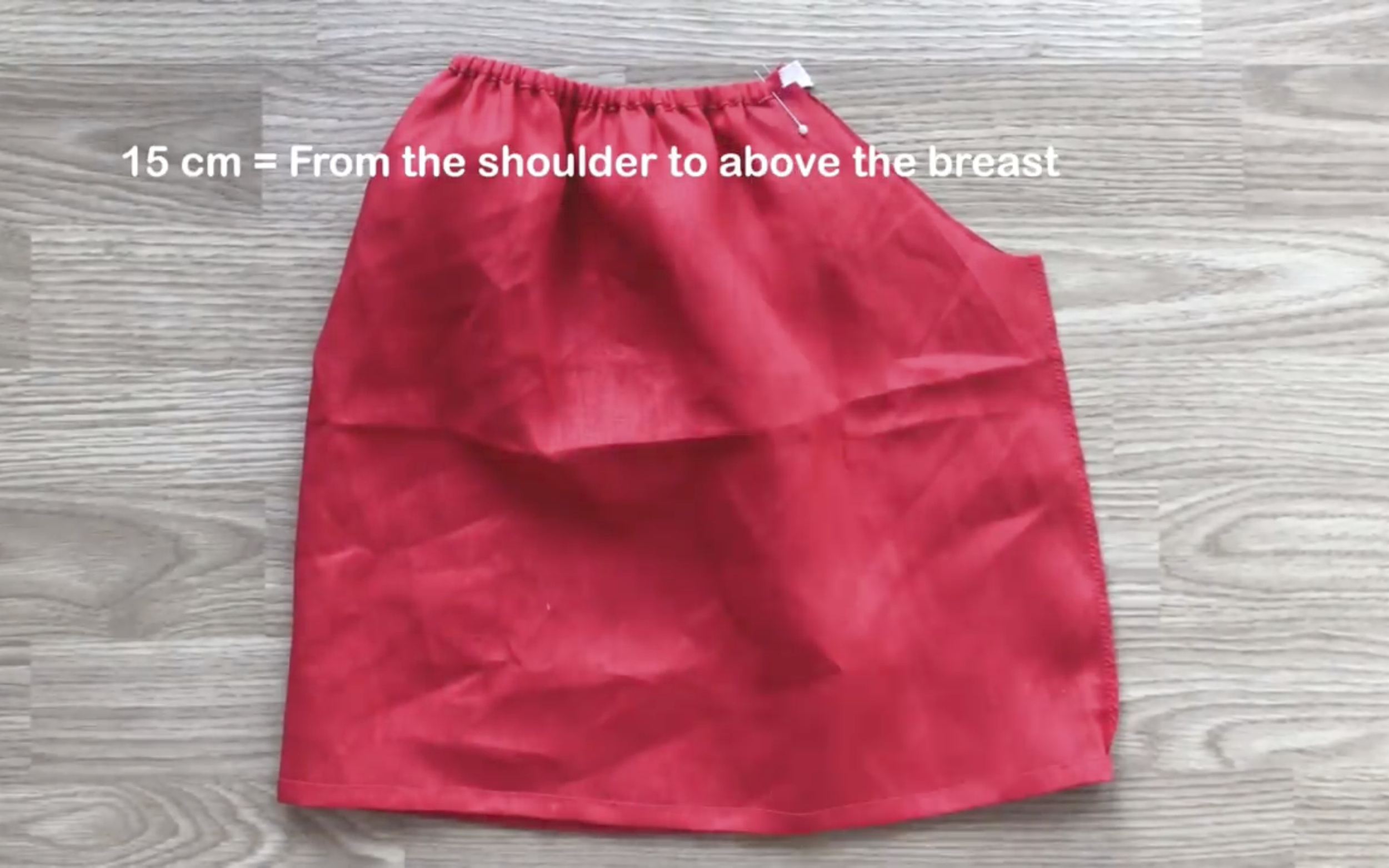
After that, sew the two ends of the elastic band to secure it.
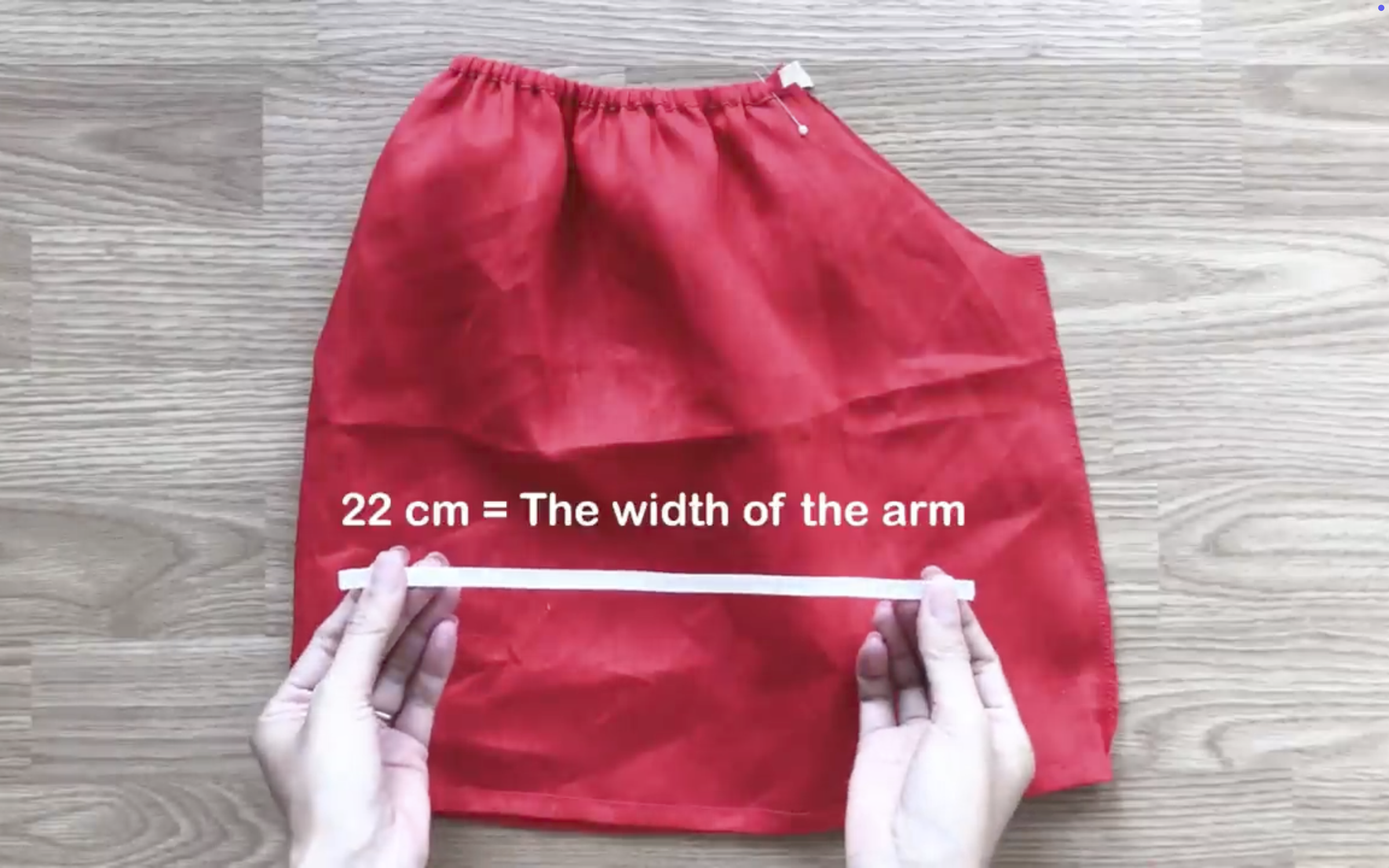
For the bottom of the sleeve, cut a 22 cm elastic band, matching the arm width.
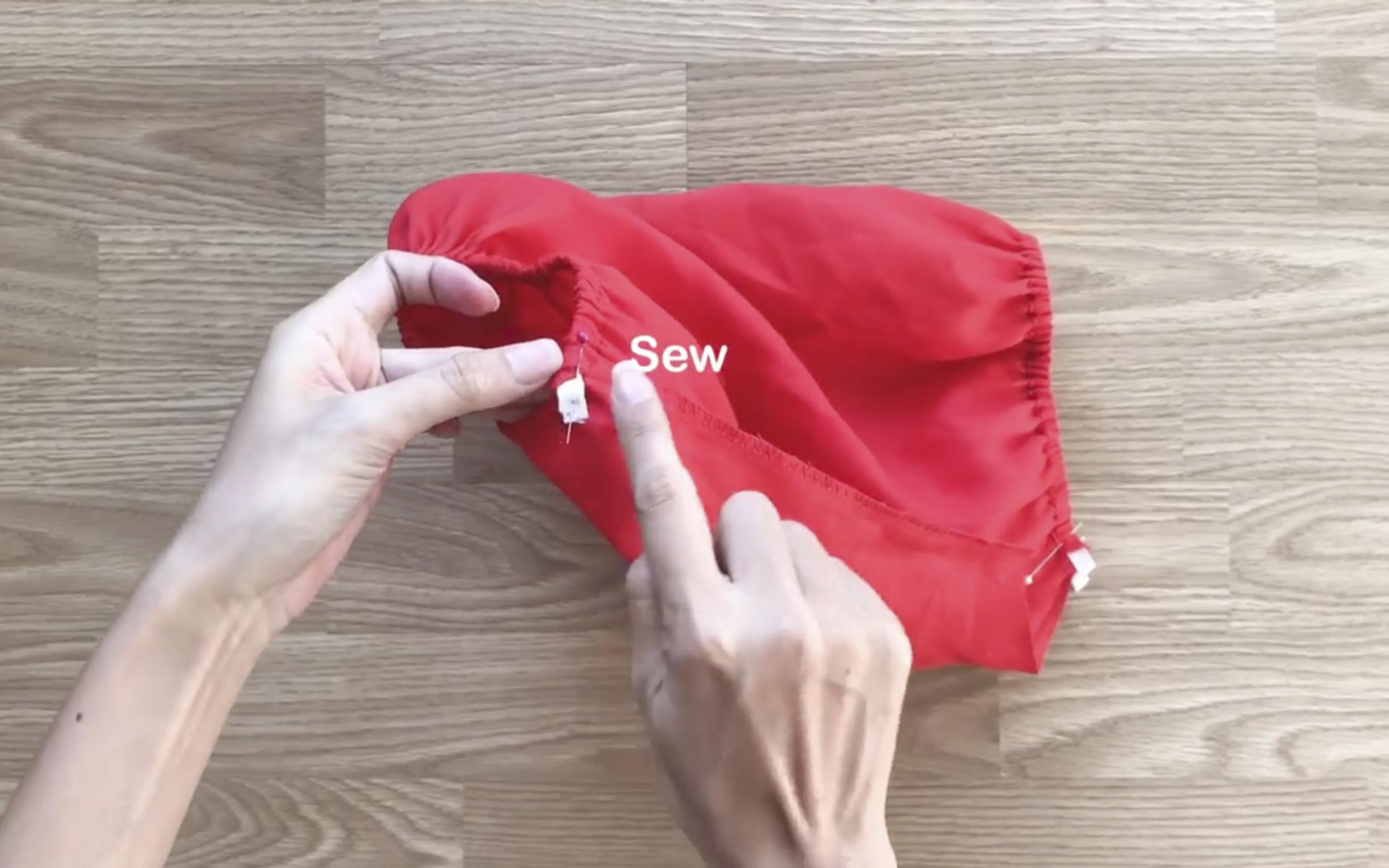
Thread the elastic bands through the fabric holes and secure the ends.
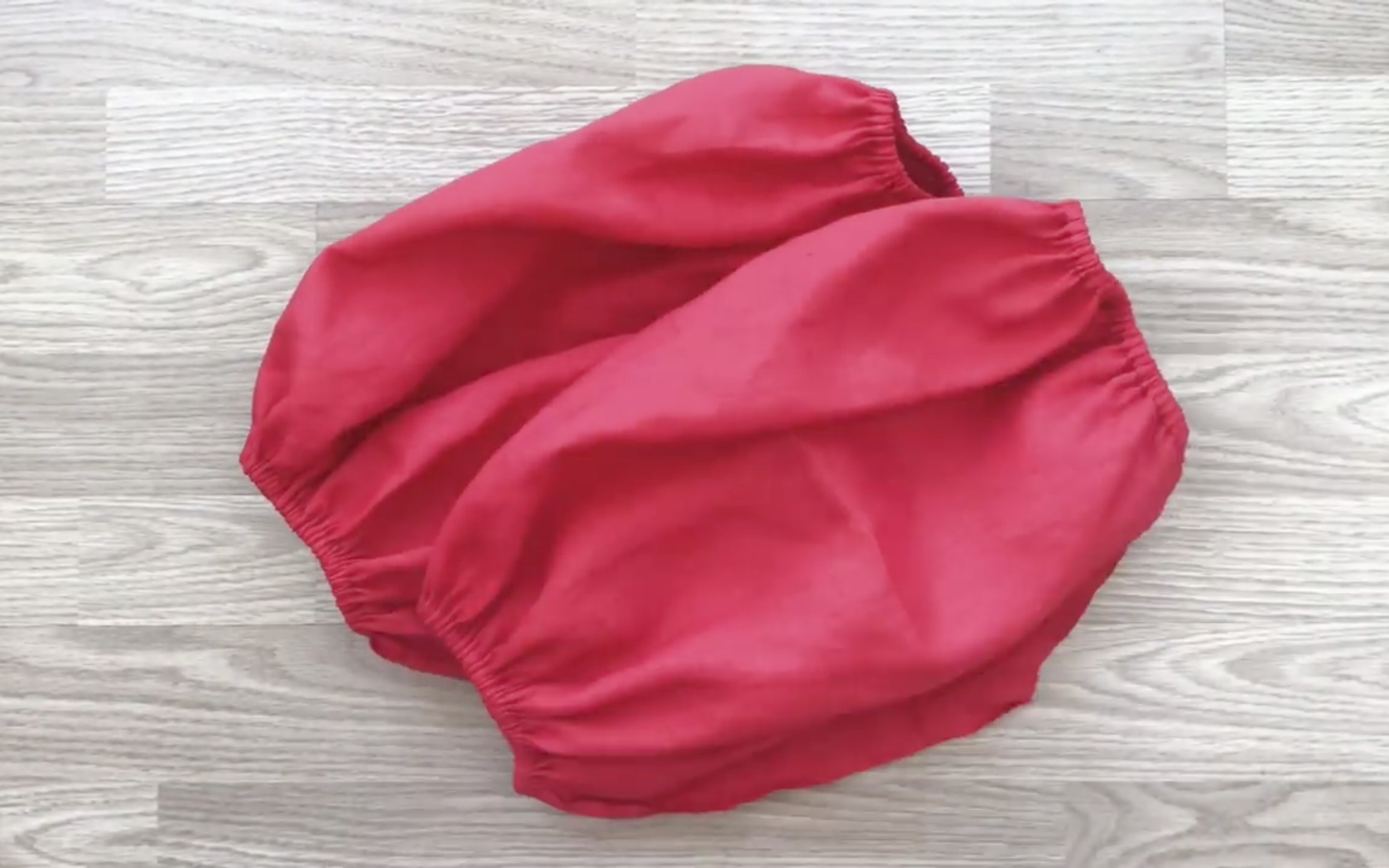
Make another sleeve piece.
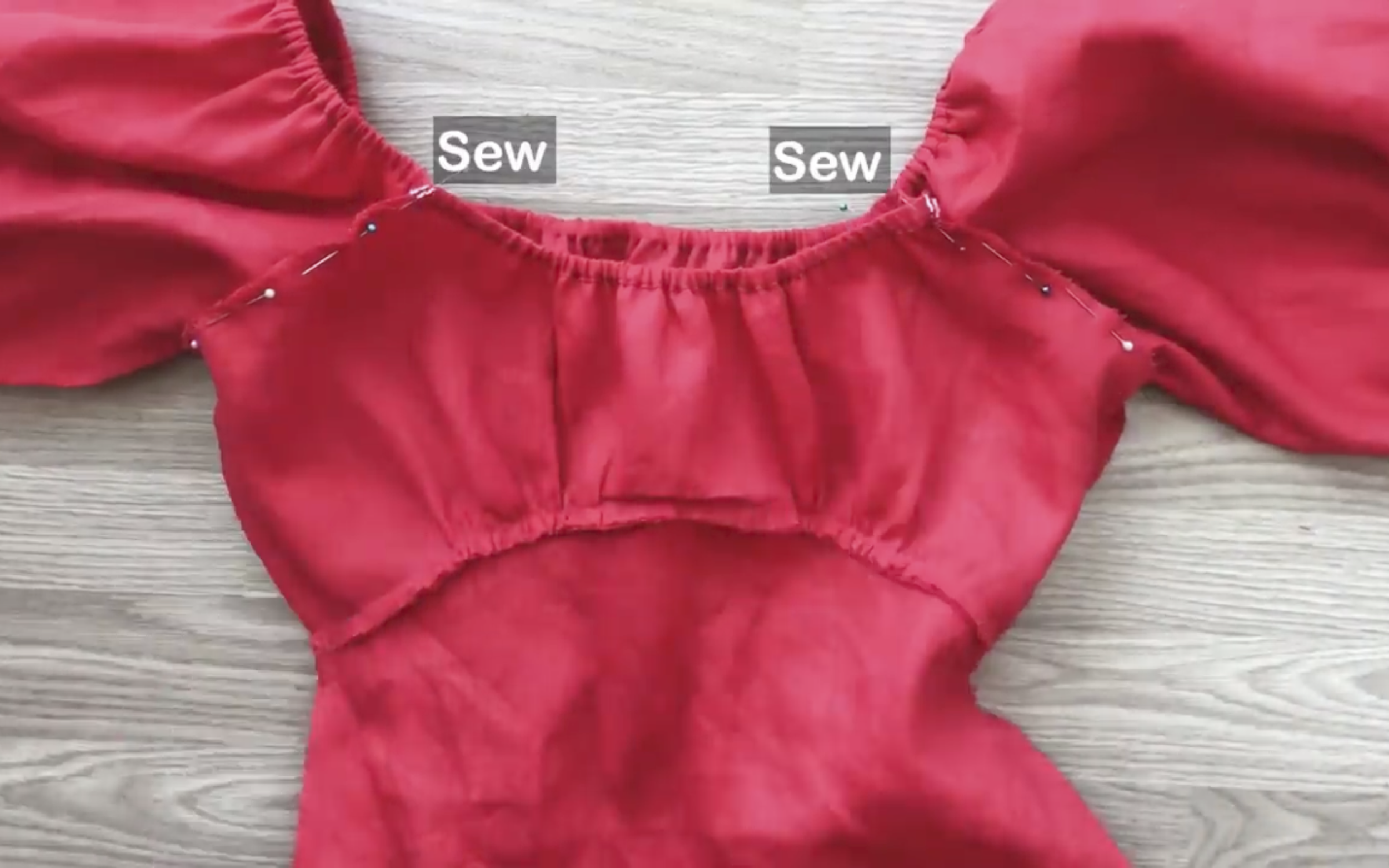
The last step is attaching the sleeves to the main body of the dress.

DIY Party dress | Puff sleeve bustier mini dress - Step by step sewing tutorial (beginner friendly)
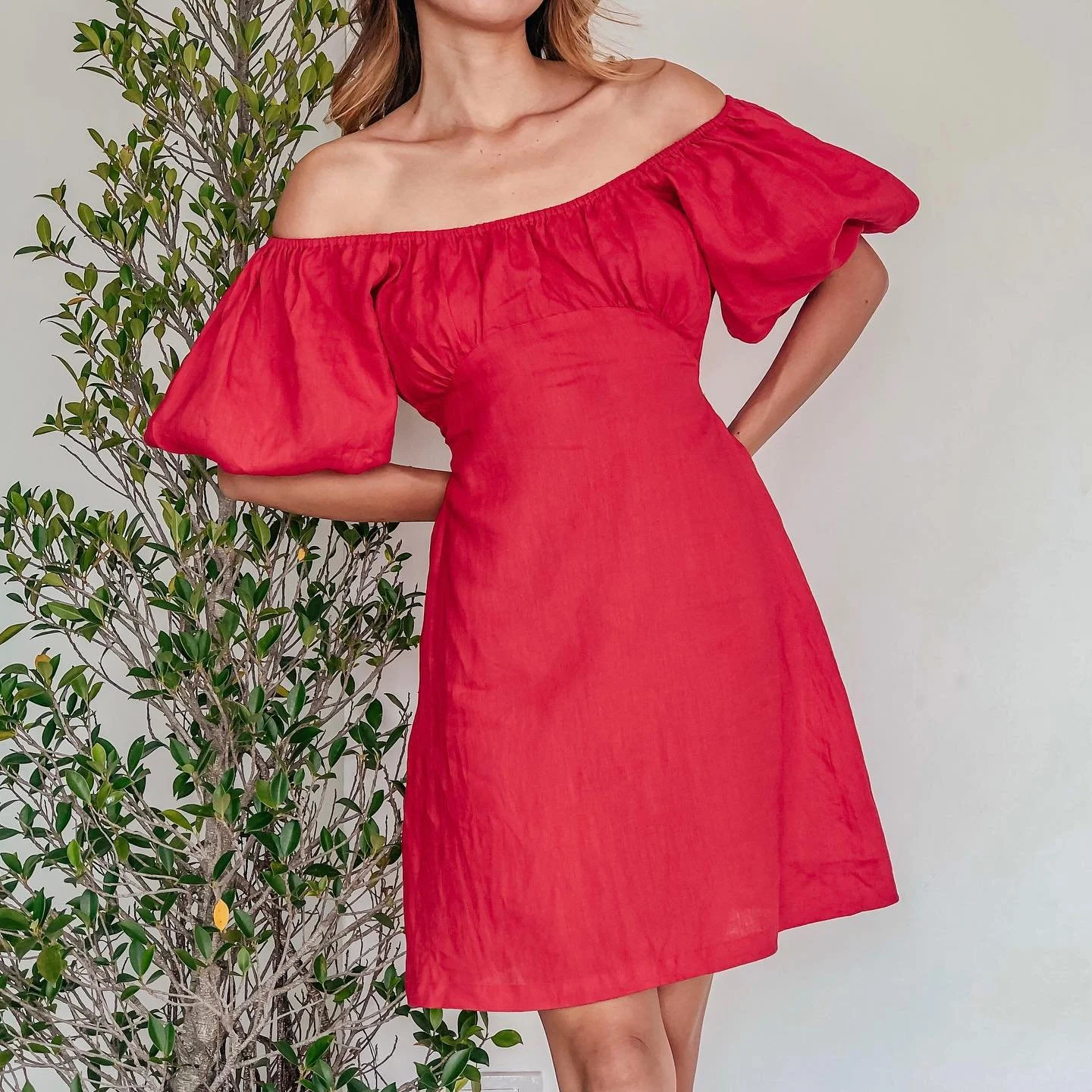
And here’s the final result!
This red dress gives off the perfect Christmas vibe, and I love how it turned out.
I hope you found my step-by-step guide helpful and inspiring.
If you’re interested in making your own, give it a try and let me know how it goes!
Until then, happy sewing!