DIY PUFFY SLEEVE BLOUSE | Beginner friendly sewing tutorial in step by step [+Free Pattern]

DIY Puffy Sleeve Blouse

Welcome or welcome back to my sewing blog!
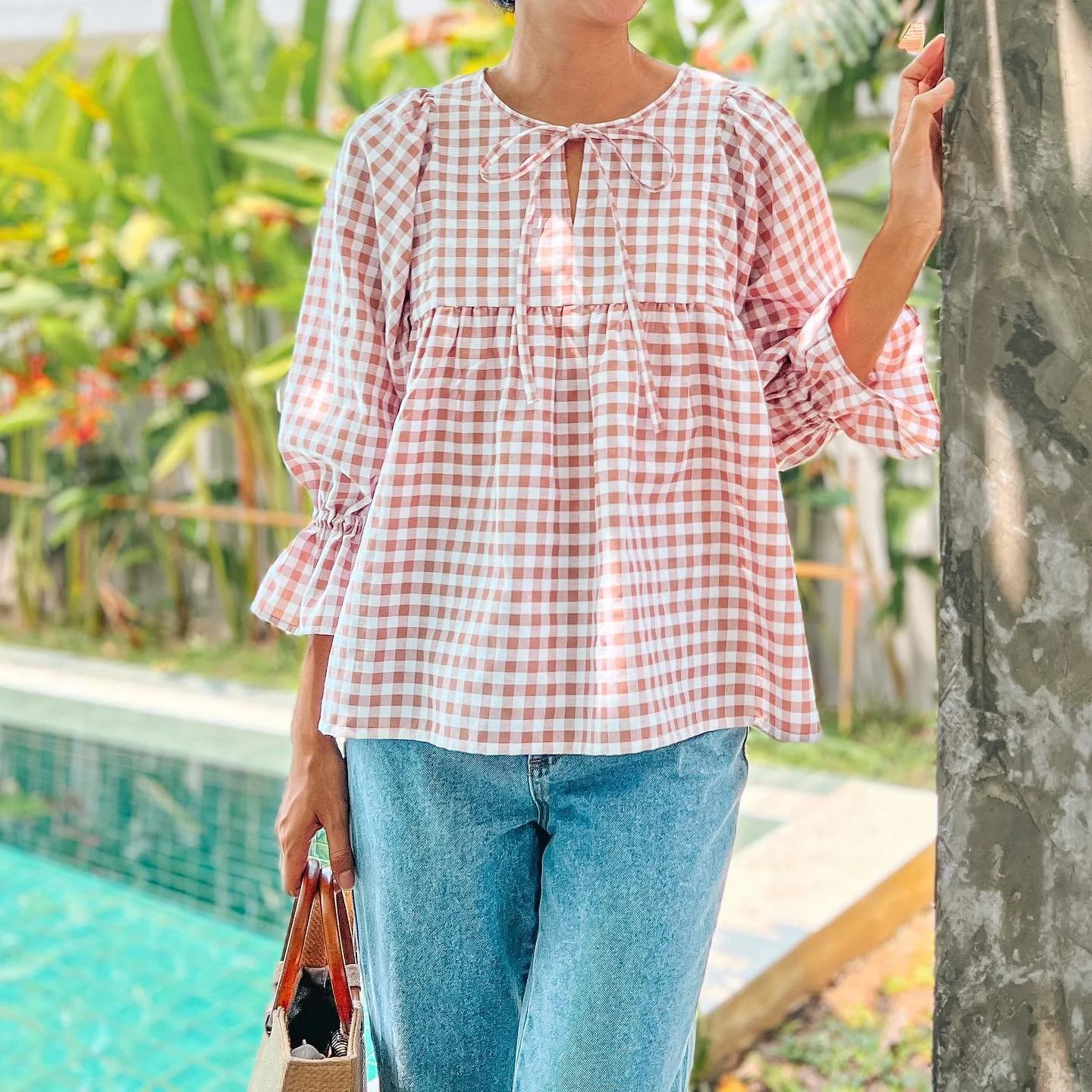
In today's video, I'm going to share with you how I made my Puffy sleeve blouse. It's a long blouse with puffy details at the top and the end of the sleeve. It's also the oversize blouse. So it's very comfy. It's a beginner friendly sewing DIYs.
So I hope you like it and try it out.
Let’s get started!
WHAT YOU’LL NEED
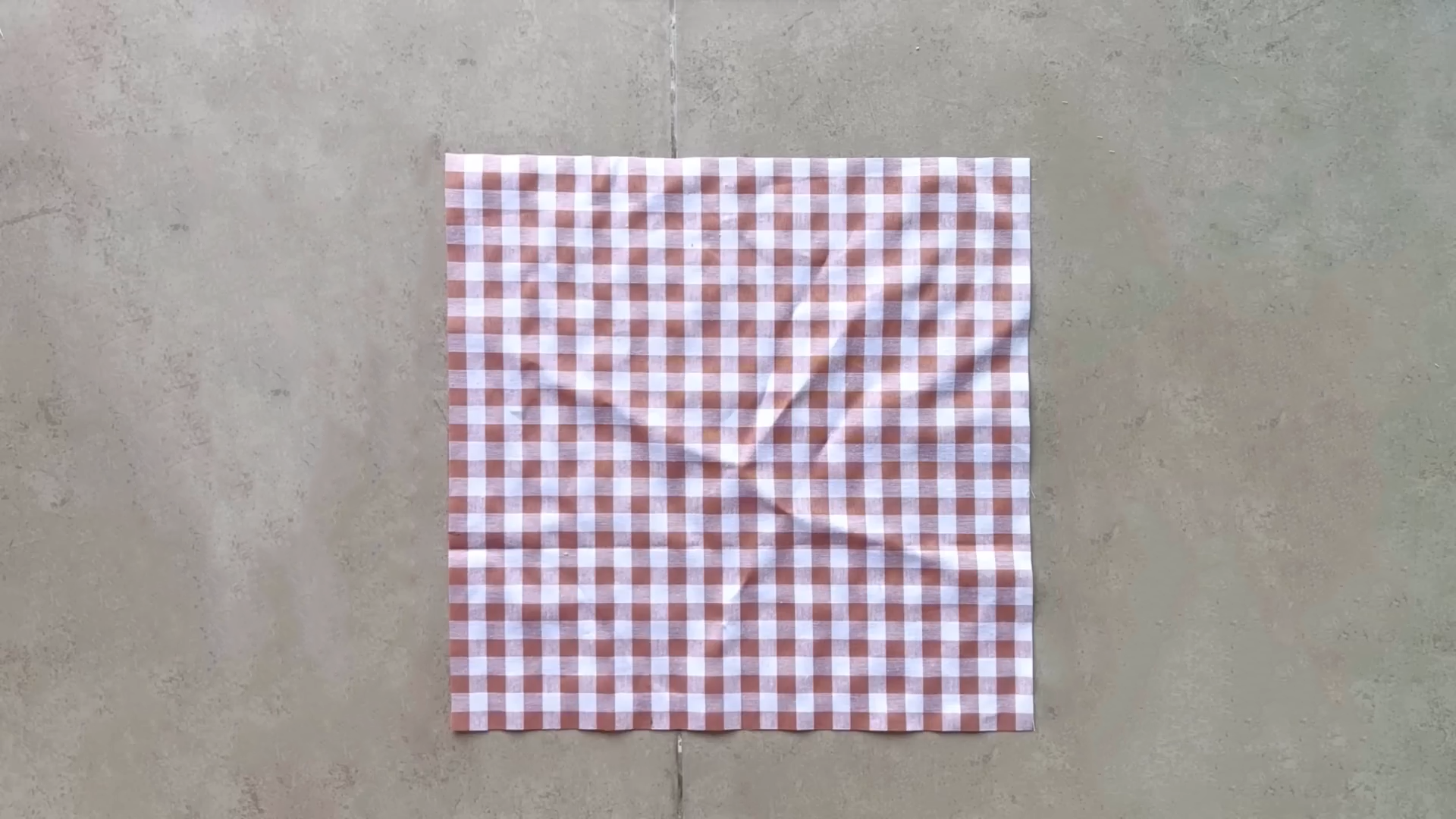
2m of cotton fabric (The width of the fabric is 130cm)
Pattern paper
Sewing machine
Thread
Pencil
Pins
Scissors
Ruler
SEWING THE DRESS
THE BODICE PART
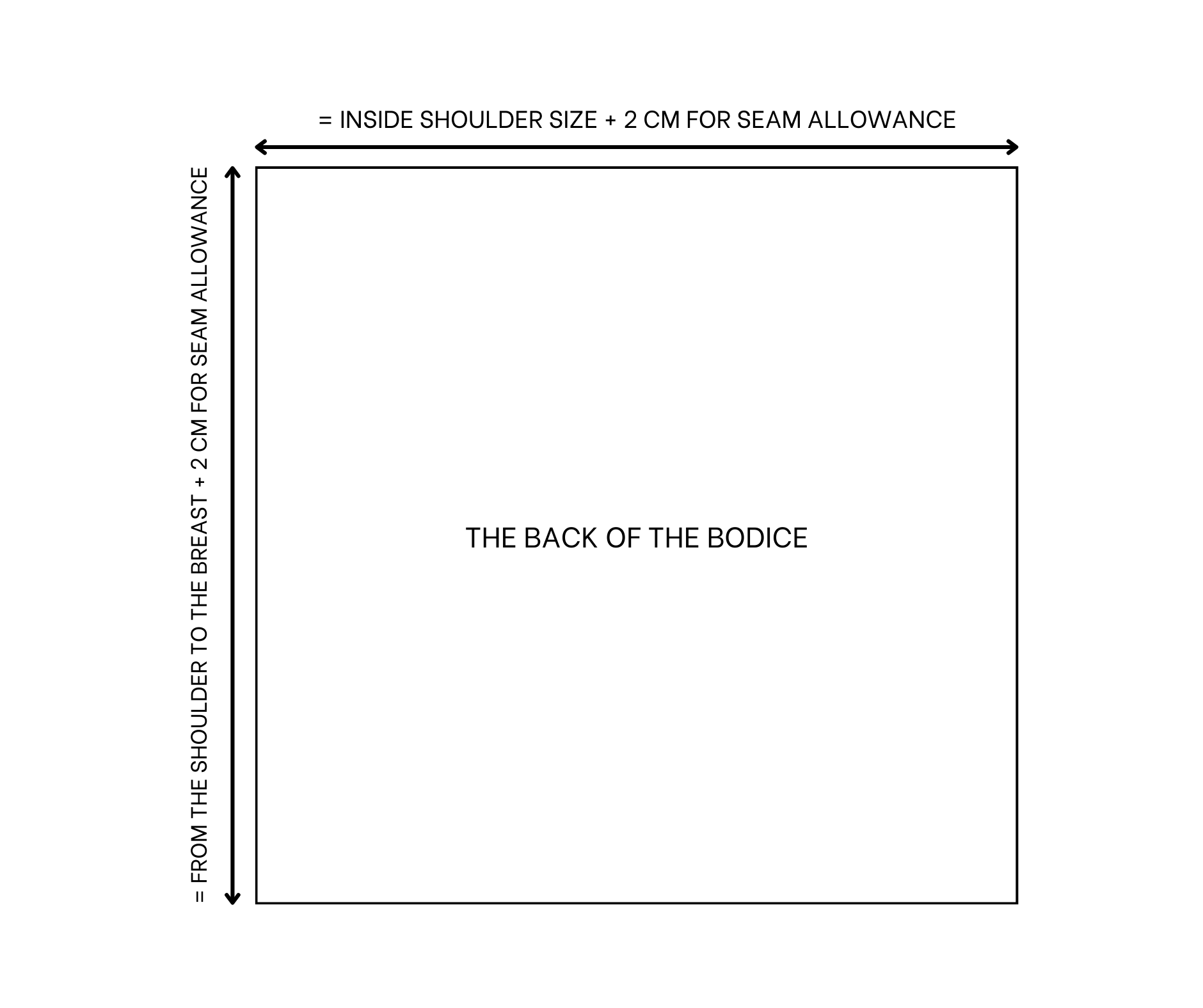
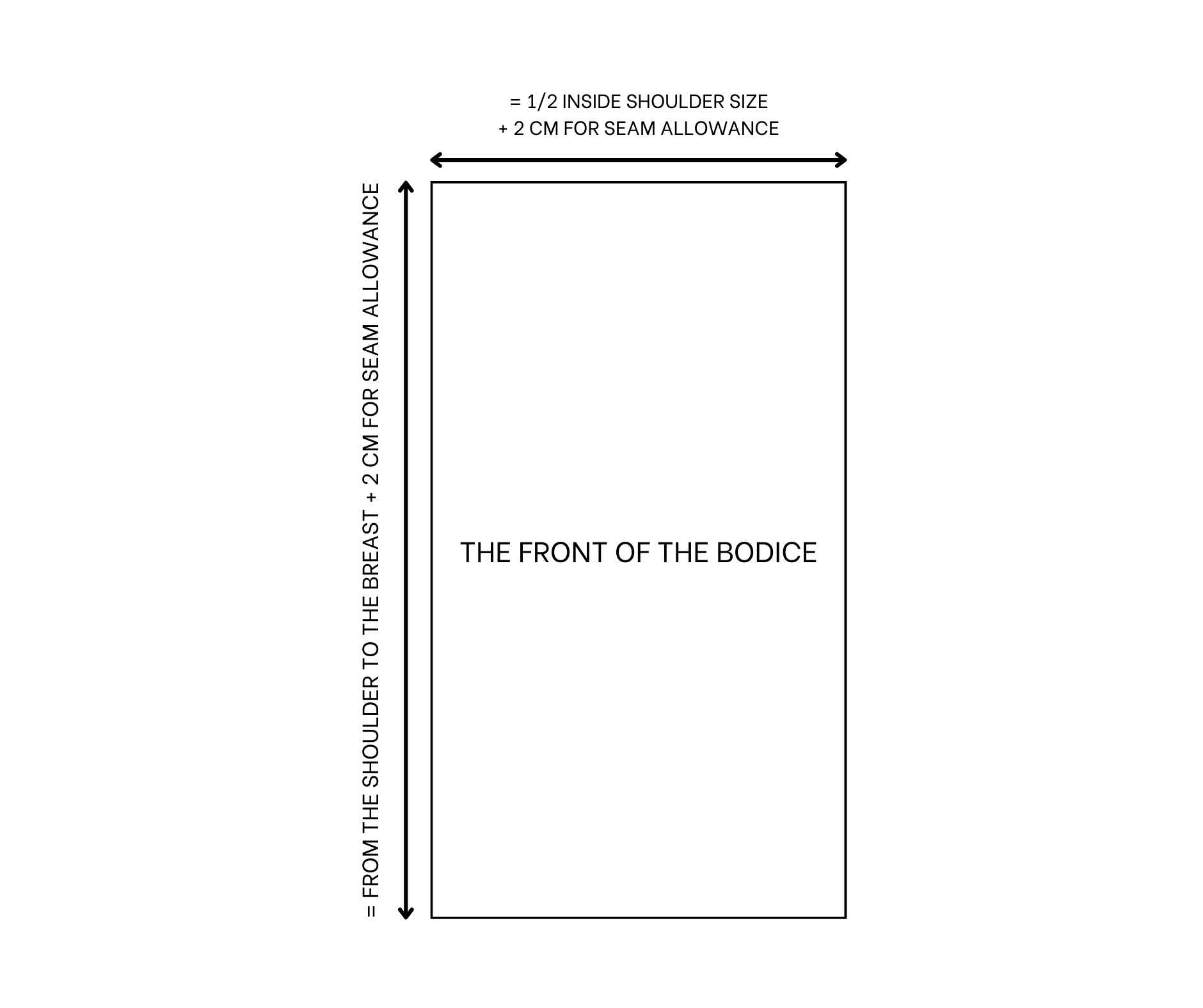
The main bodice pattern
The back of the bodice
Cut a rectangle with a width of 30 cm, which is your inside shoulder size plus 2 cm for seam allowance, and a length of 30 cm, which is the length from the shoulder to under the breast plus 2 cm for seam allowance. This will be the back of the bodice.
The front of the bodice
Cut two smaller rectangles with a width of 16 cm, which is half of your inside shoulder size plus 2 cm for seam allowance, and a length of 30 cm, which is the length from the shoulder to under the breast.
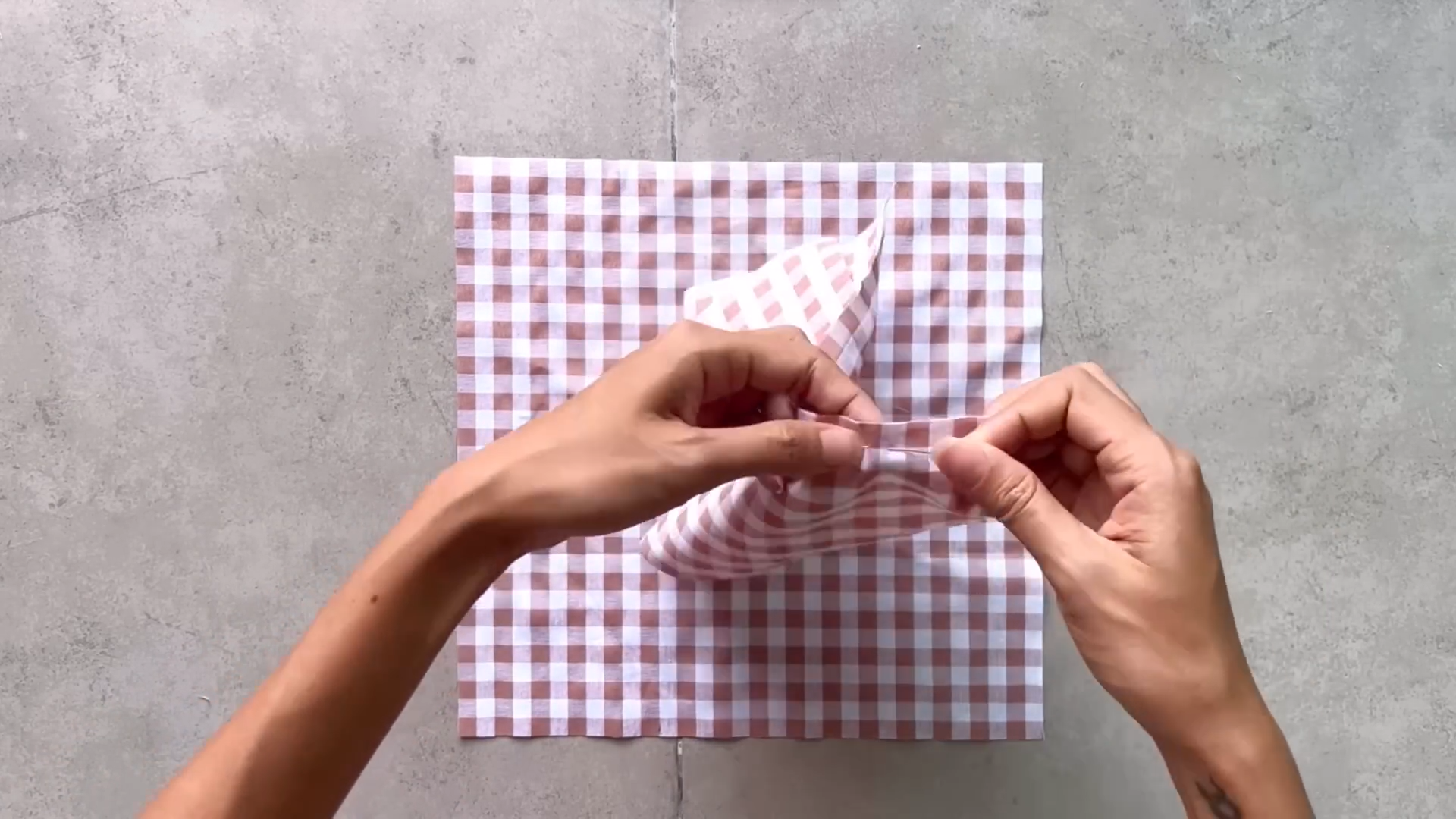
Connect two pieces of the front bodice together by the lane line first before sewing.
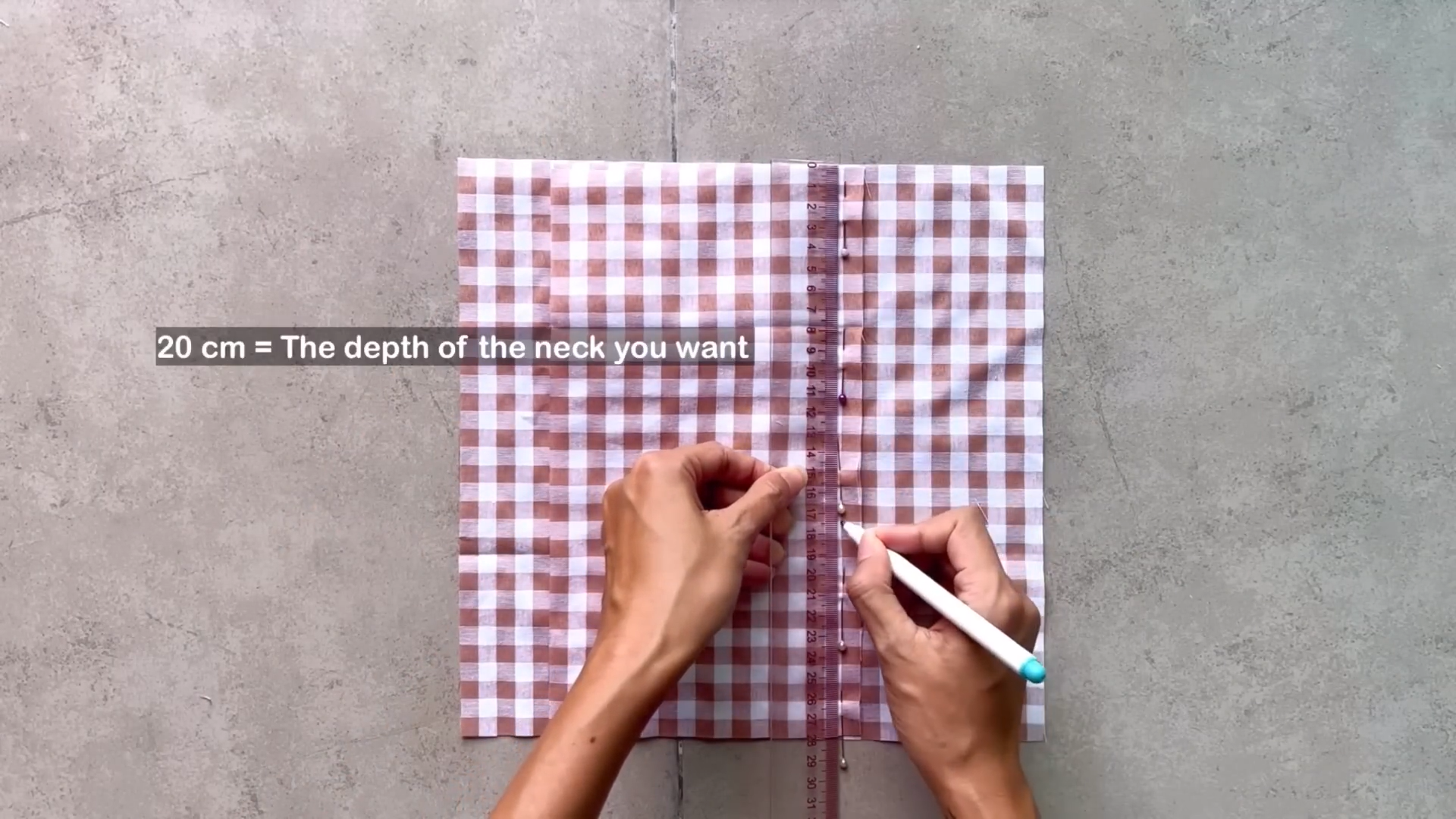
Mark it 20 cm from the top of the connecting line. This will be the depth of the neck of the blouse that you want. Then sew the rest together.
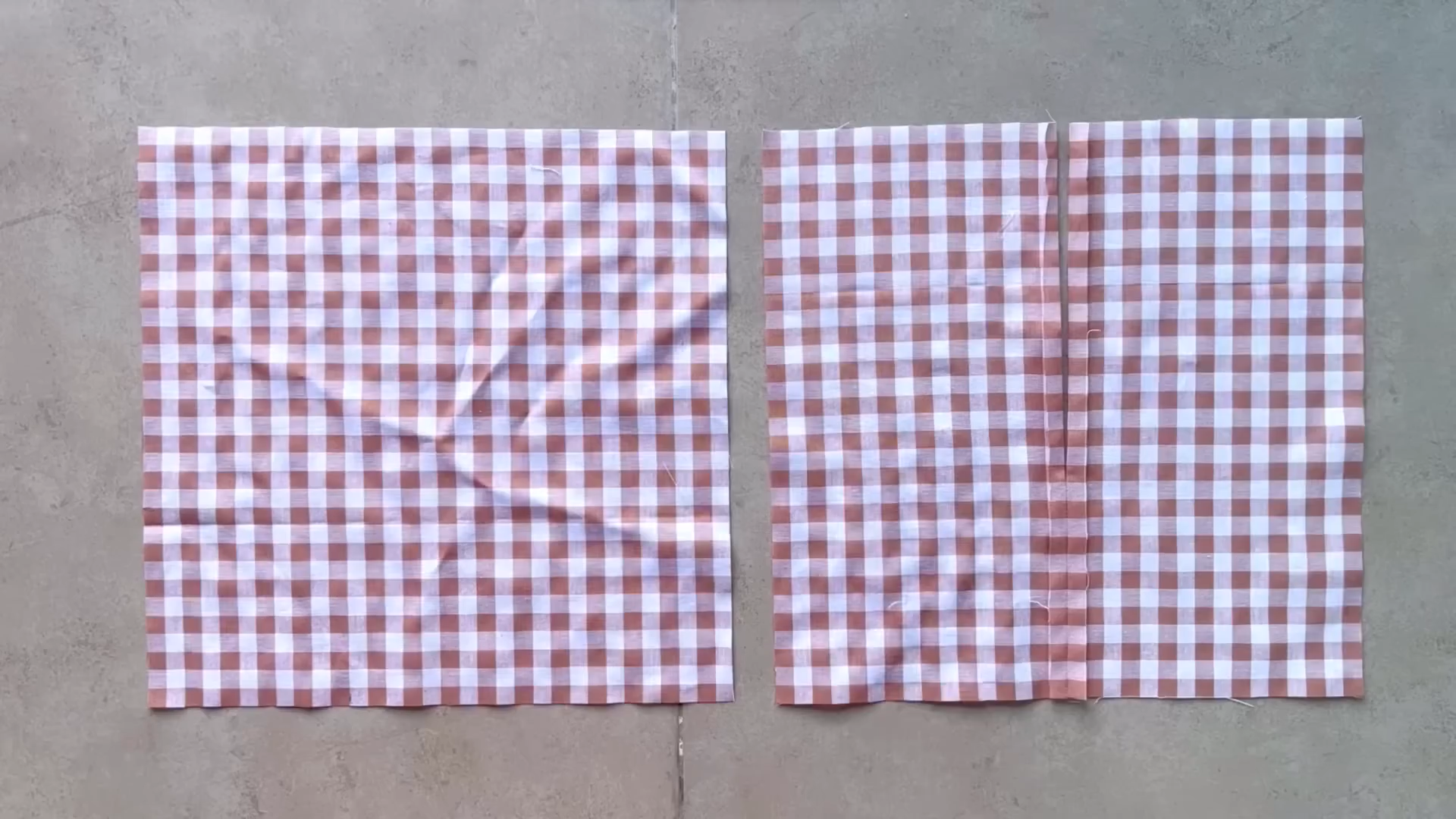
After sewing, we will have two pieces of the front and the back bodice in the same size.
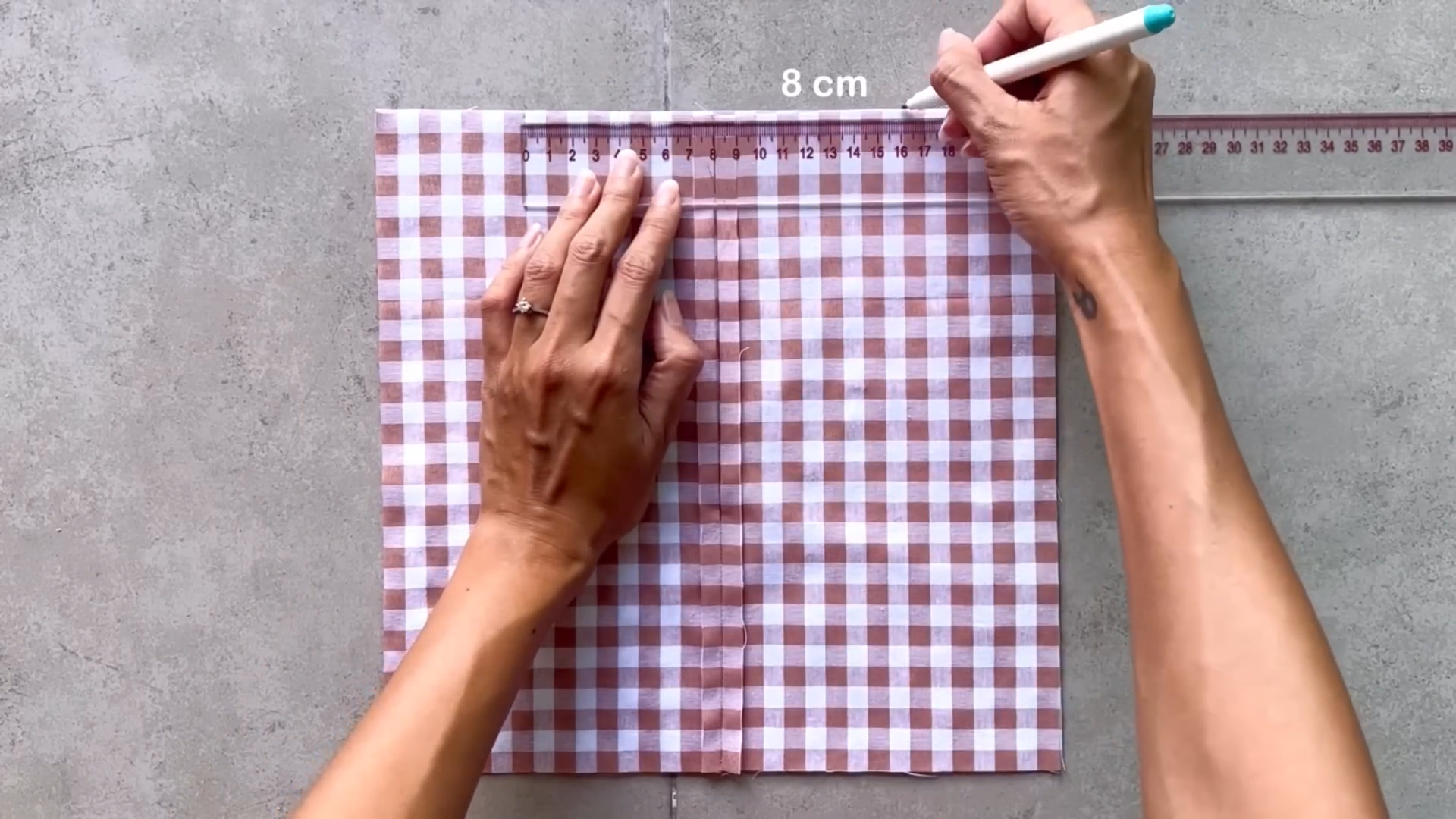
From the middle of the top width line, mark two sides 8 cm so the width between two marks will be 16 cm, which is the width of the neck that you want minus 2 cm for seam allowance.
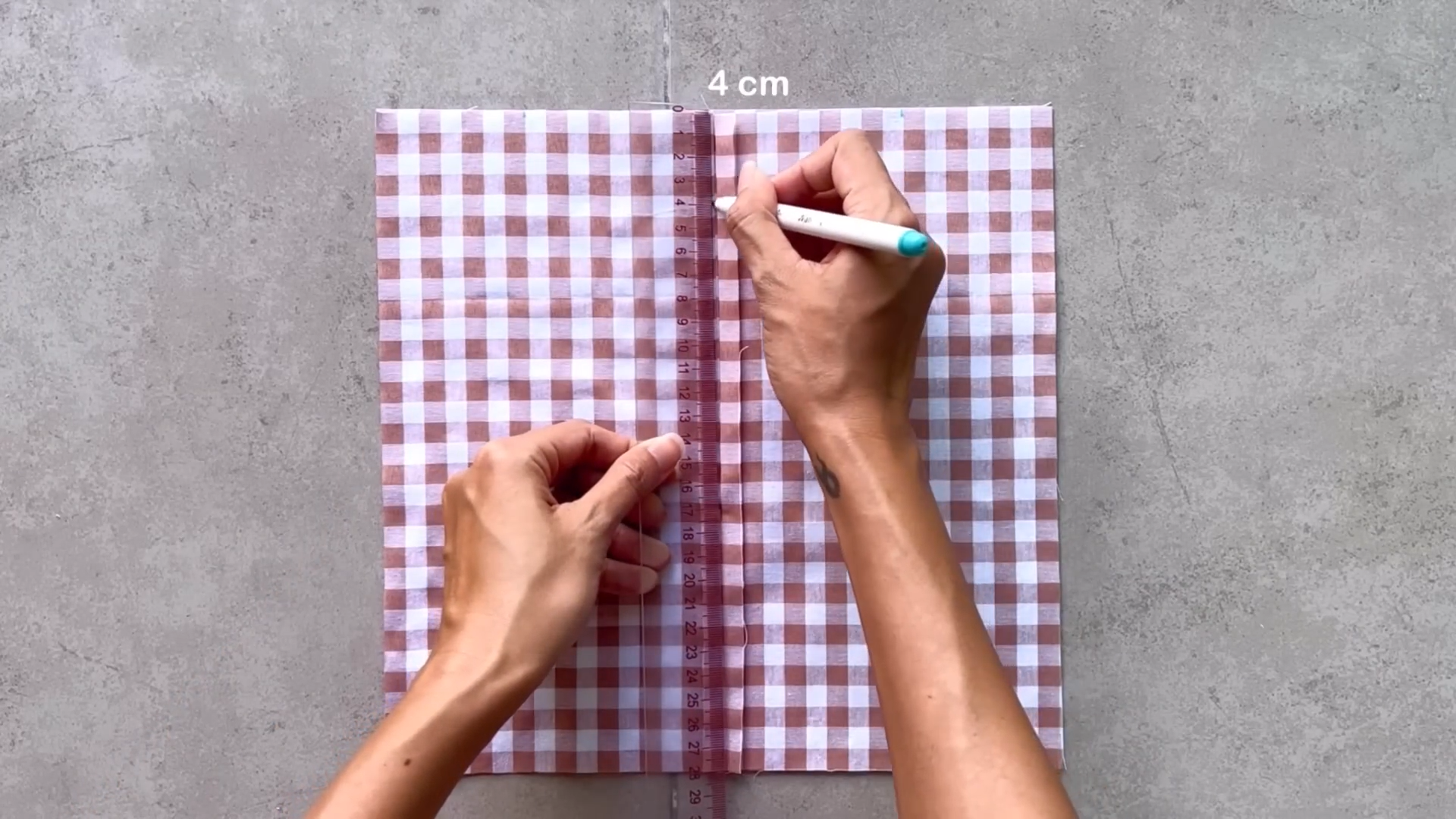
From the middle of the top width line, mark down 4 cm.
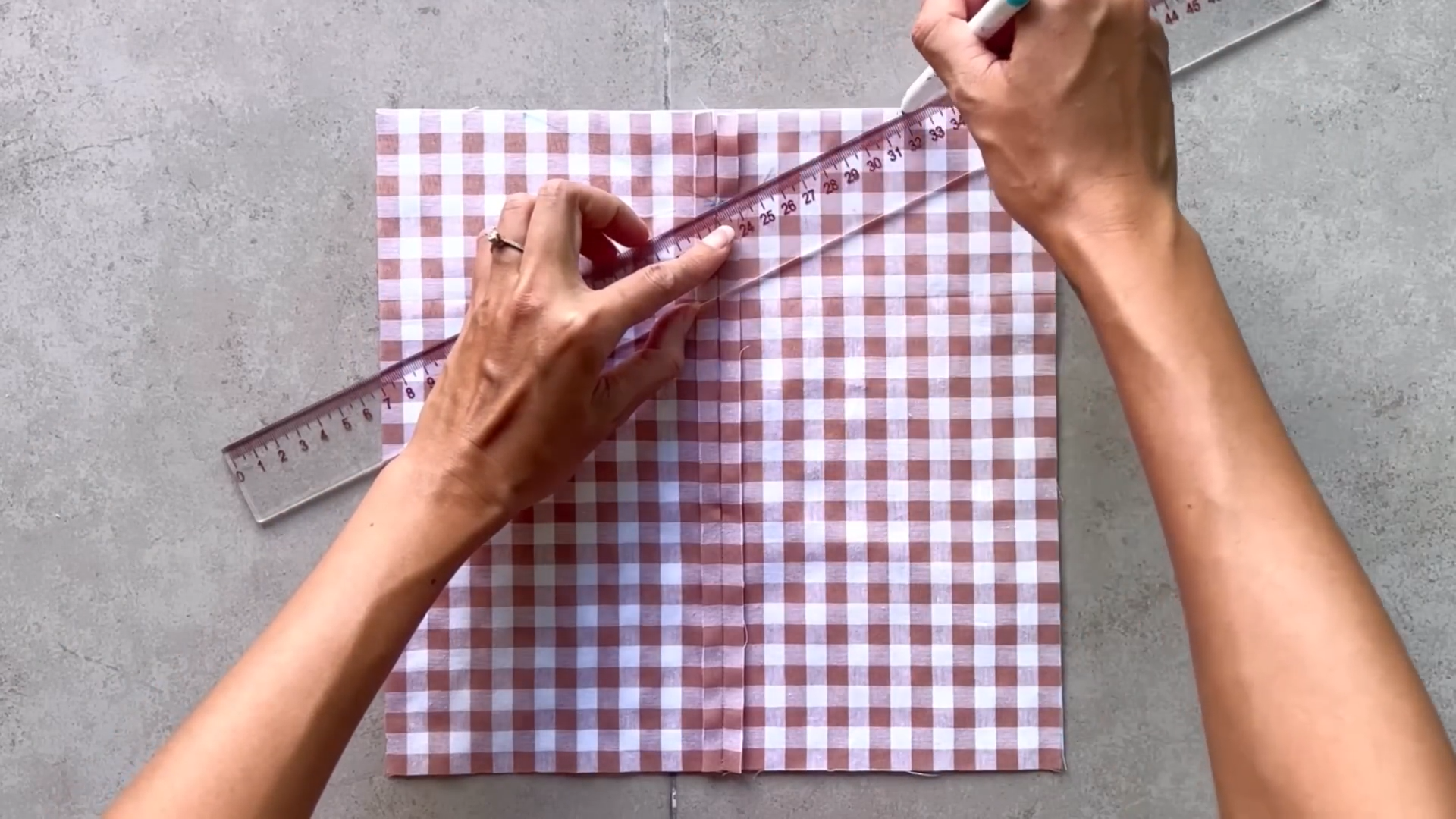
Then, connect this mark to two marks you just made before that.
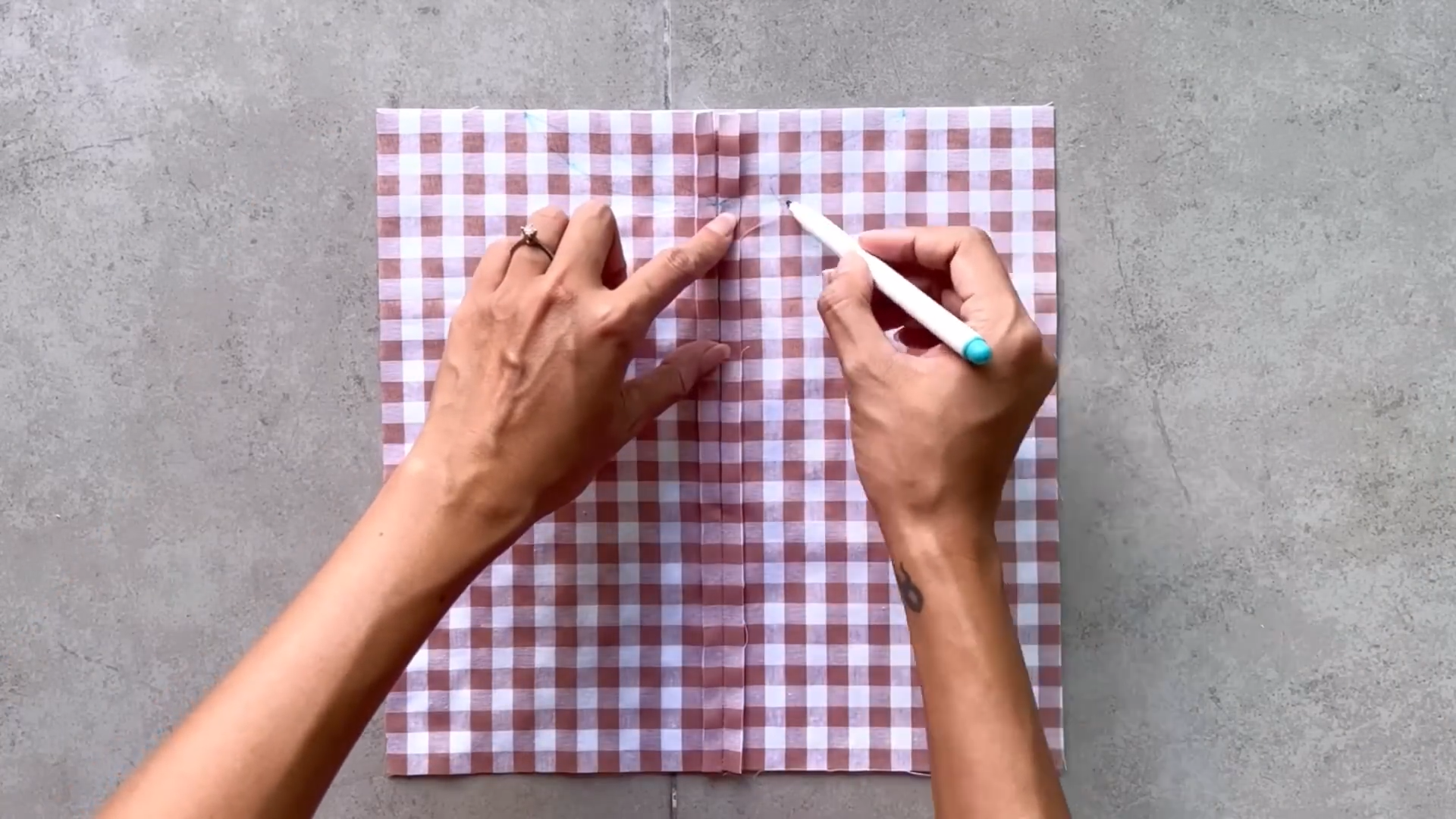
Based on it, draw a slightly curved line to finish the neckline of the back bodice.
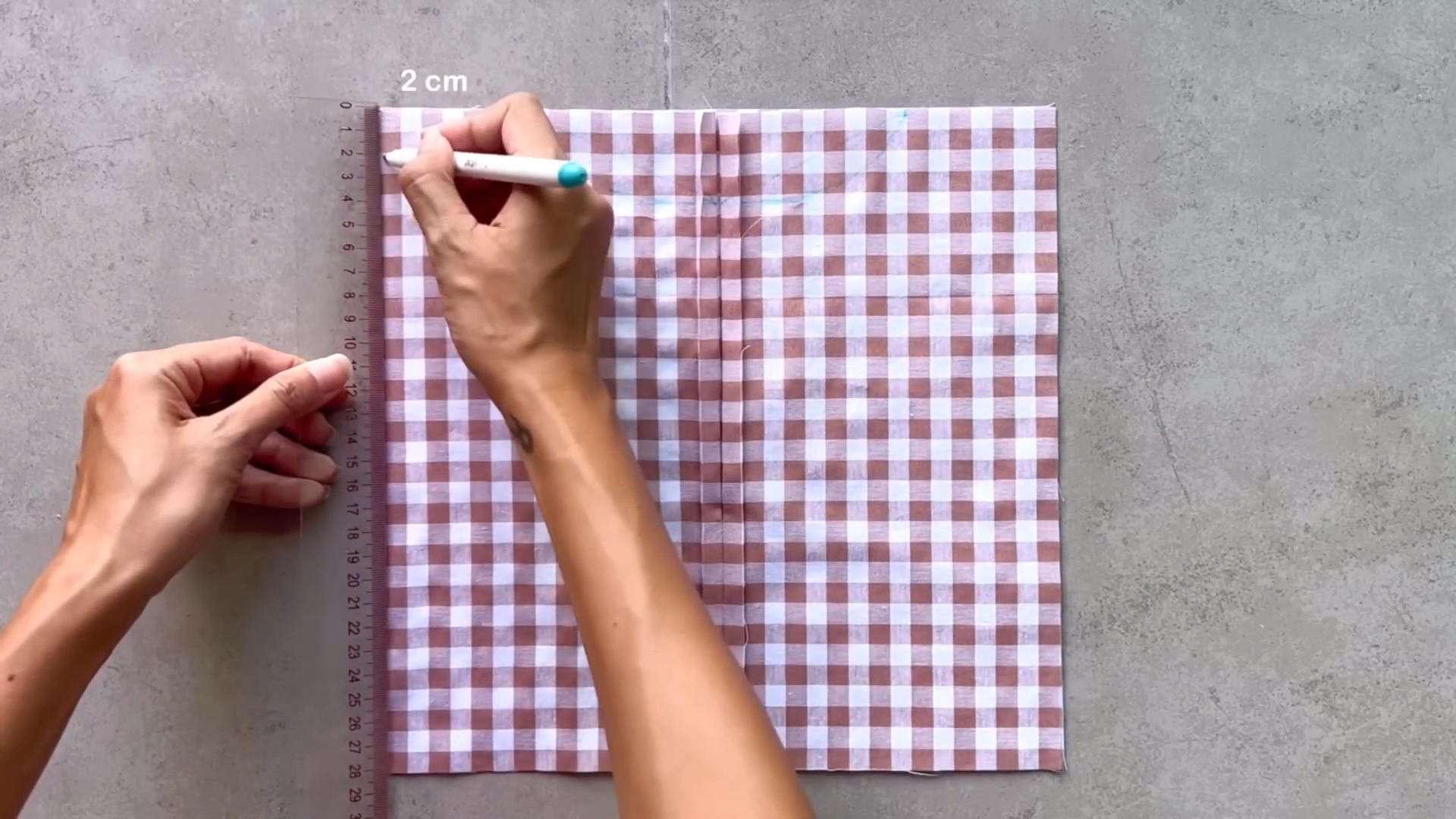
From the top of the land line, mark down 2 cm.
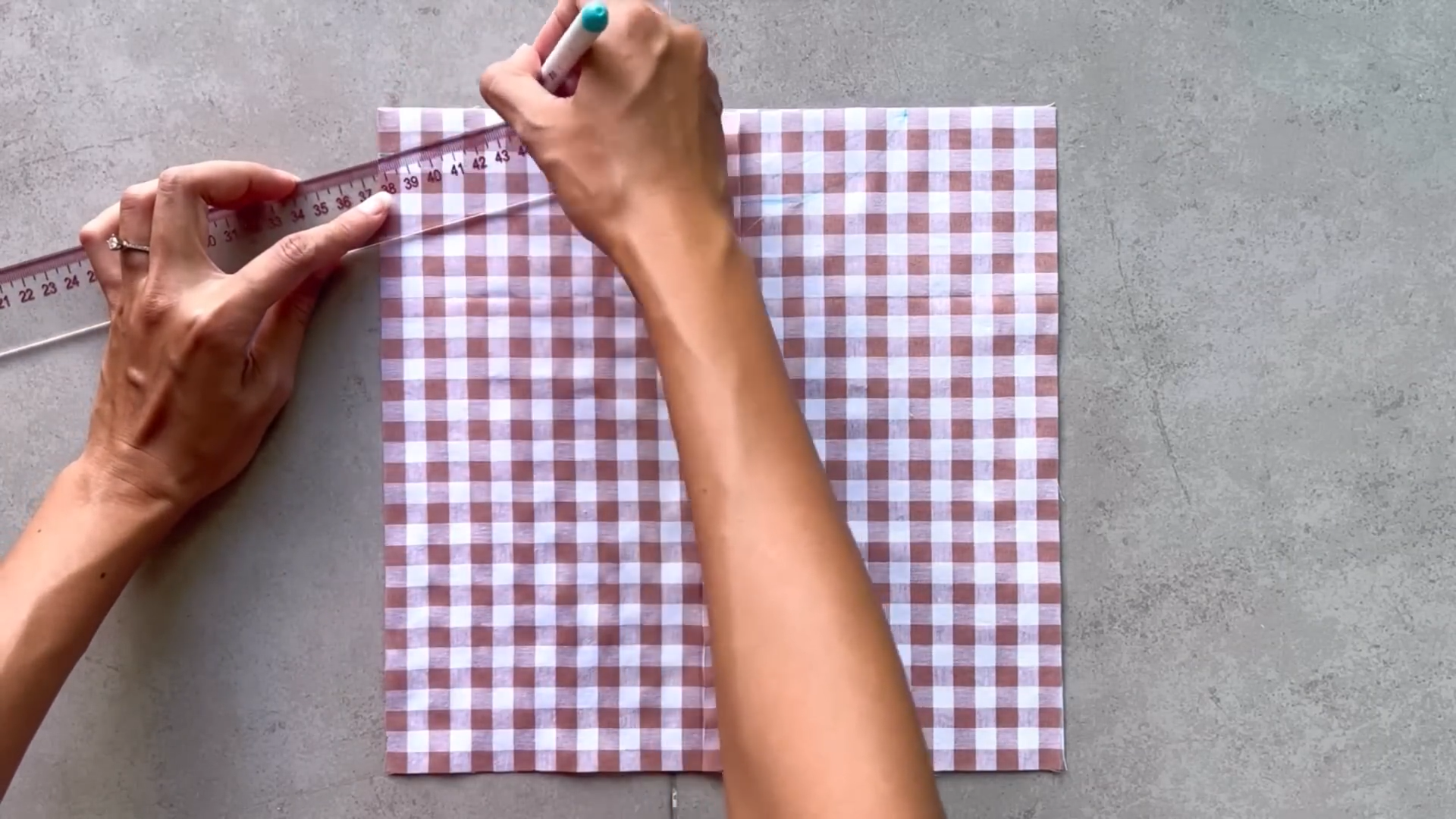
Then, connect this mark to one end of the neckline next to it to finish the shoulder line.
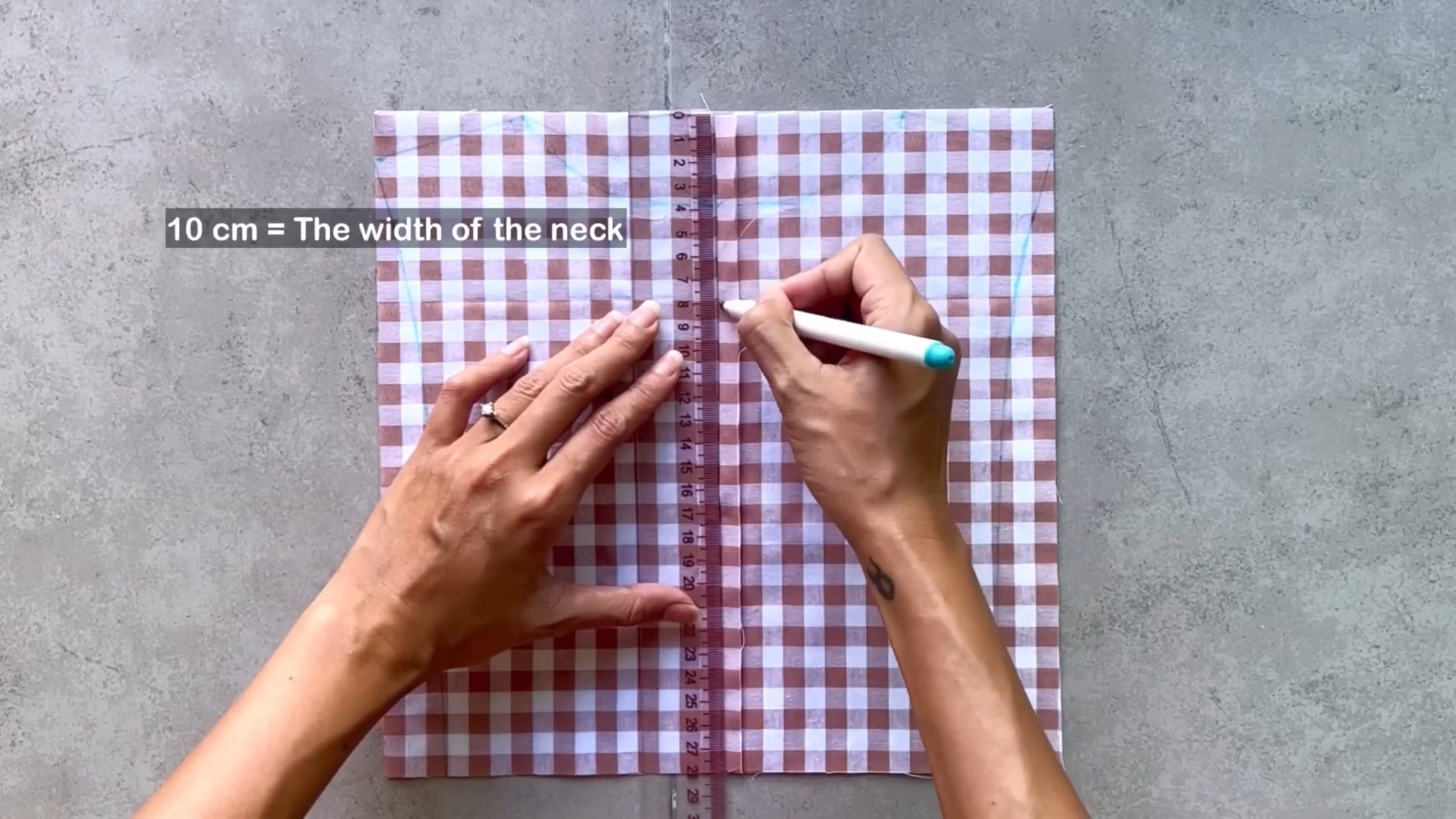
From the middle of the top width line, mark down 10 cm, which is the width of your neck.
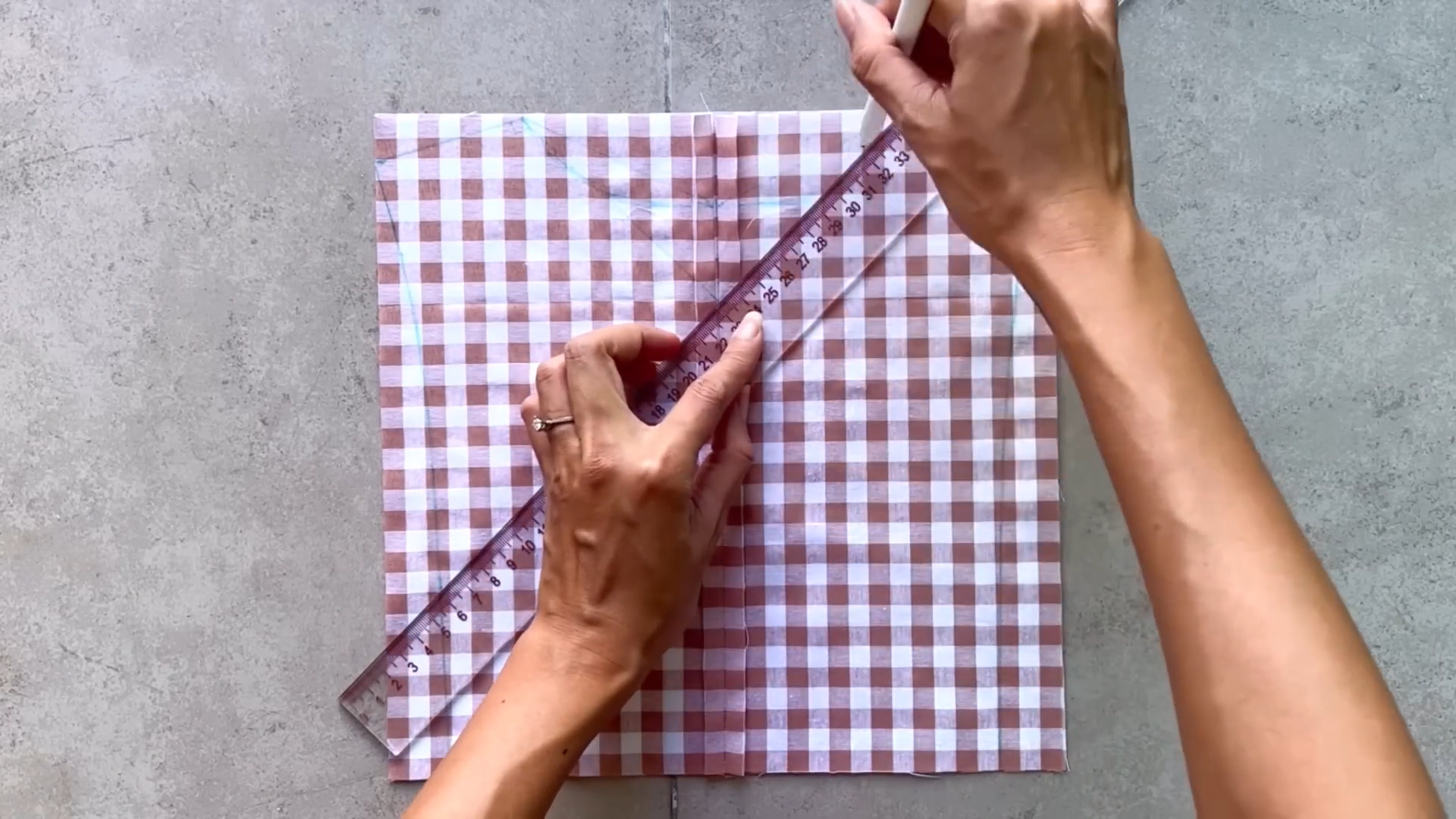
Then connect this mark to two ends of the back neckline you drew before that.
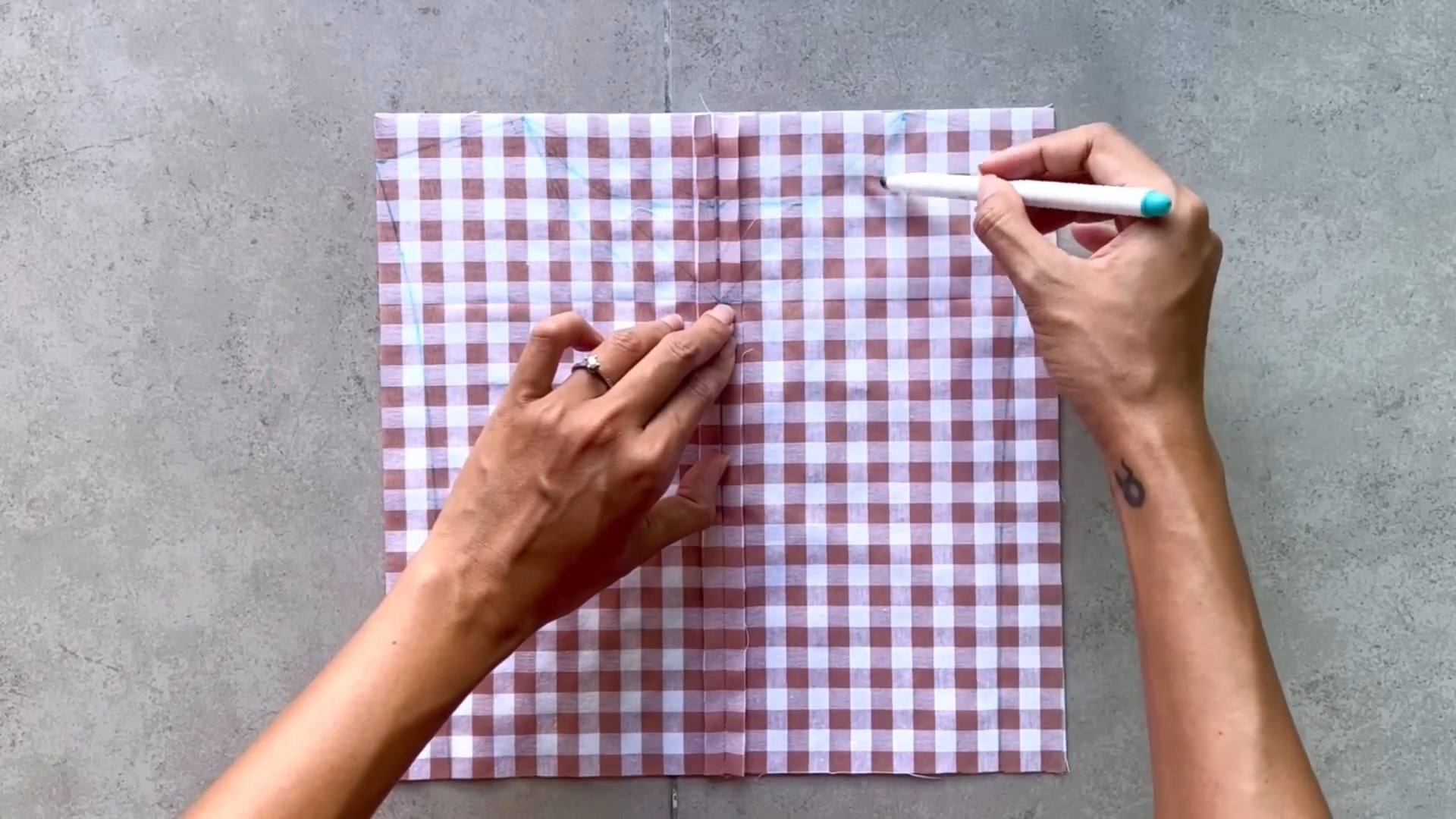
Based on it, draw a slightly curved line to finish the front neckline of the blouse.
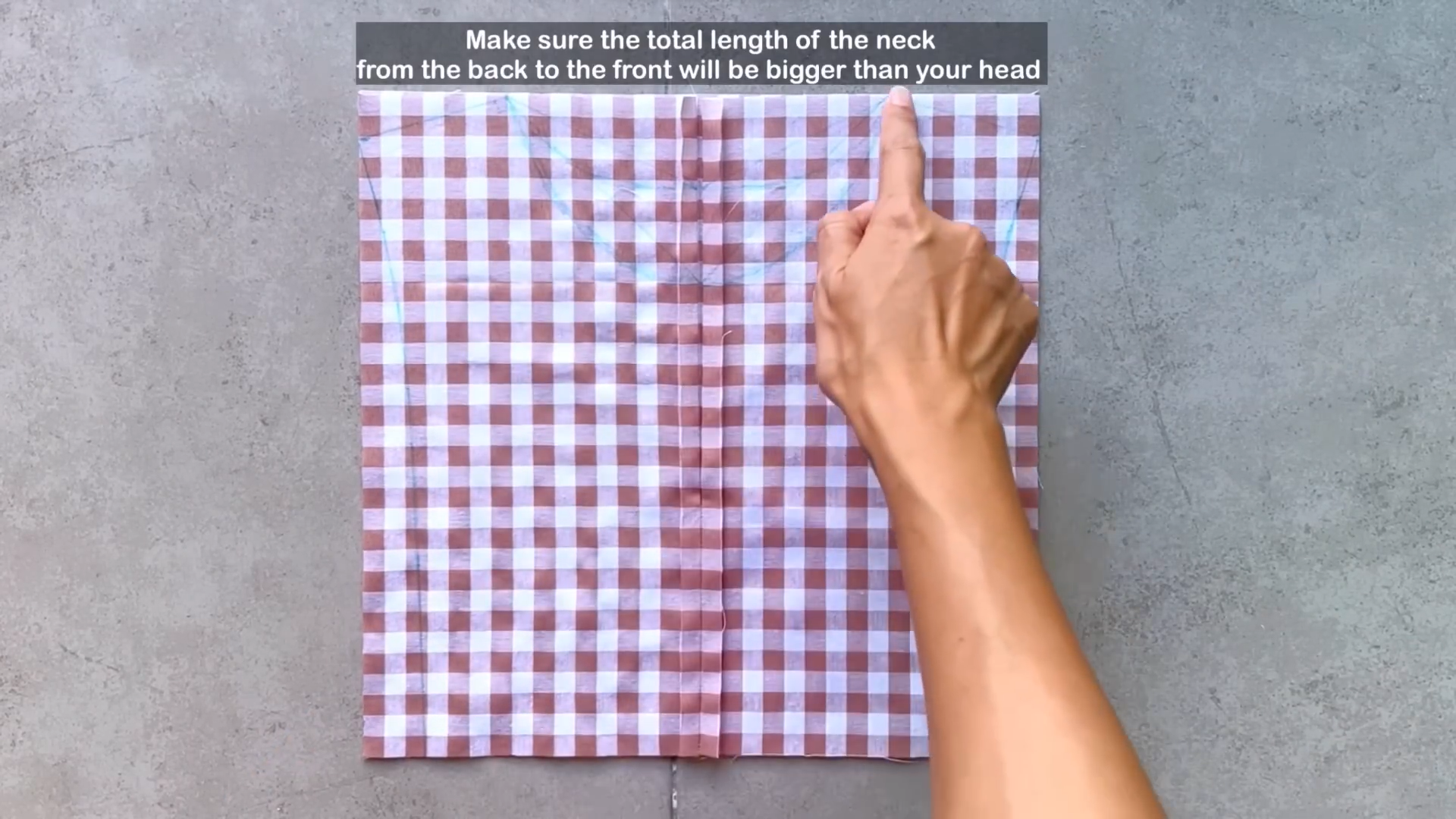
Make sure the total width from the back to the front of the neck is bigger than your head so you can wear the blouse over your head later.
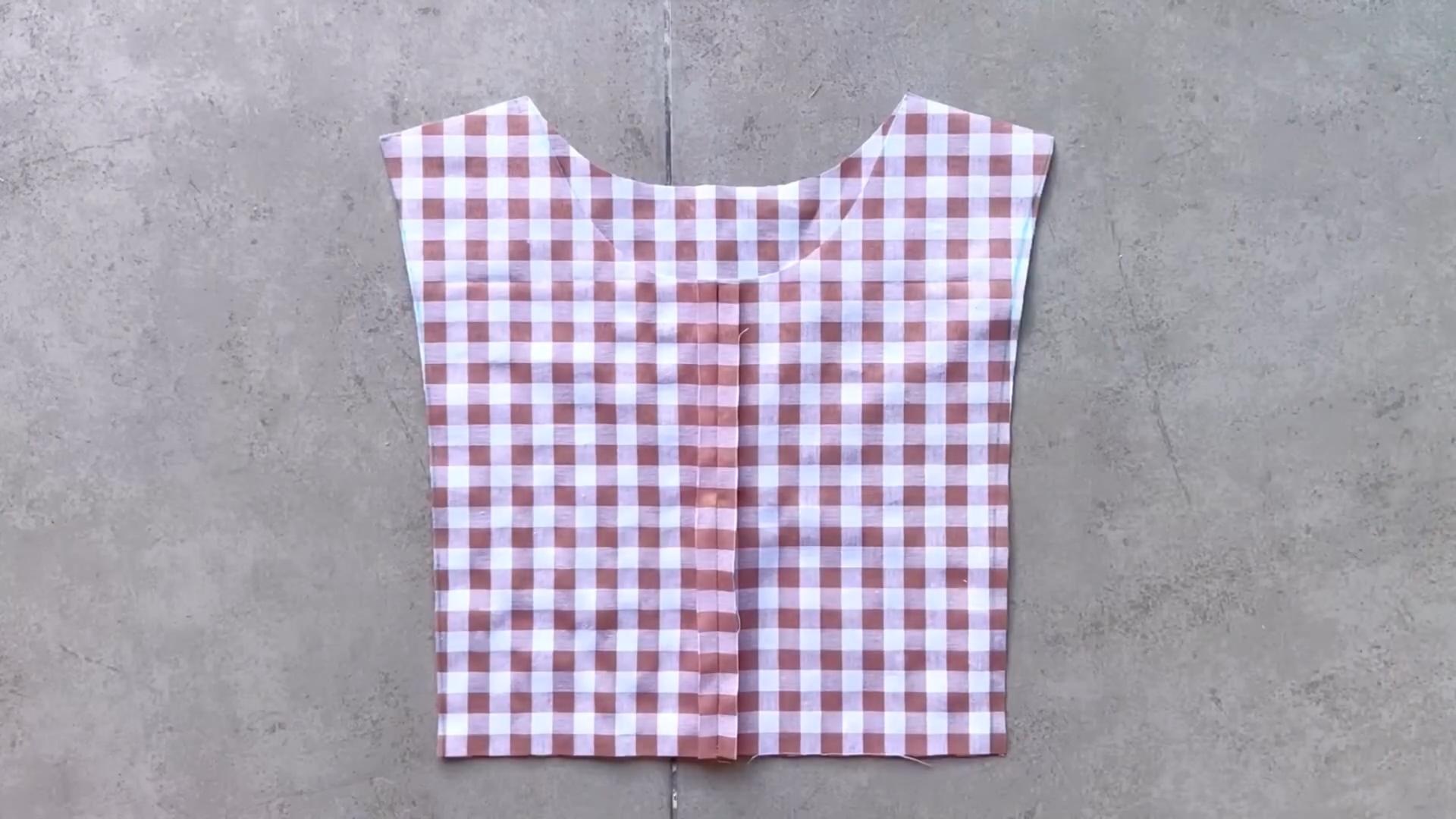
Here’s the bodice after cutting.
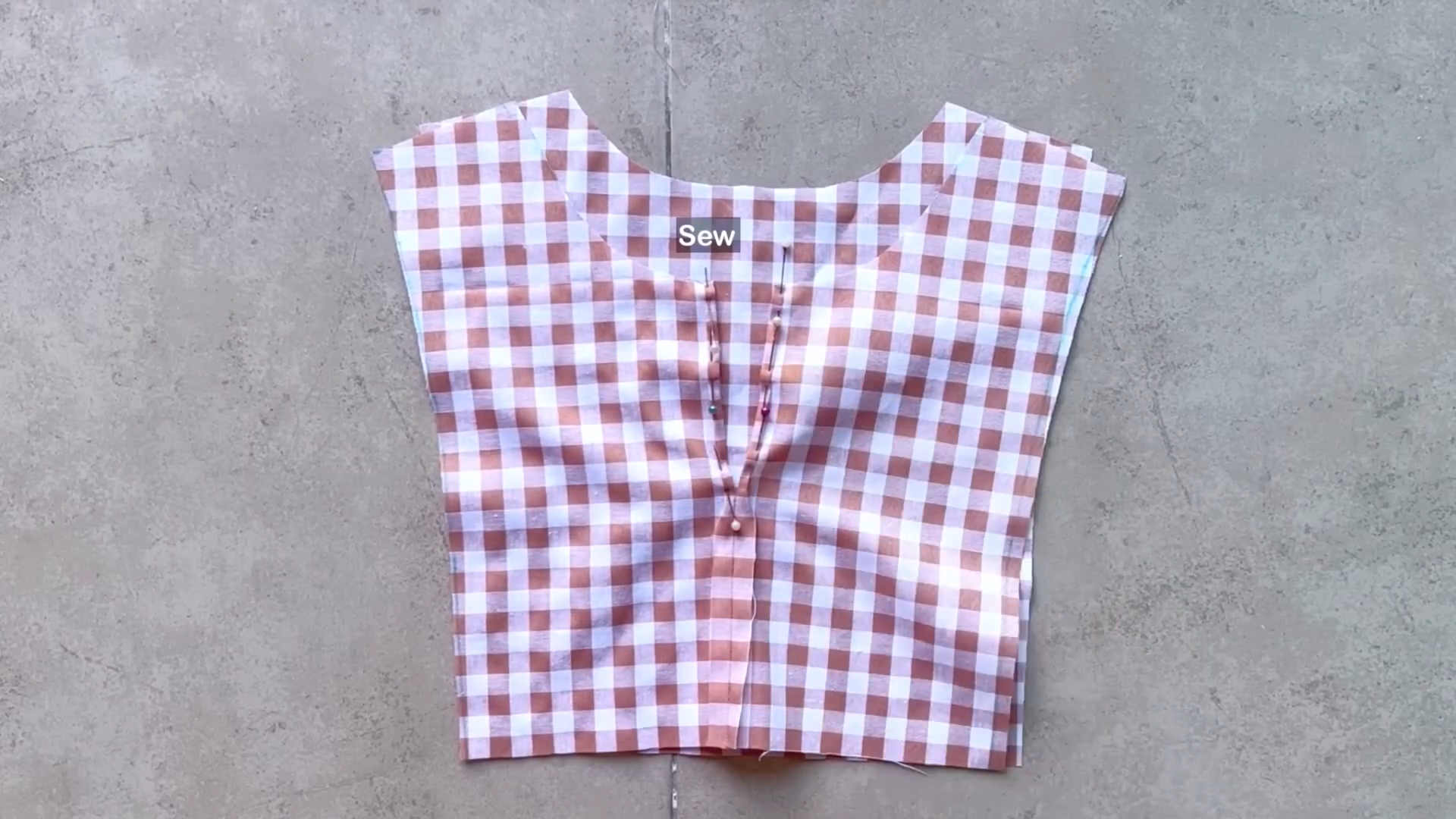
After cutting, finish the depth of the neck at the front by folding the end fabric inside two times with a half centimeter each time and sewing.
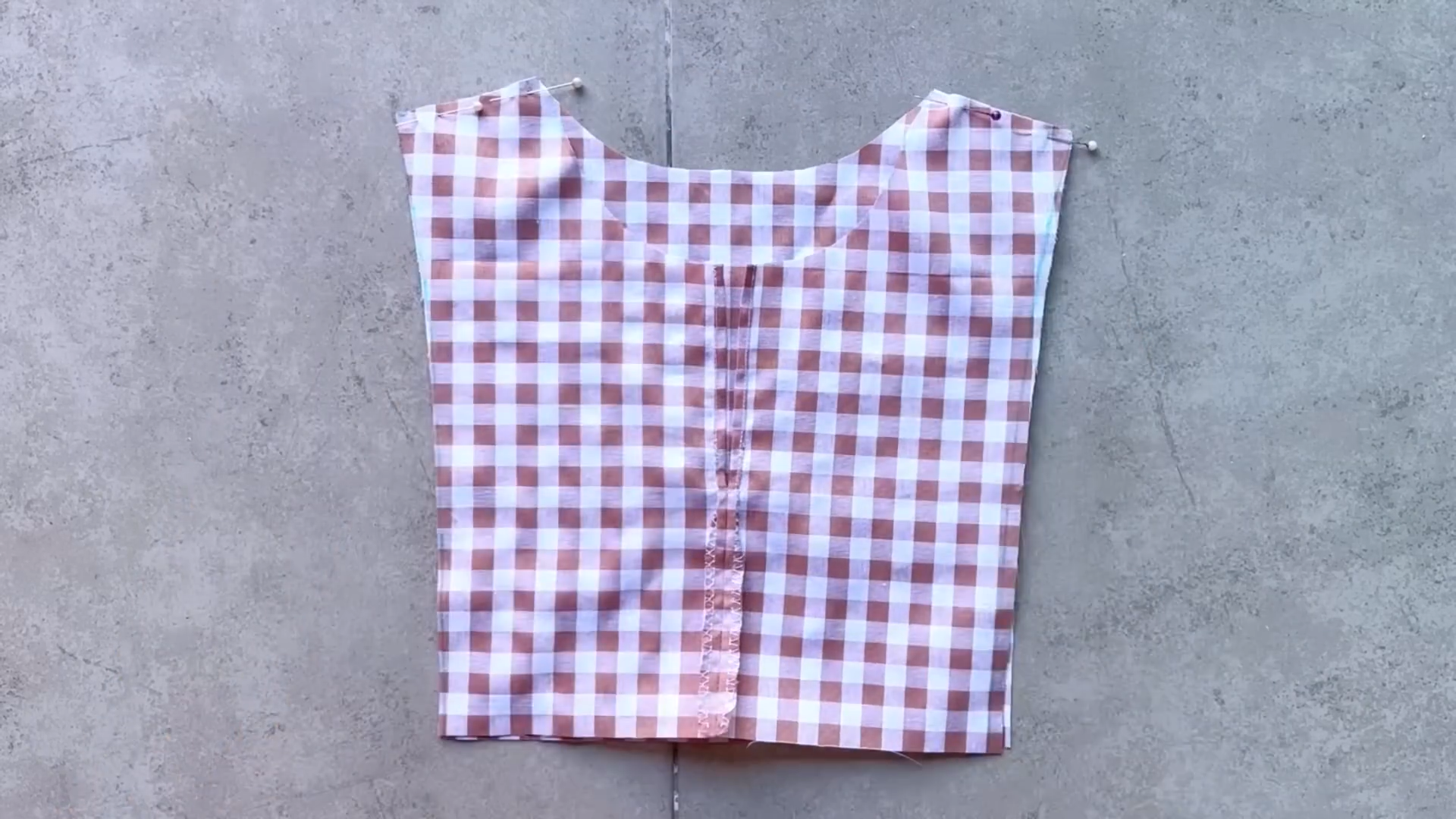
After that, connect the front and the back bodice together at the shoulder.
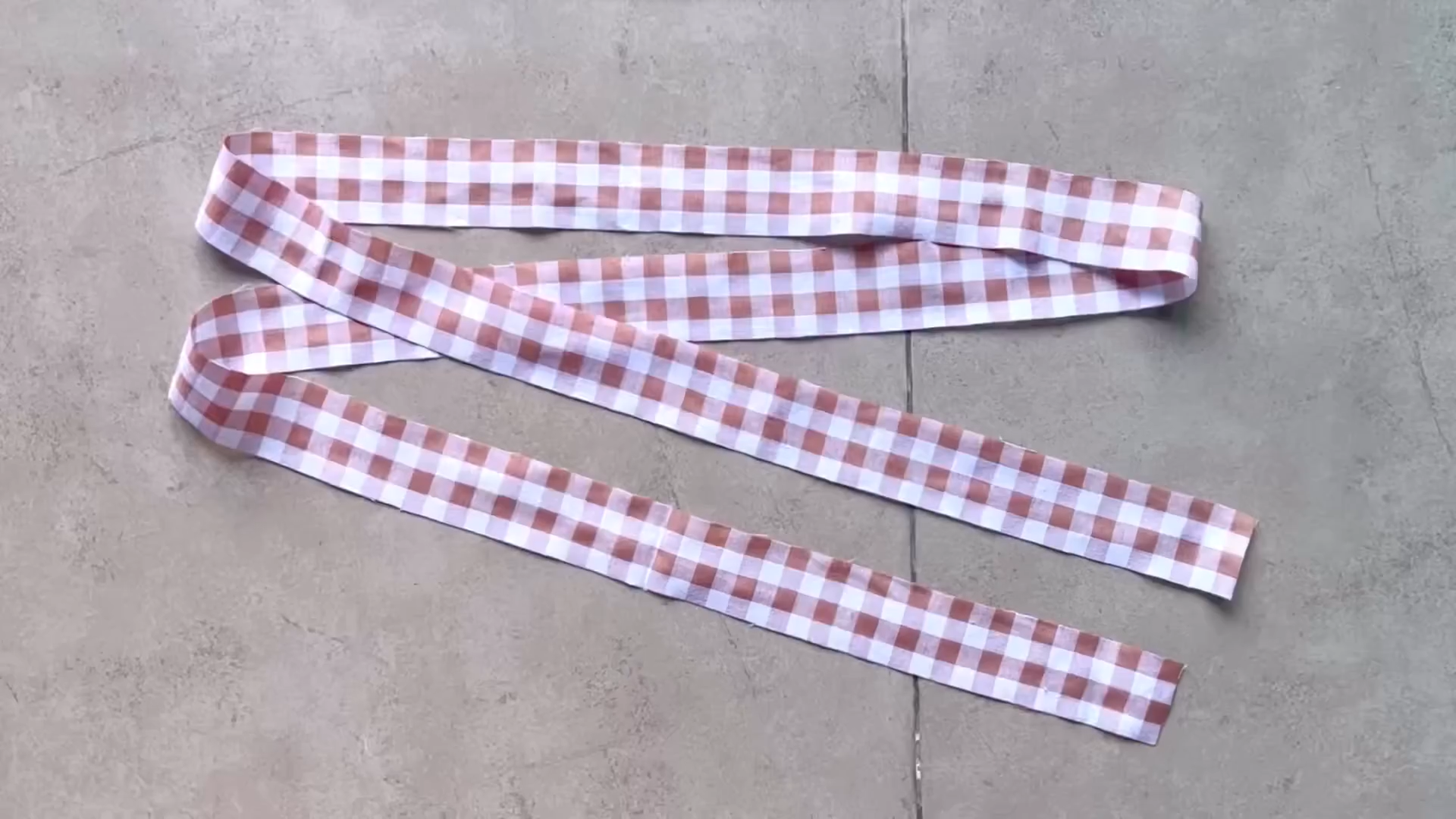
To finish the neck, cut a long fabric line with a width of three and a half centimeters and around 120 centimeters length.
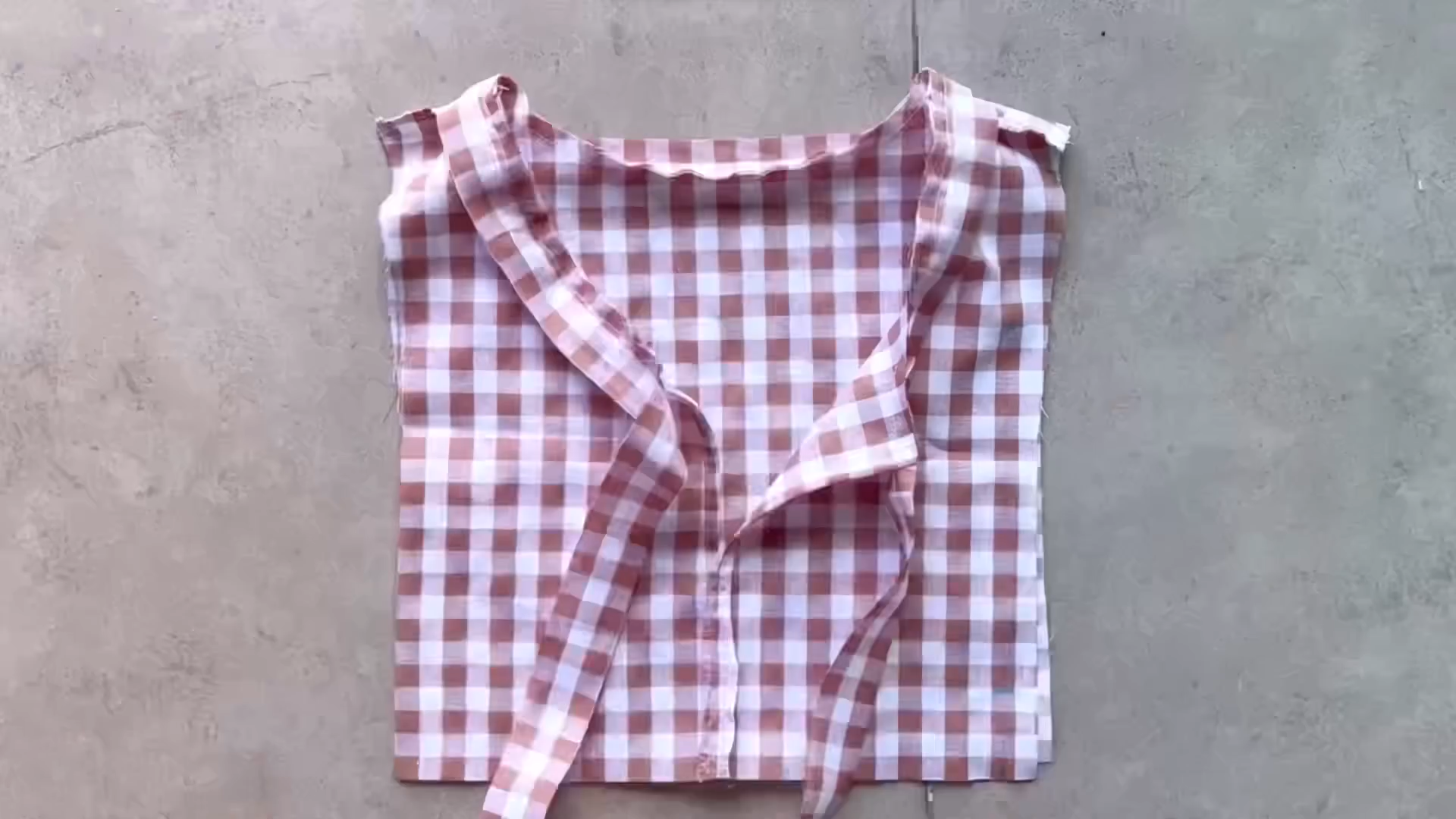
Connect the middle of the fabric line to the middle of the back neckline first then connect the rest of them together later and sew.
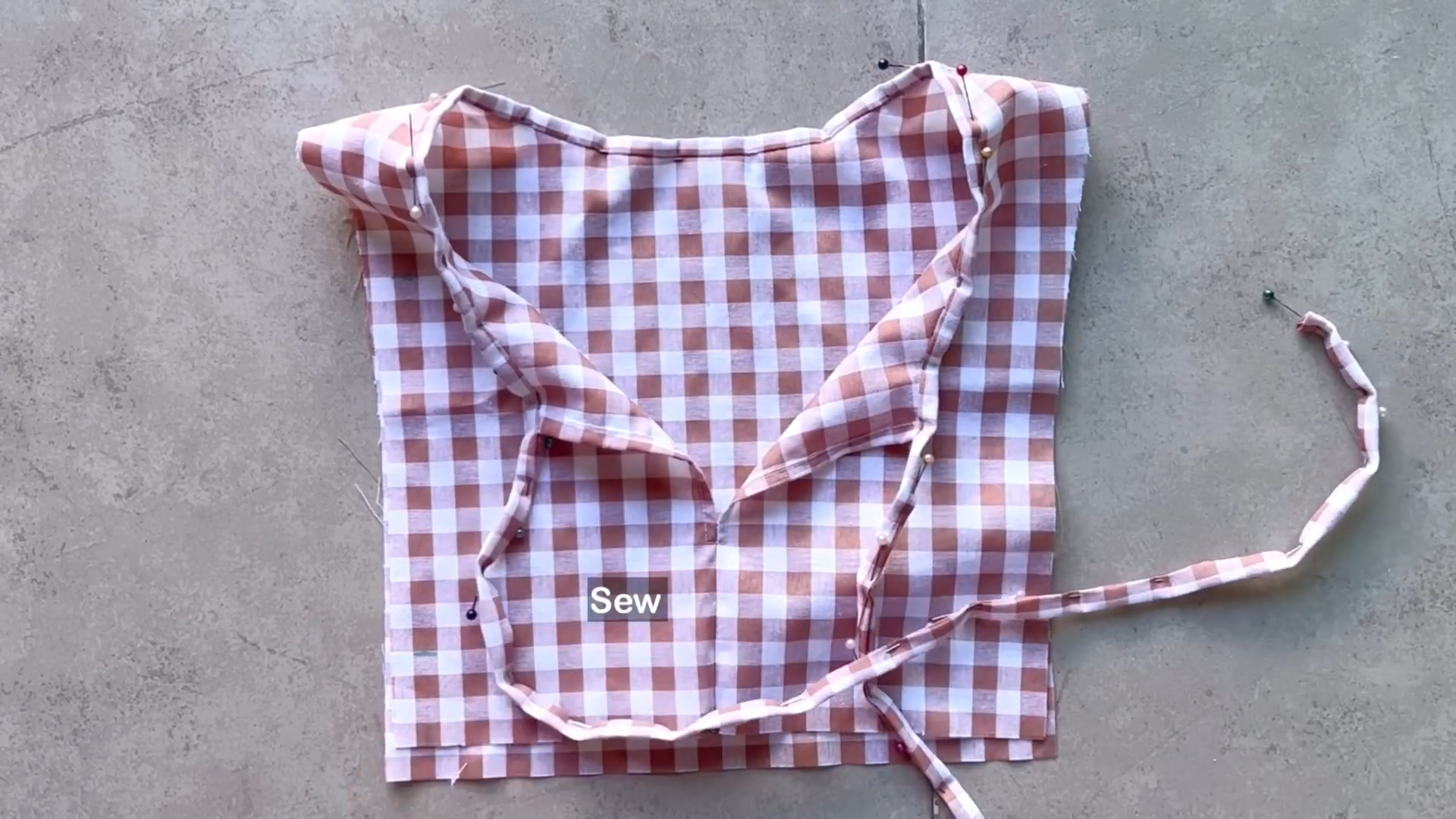
After the first seam, fold the other side of the fabric line to the middle then keep folding it over the first seam to hide the end fabric inside and sew.
THE SLEEVE PART
The sleeve part
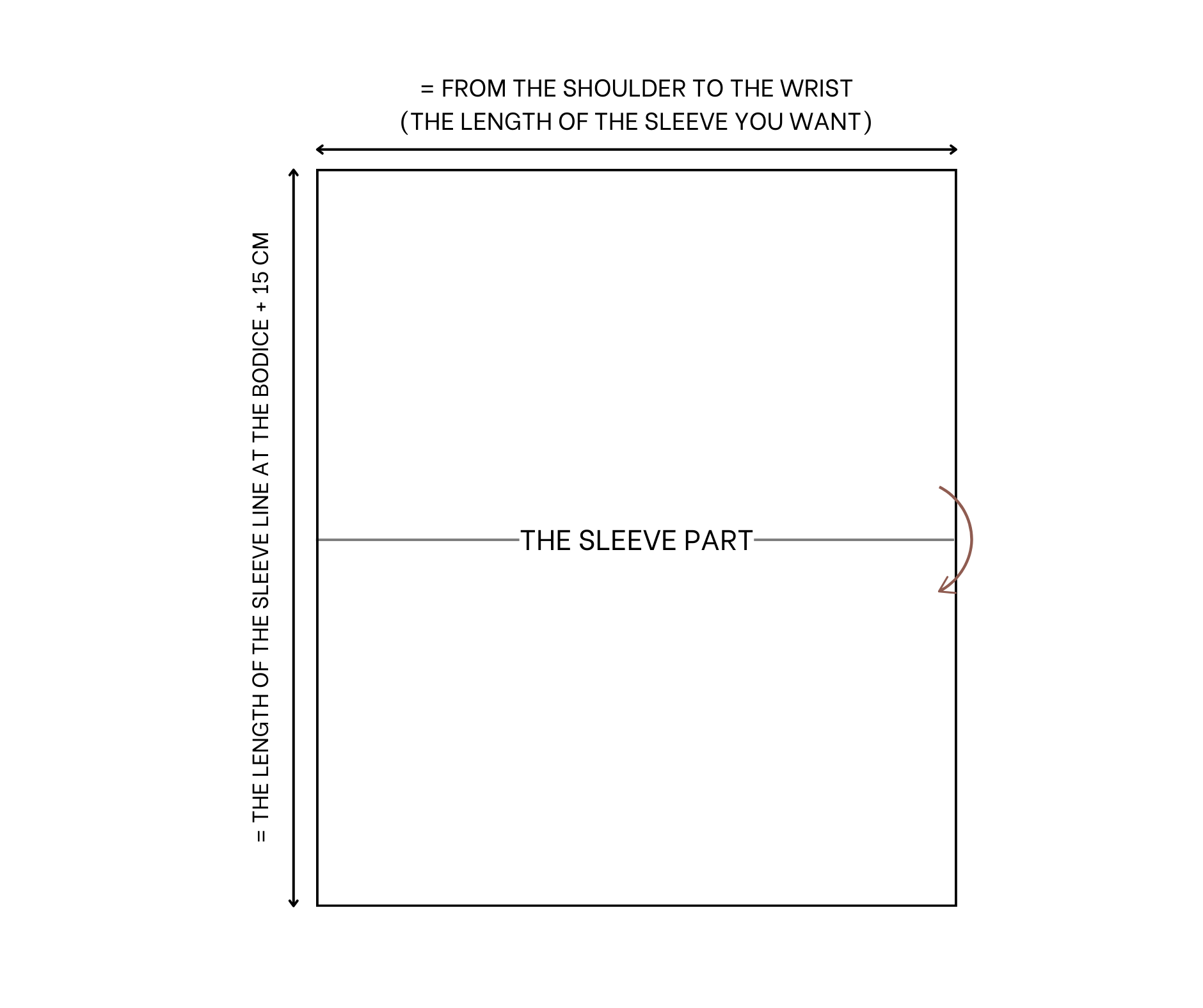
Cut a long rectangle with a length of 60 cm, which is the length of the sleeve that you want, and a width of 75 cm, which is the total length of the sleeve line from the front to the back of the bodice plus 15 cm to create a gathering fabric at the top of the sleeve later.
Fold two lane lines of the rectangle together first.
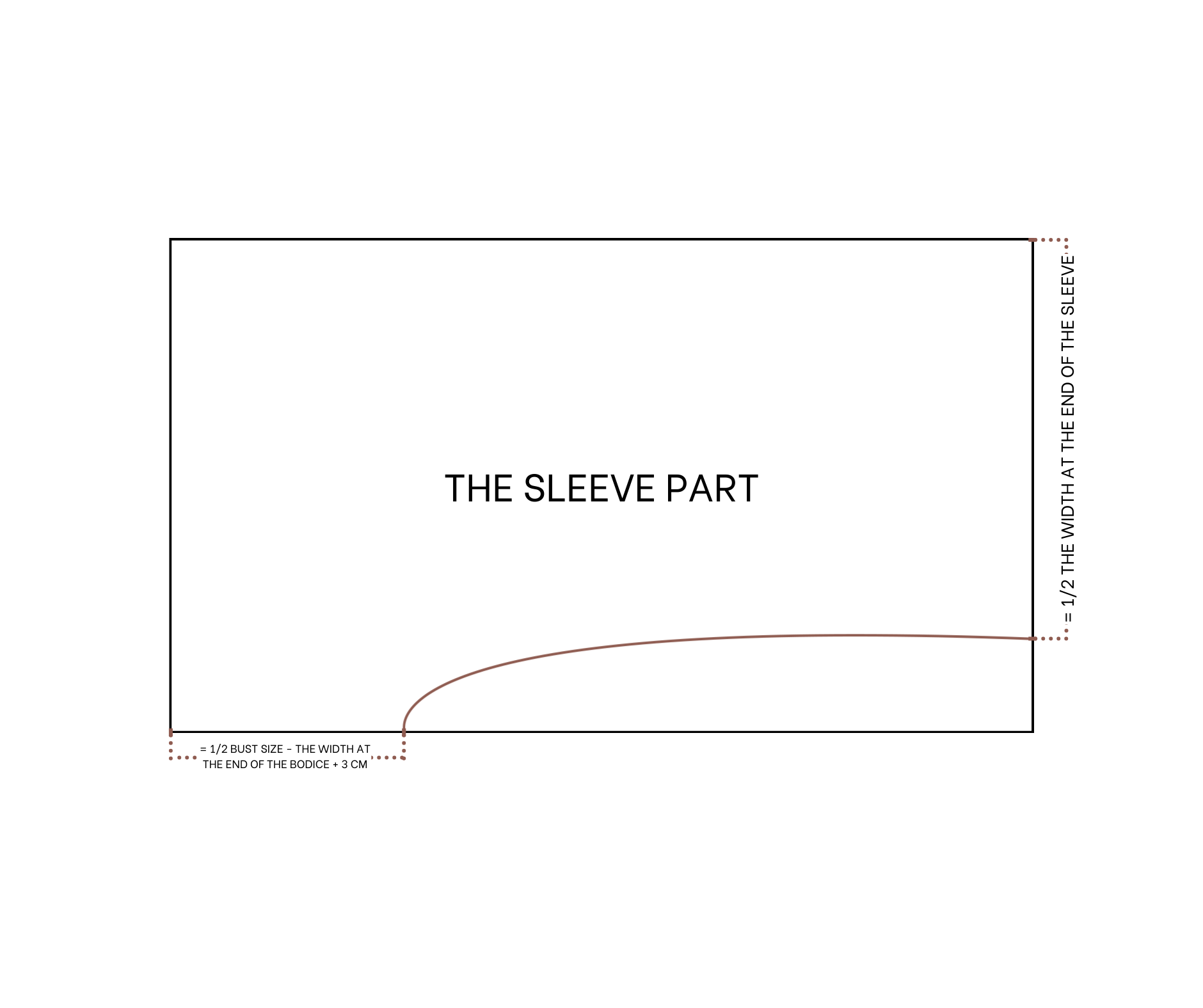
From the edge of the folding rectangle, mark on the lane line 14 cm, which is half of the gap between half of your bust size minus the width at the end of the bodice.
From one end of the folding line, mark down on the width line 26 cm, which is half of the end of the sleeve that you want. Then connect this mark to the one on the length line just made before that to create the under armpit line of the sleeve. Make it a big curve at the end to create a smooth connecting.
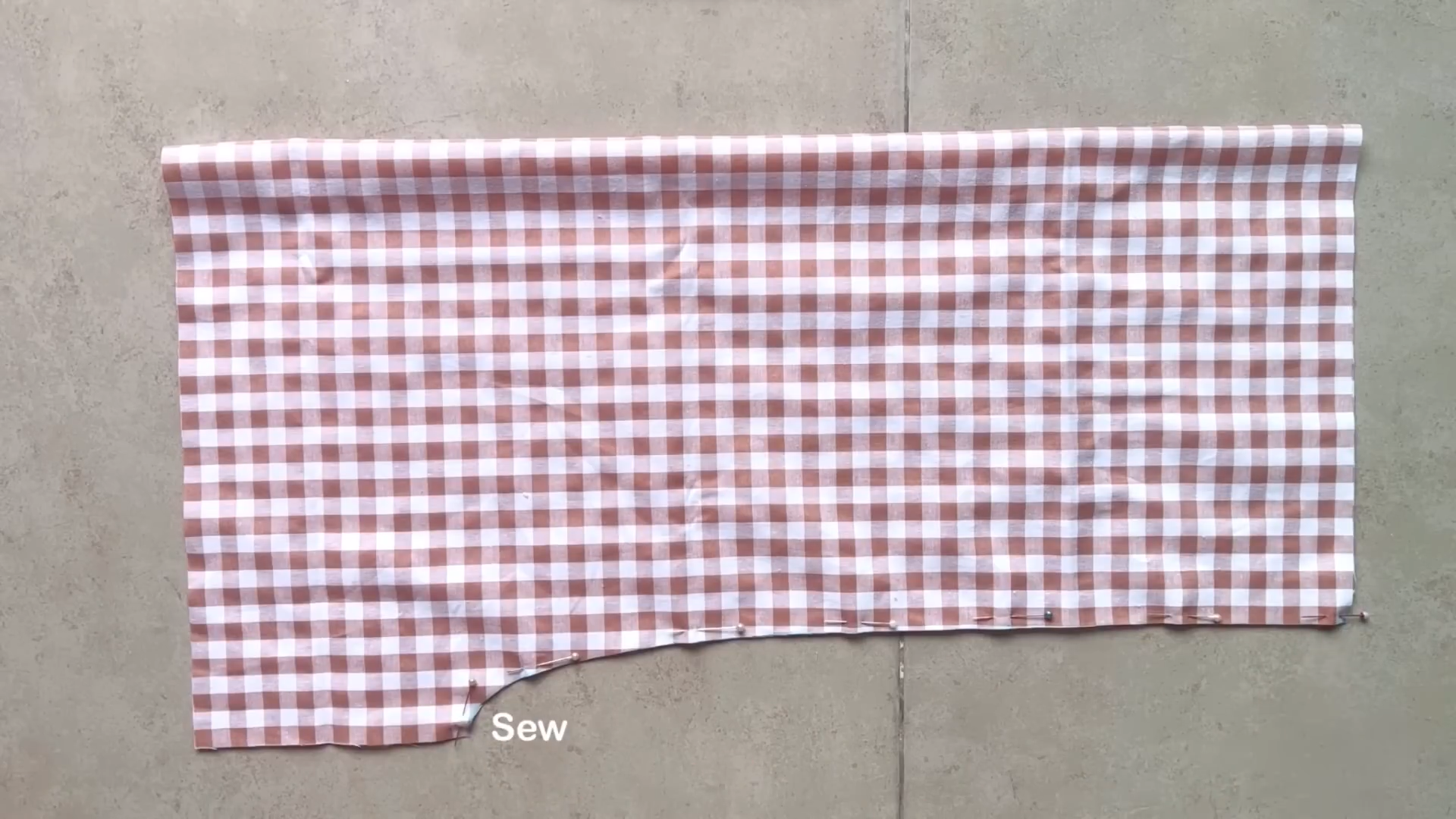
After cutting, connect two under armpit lines together.
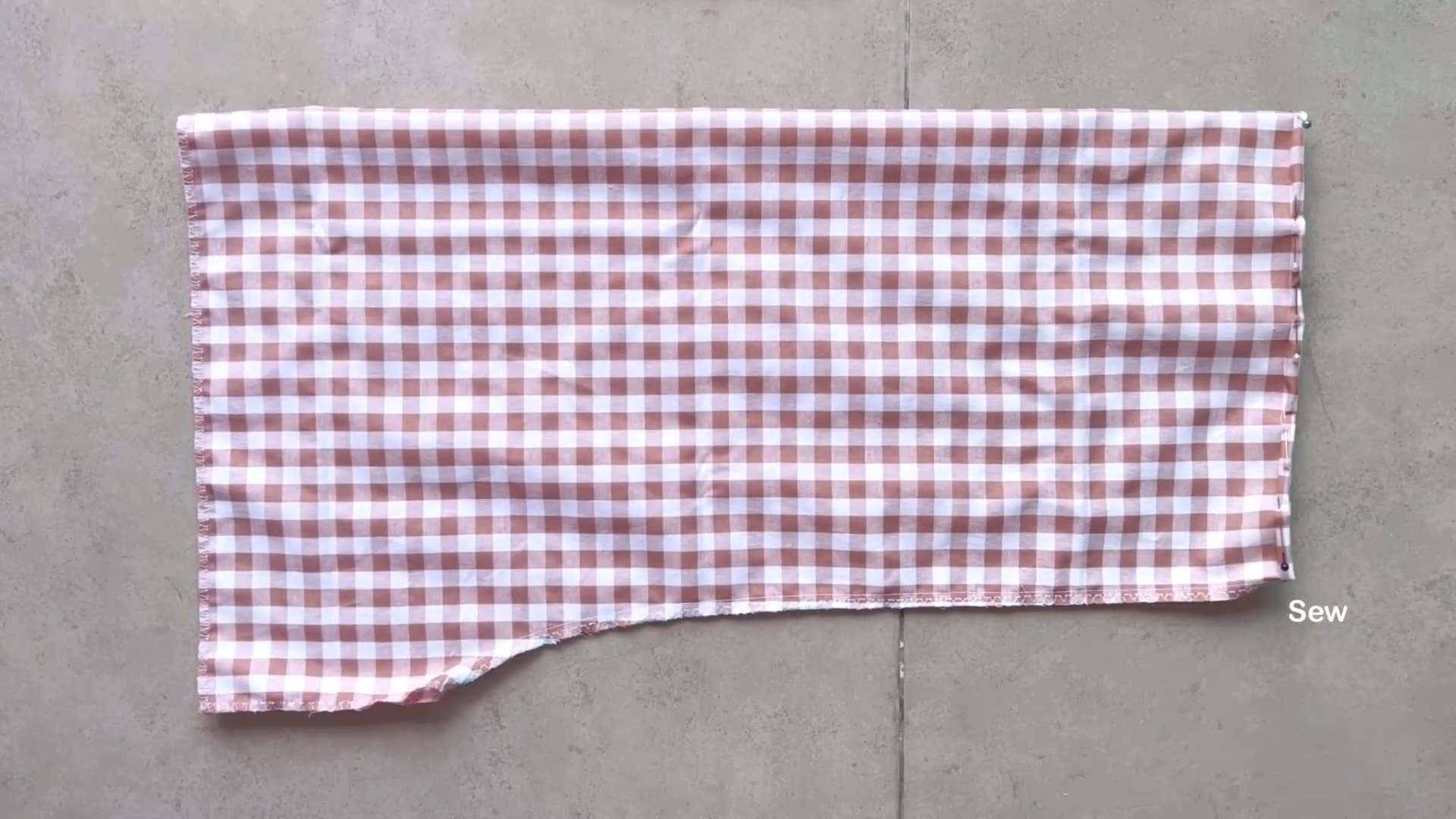
Finish the end of the sleeve by folding the end fabric inside two times with around a half centimeter each time and sewing.
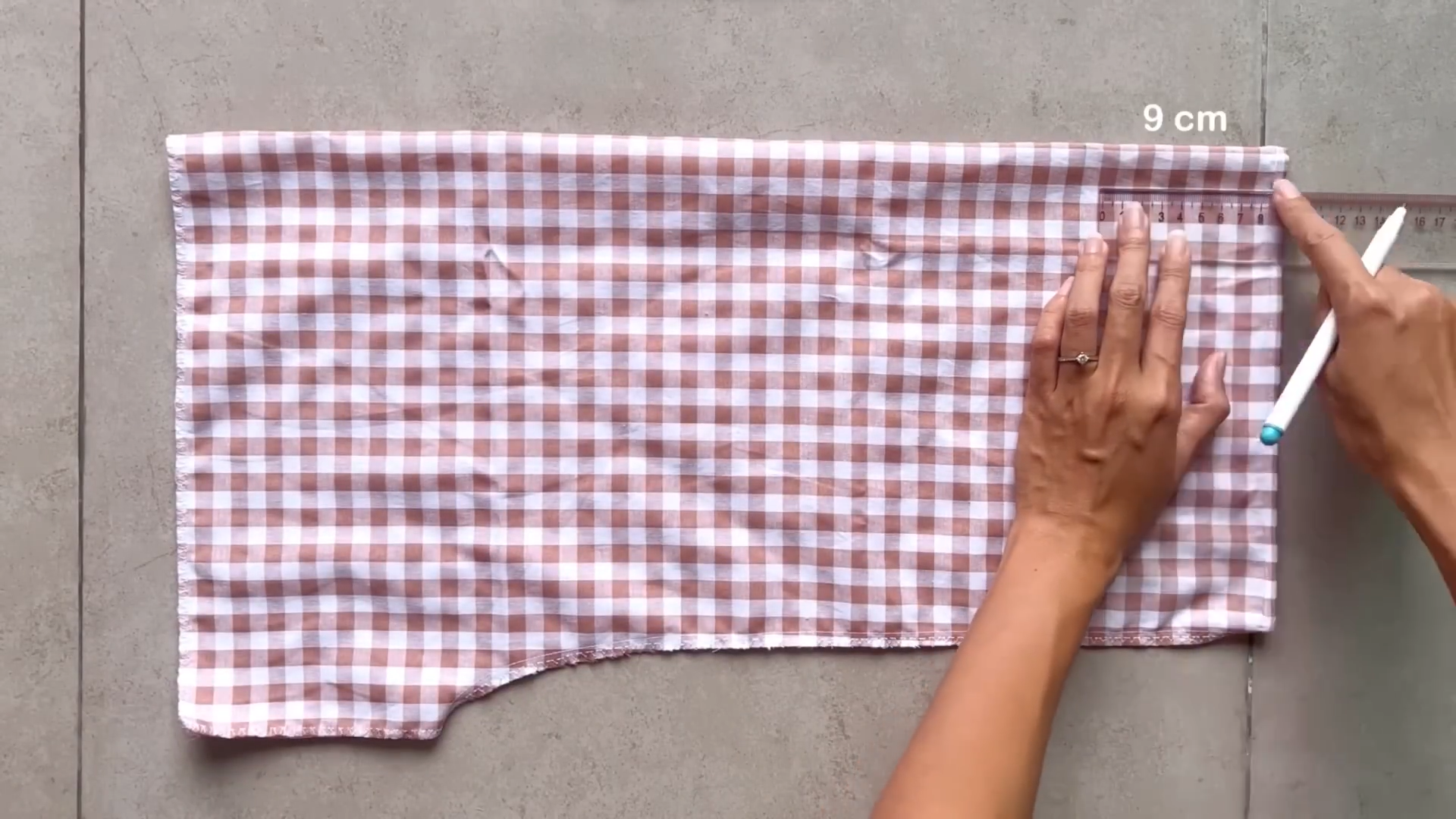
From the end of the sleeve, draw a line 9 cm above it. It will be the position of the fabric hole that you will create there later.
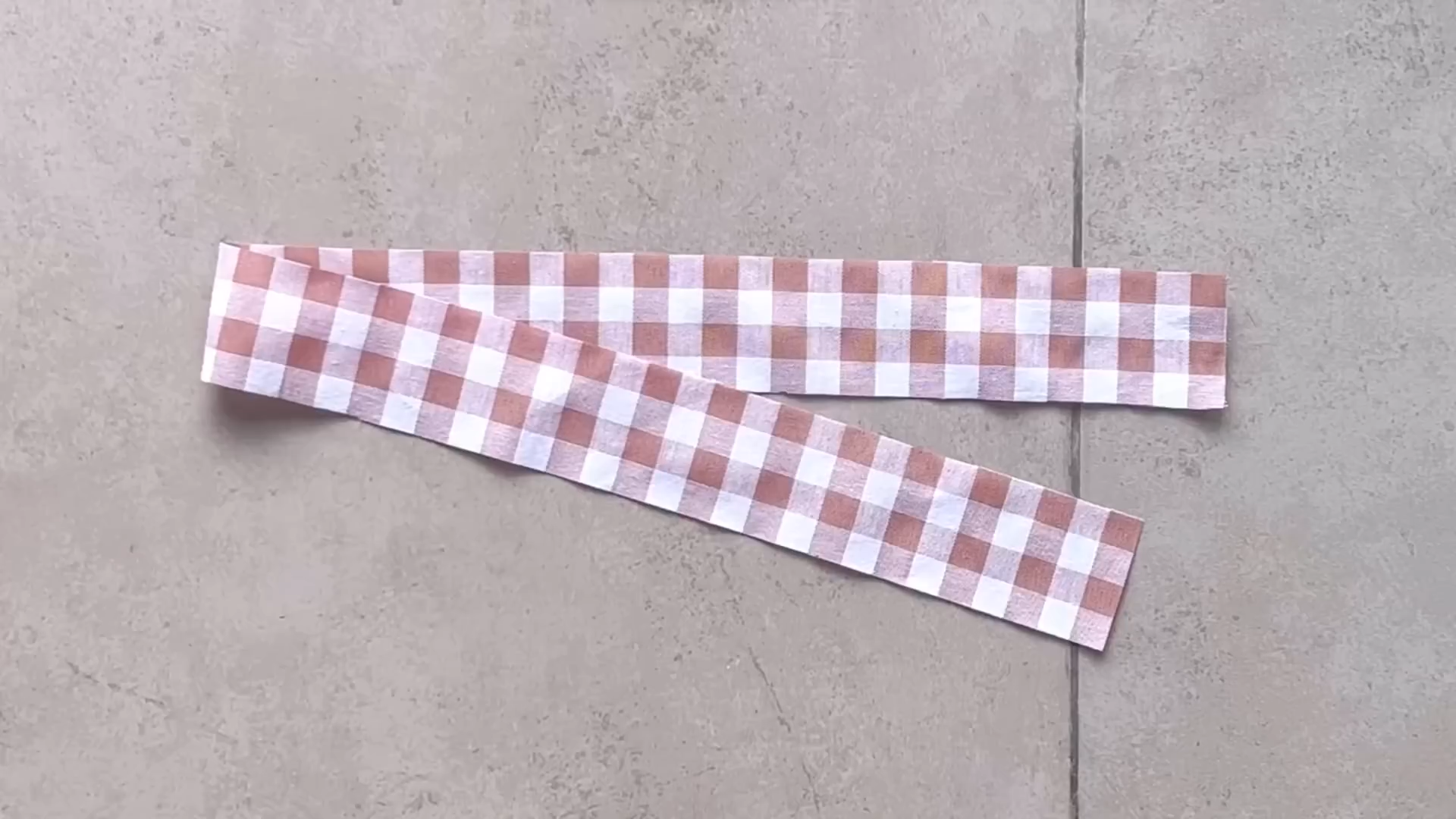
Cut a fabric line with a width of 4 cm and the length is 2 cm longer than the end of the sleeve.
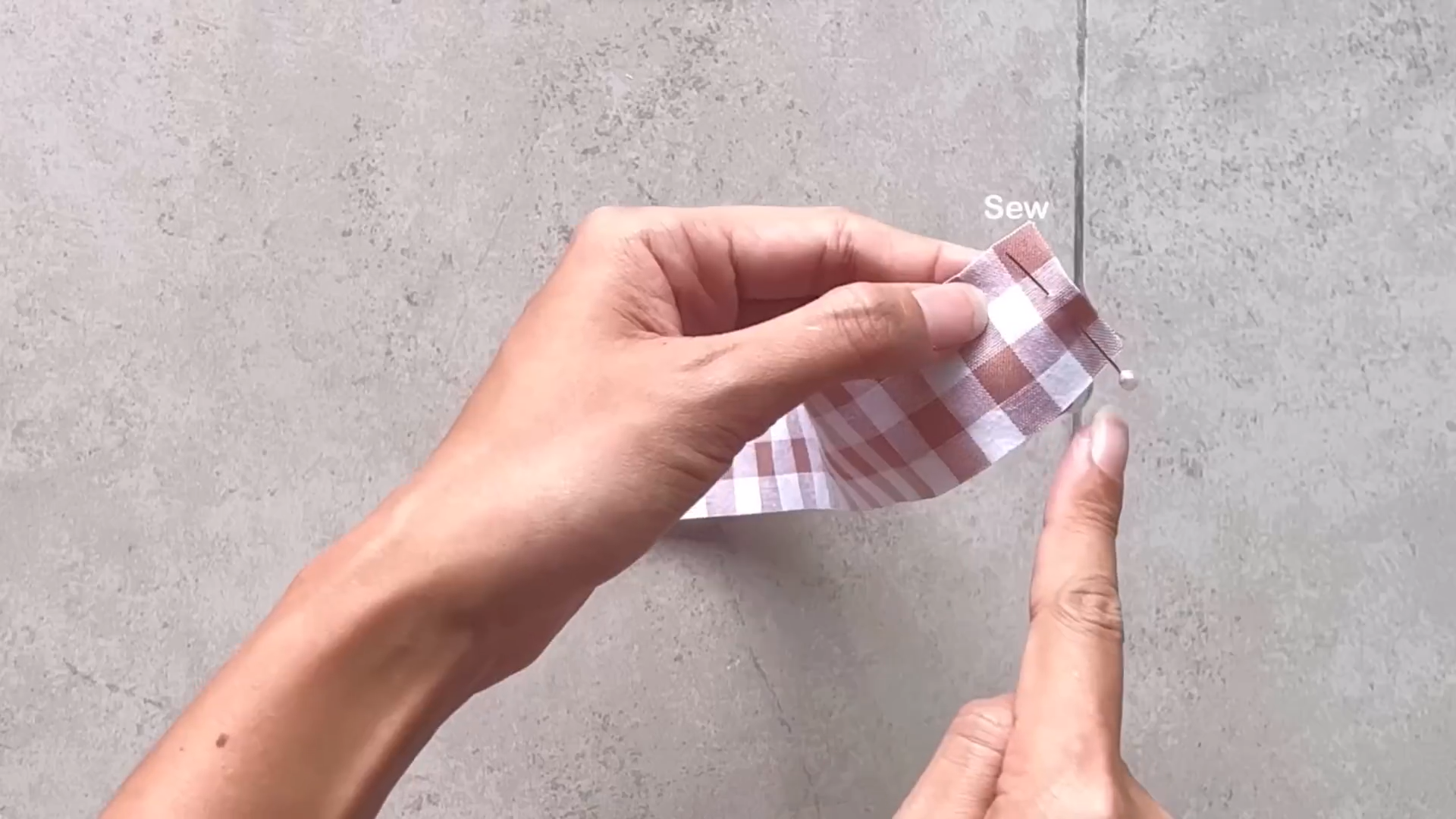
Connect two width lines together to create a circle fabric first.
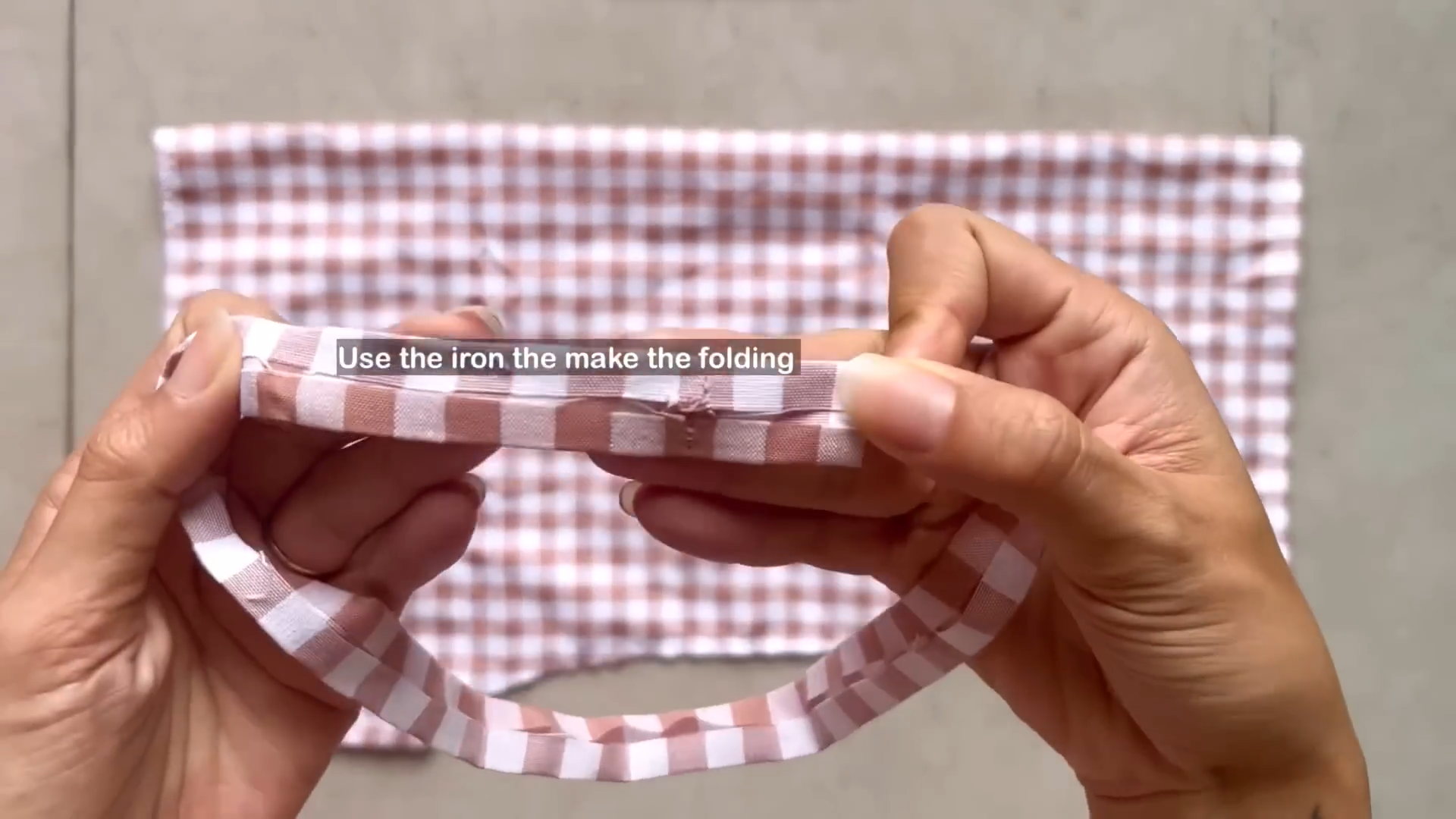
After that, use the iron to create the folding at two sides of the circle fabric.
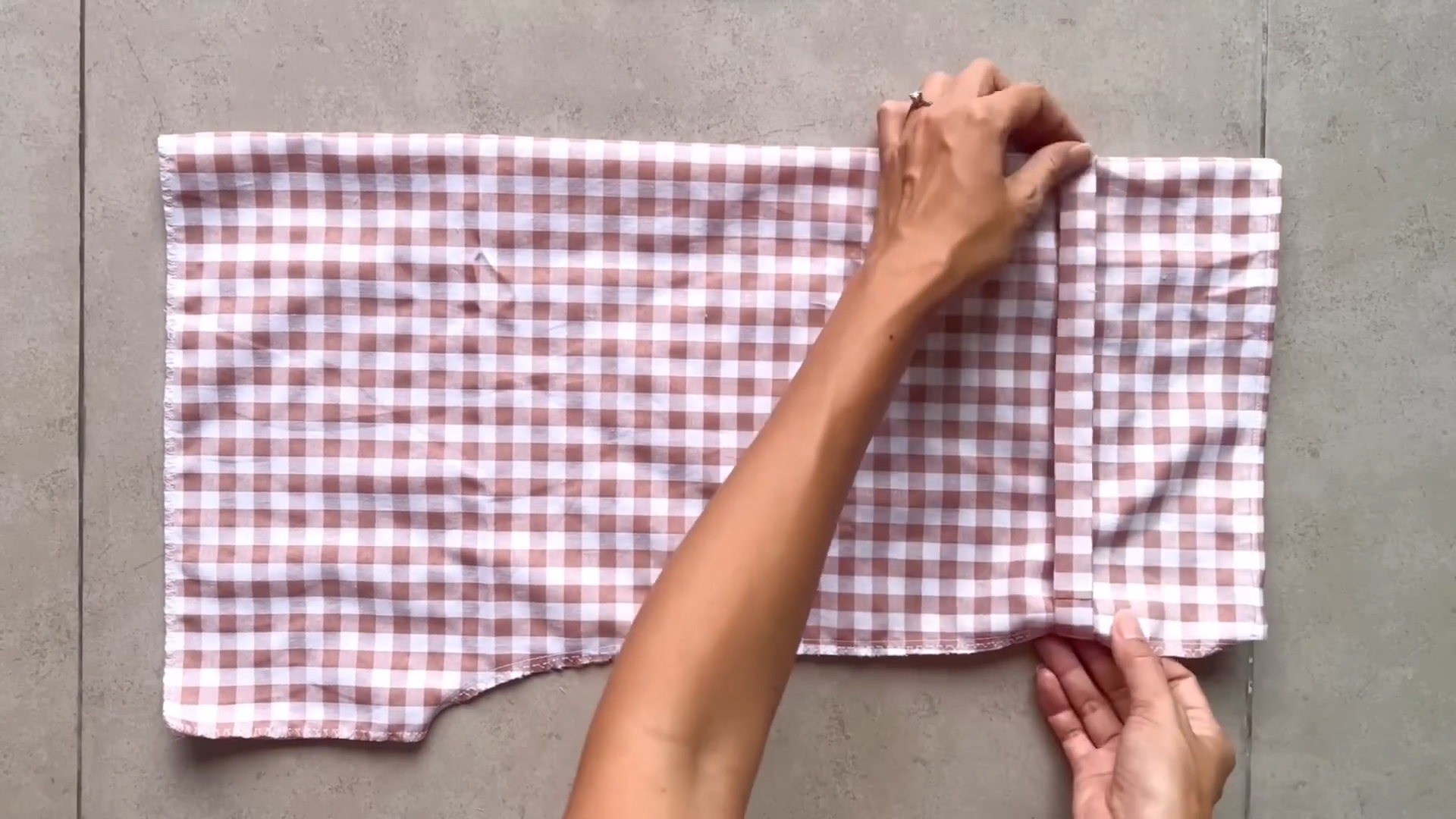
Then add the circle fabric to the line you drew before that and sew two sides of the circle fabric to the sleeve to create a fabric hole.
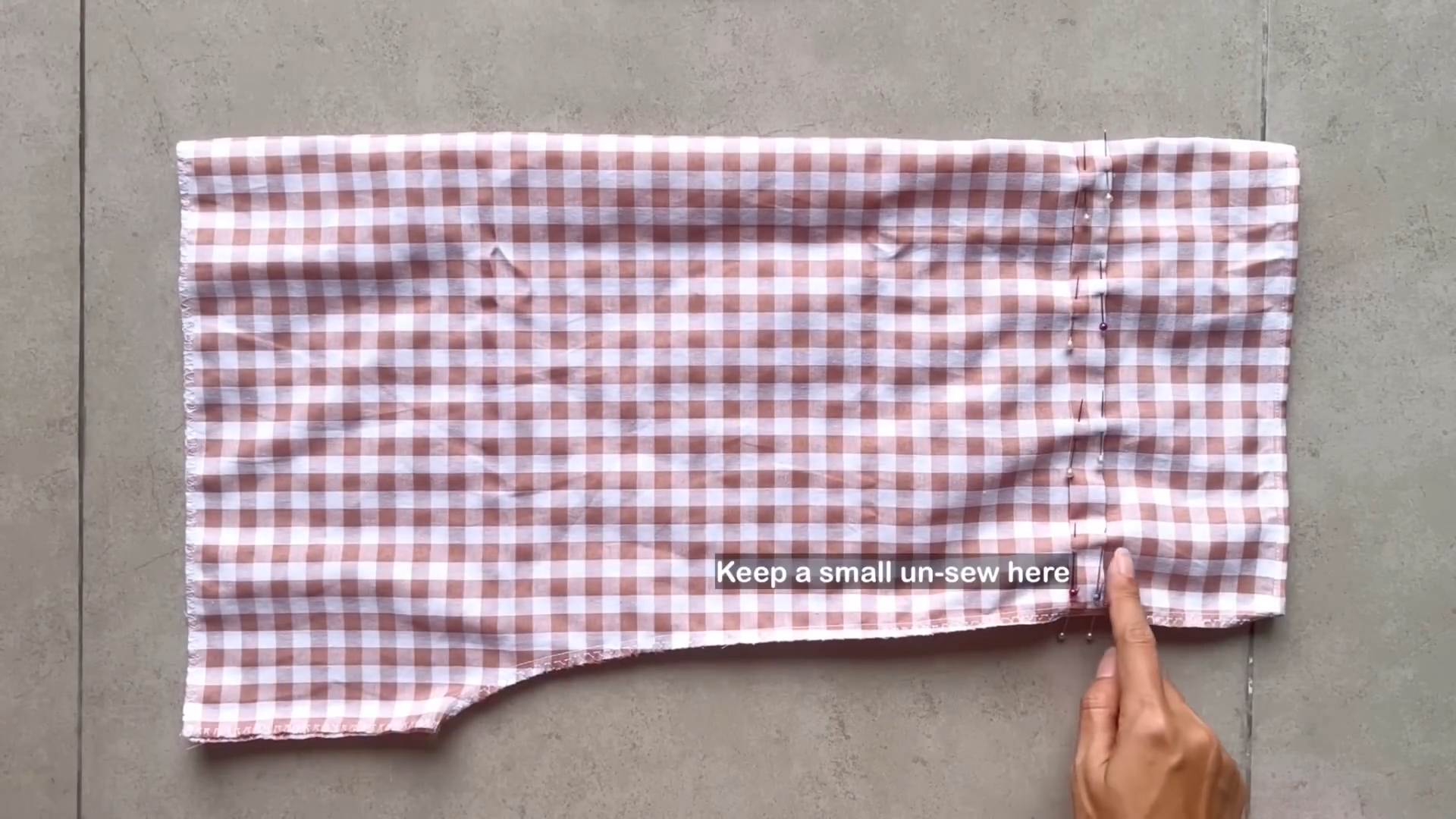
Remember to keep a small un-sewed space at one side of the circle fabric for the elastic band to go through later.
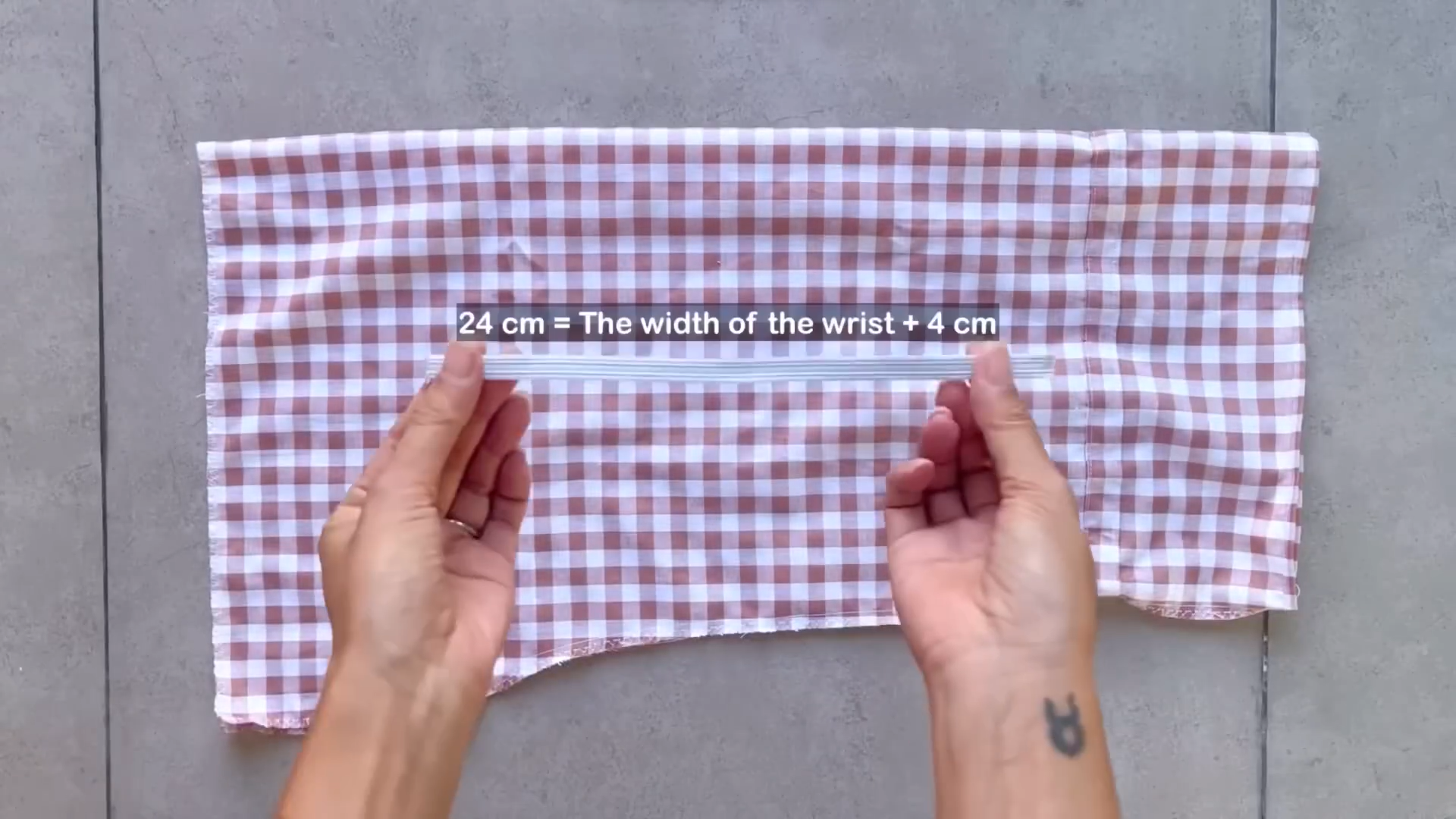
Cut an elastic band with a width of 1 cm and around 24 cm length, which is 4 cm longer than your wrist.
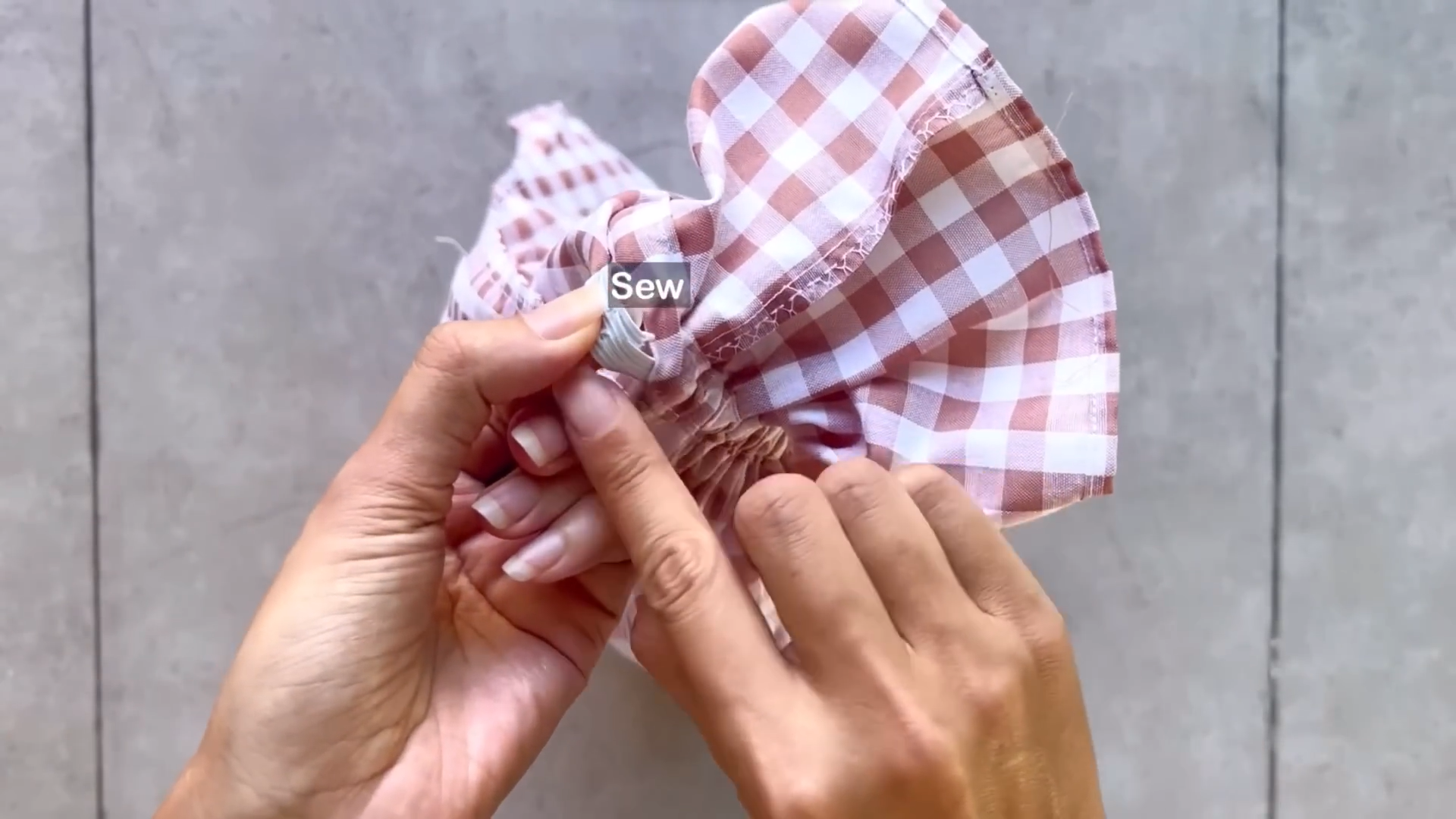
After connecting two ends of the elastic band together, close the un-sewed space you kept before that.
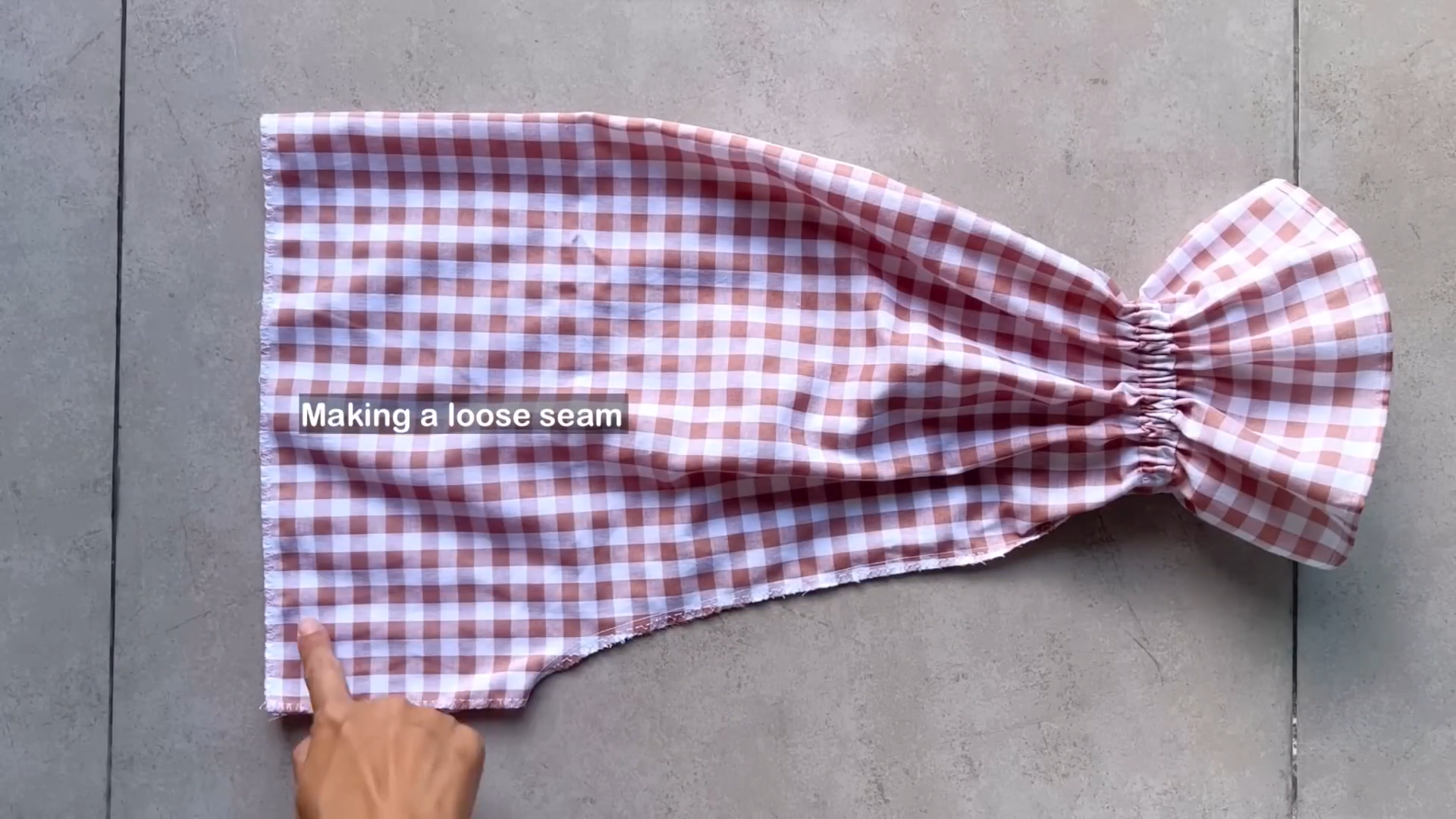
At the top of the sleeve, make a loose seam first then create a gathering fabric there later.
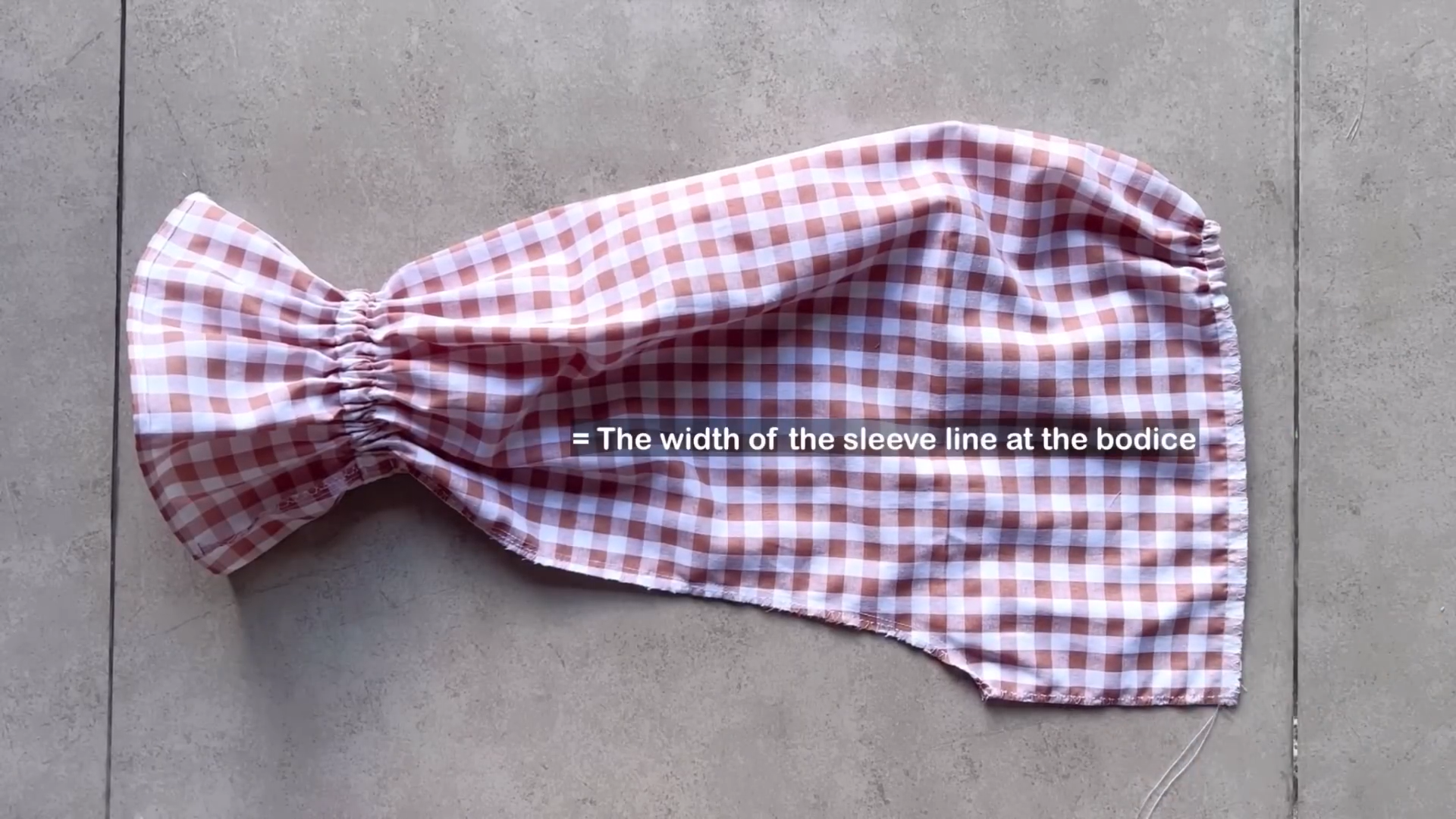
The final width of the gathering fabric will be the same as the sleeve line at the bodice so you can connect them together later.
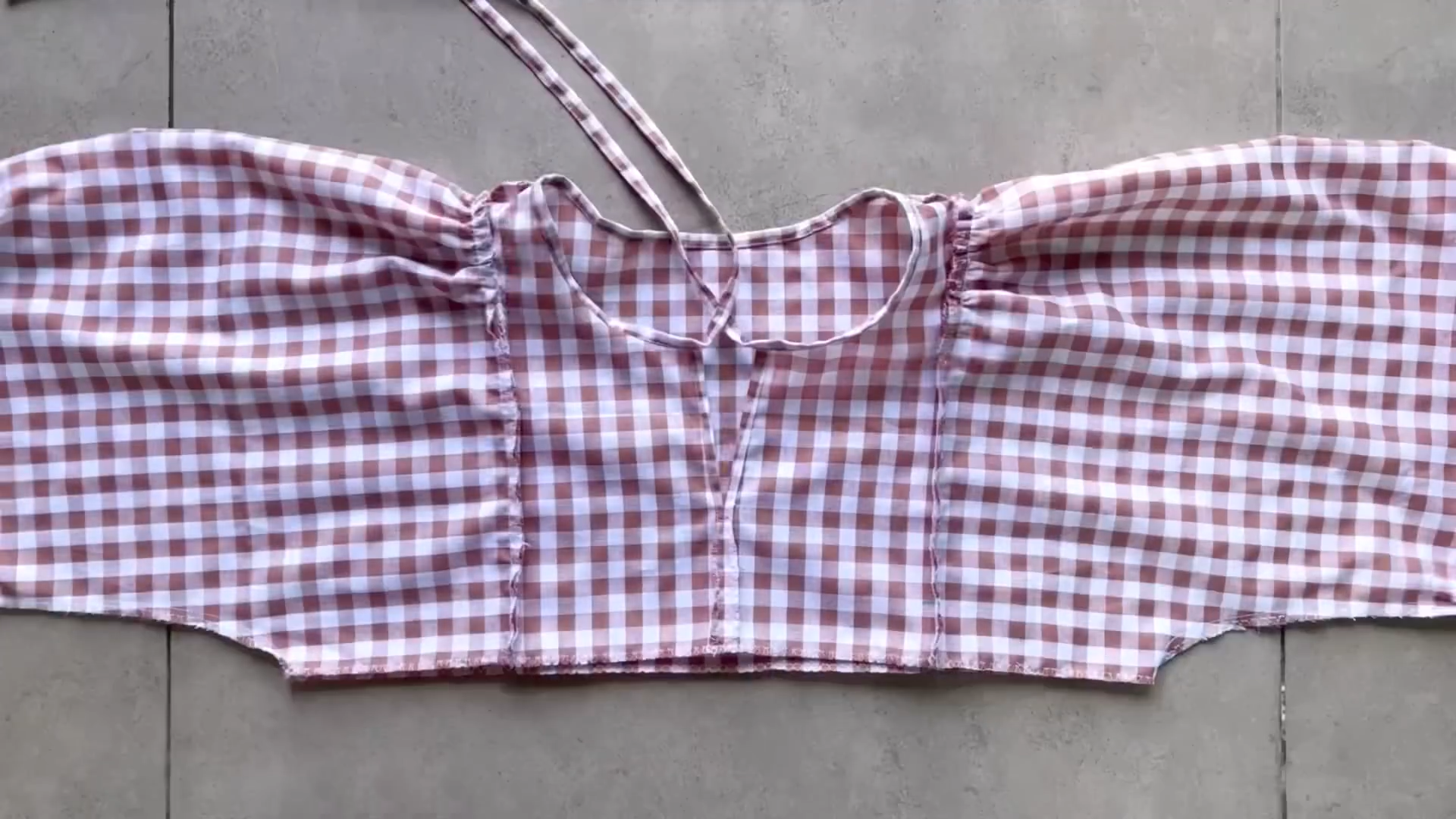
And we will finish the top part of the blouse after sewing.
THE BOTTOM PART
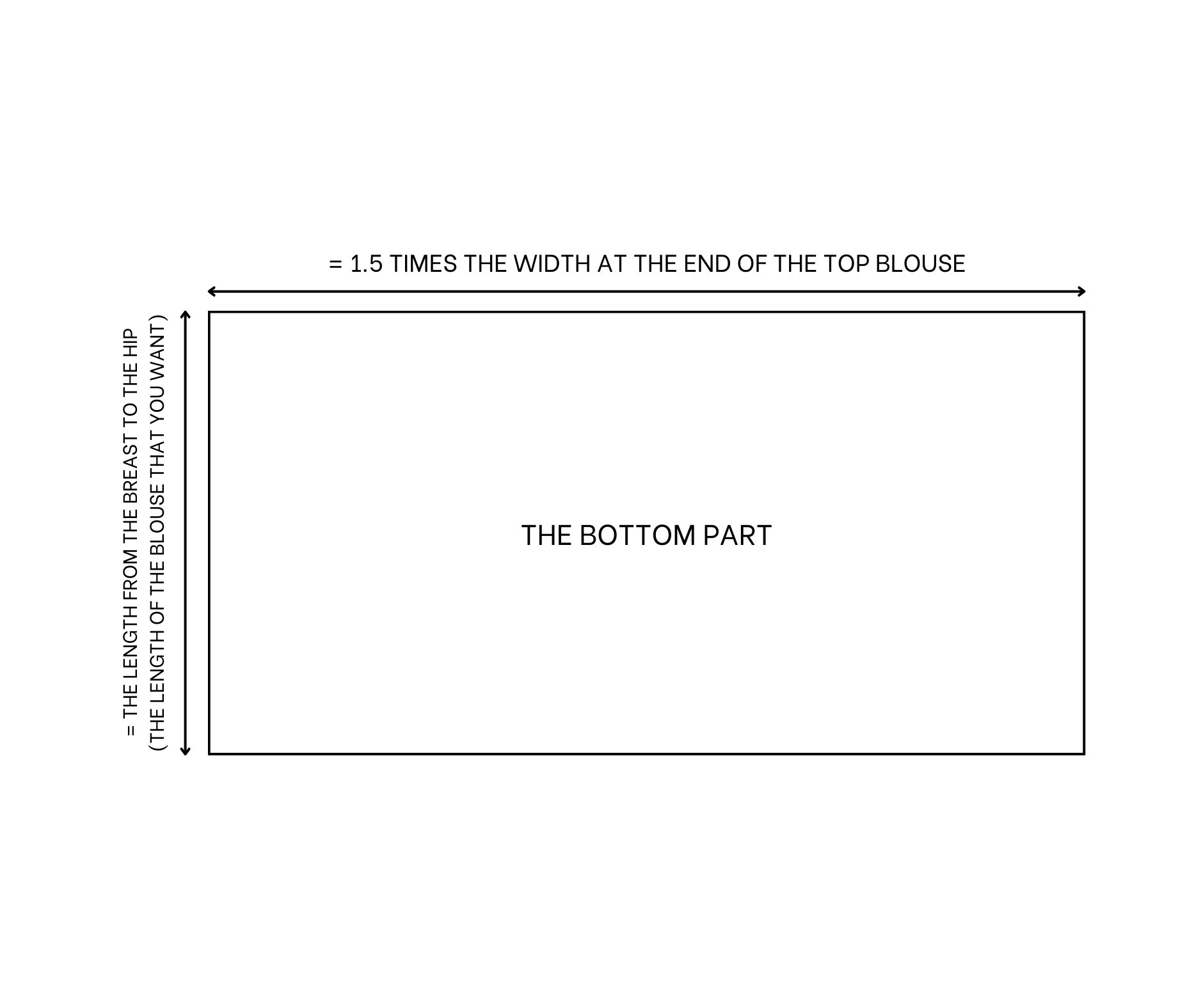
The bottom part
The first step is to check the width at the end of the top part.
Then cut a long rectangle with a width that is one and a half times that width and a length of 40 cm, which is the length from under the breast to around your hip. This is the length of the blouse you want.
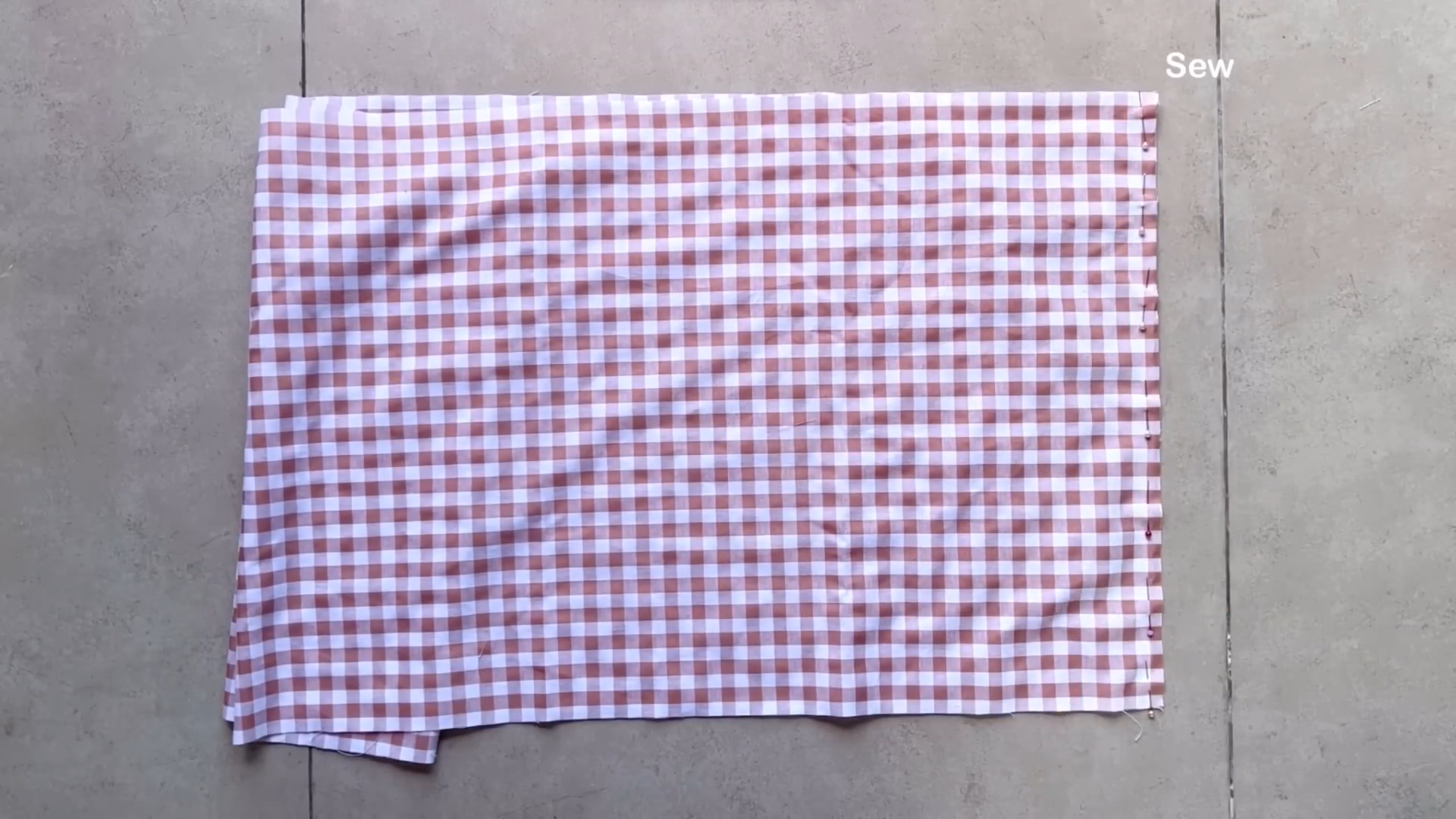
Connect two lane lines of the rectangle together to create a circle fabric first.
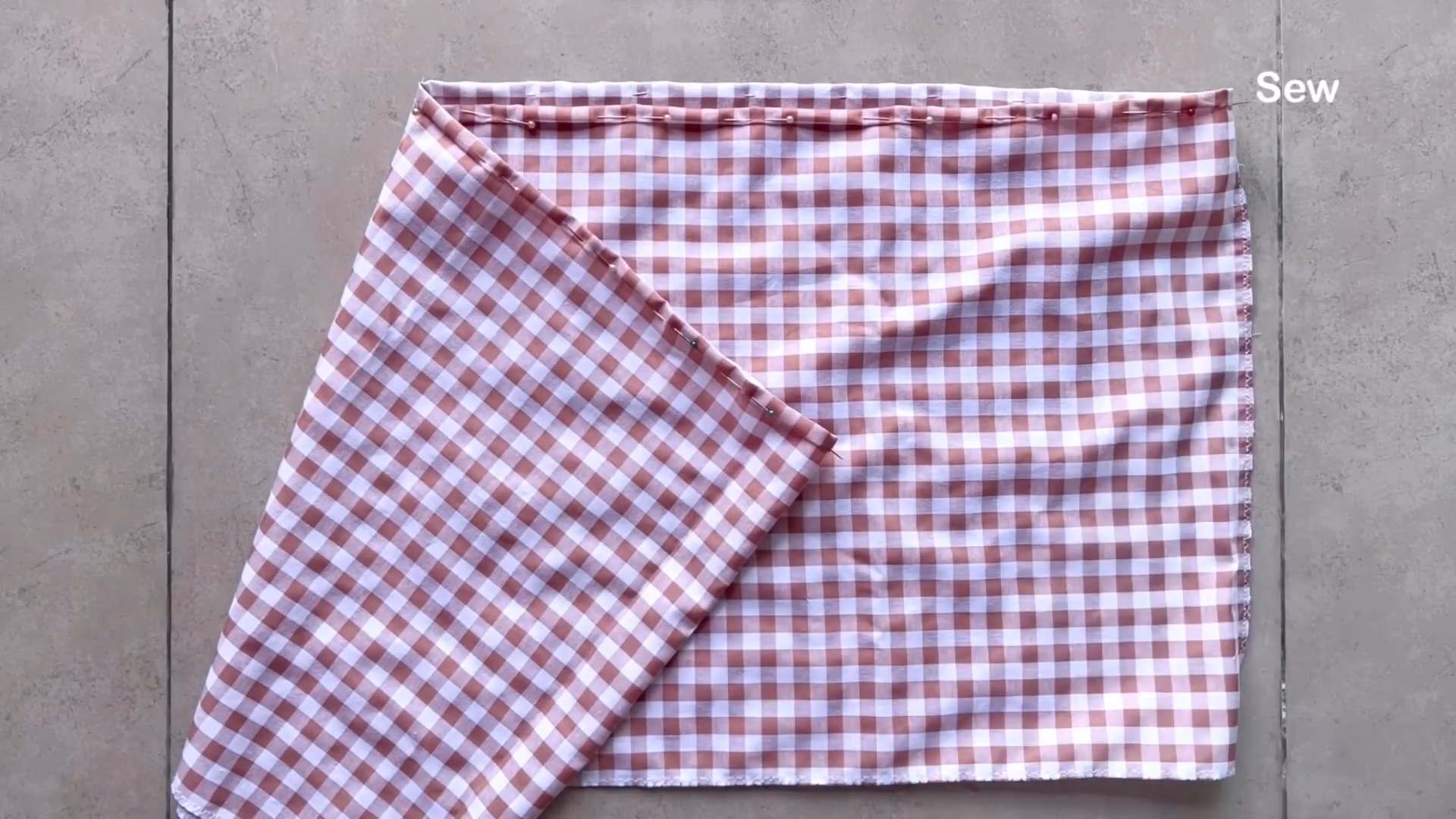
After that, finish one side of the circle fabric, which is the end of the blouse, by folding the end fabric inside two times with 1 cm each time and sewing.
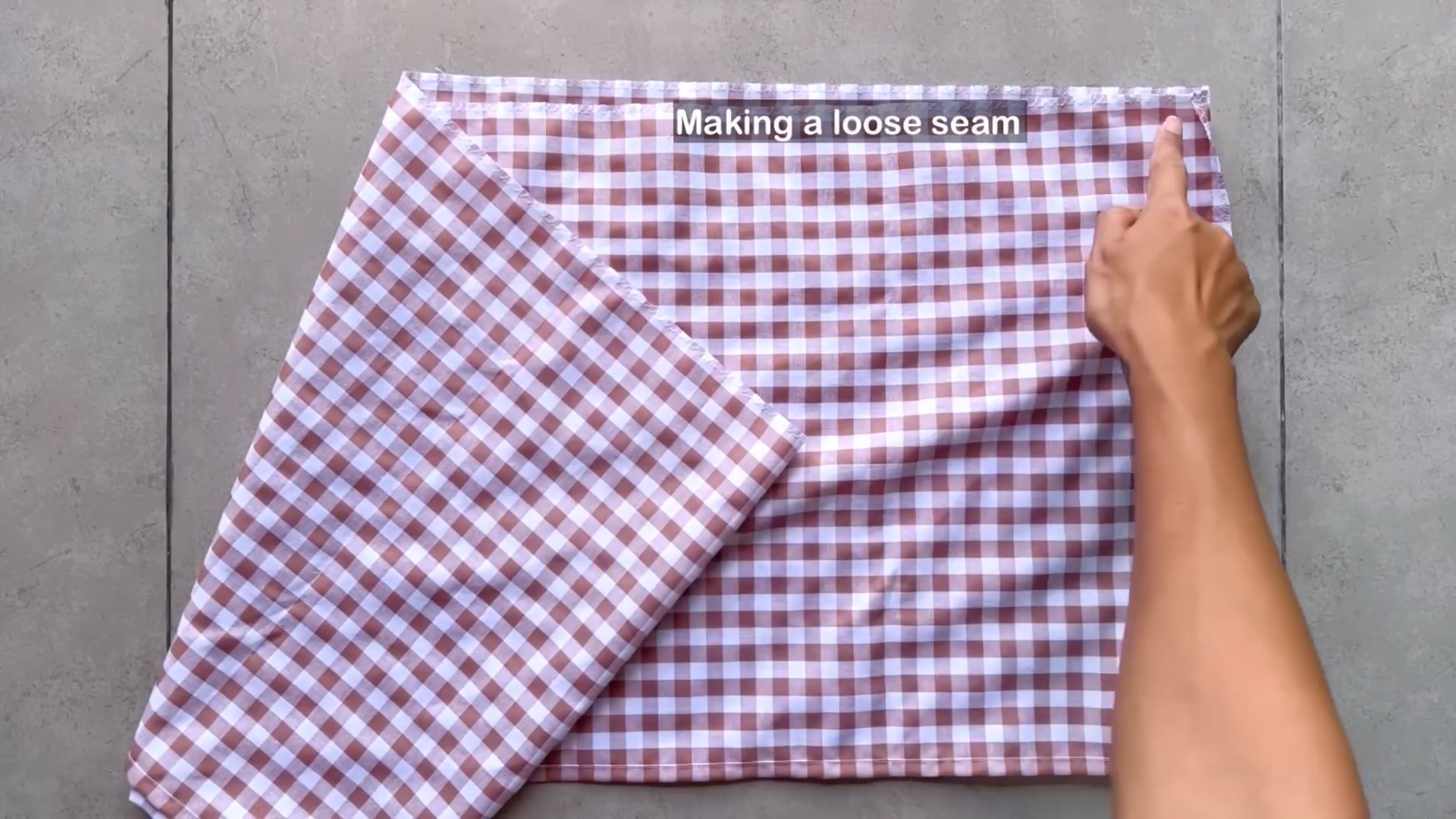
At the other side of the circle fabric, make a loose seam first, then create a gathering fabric there later.
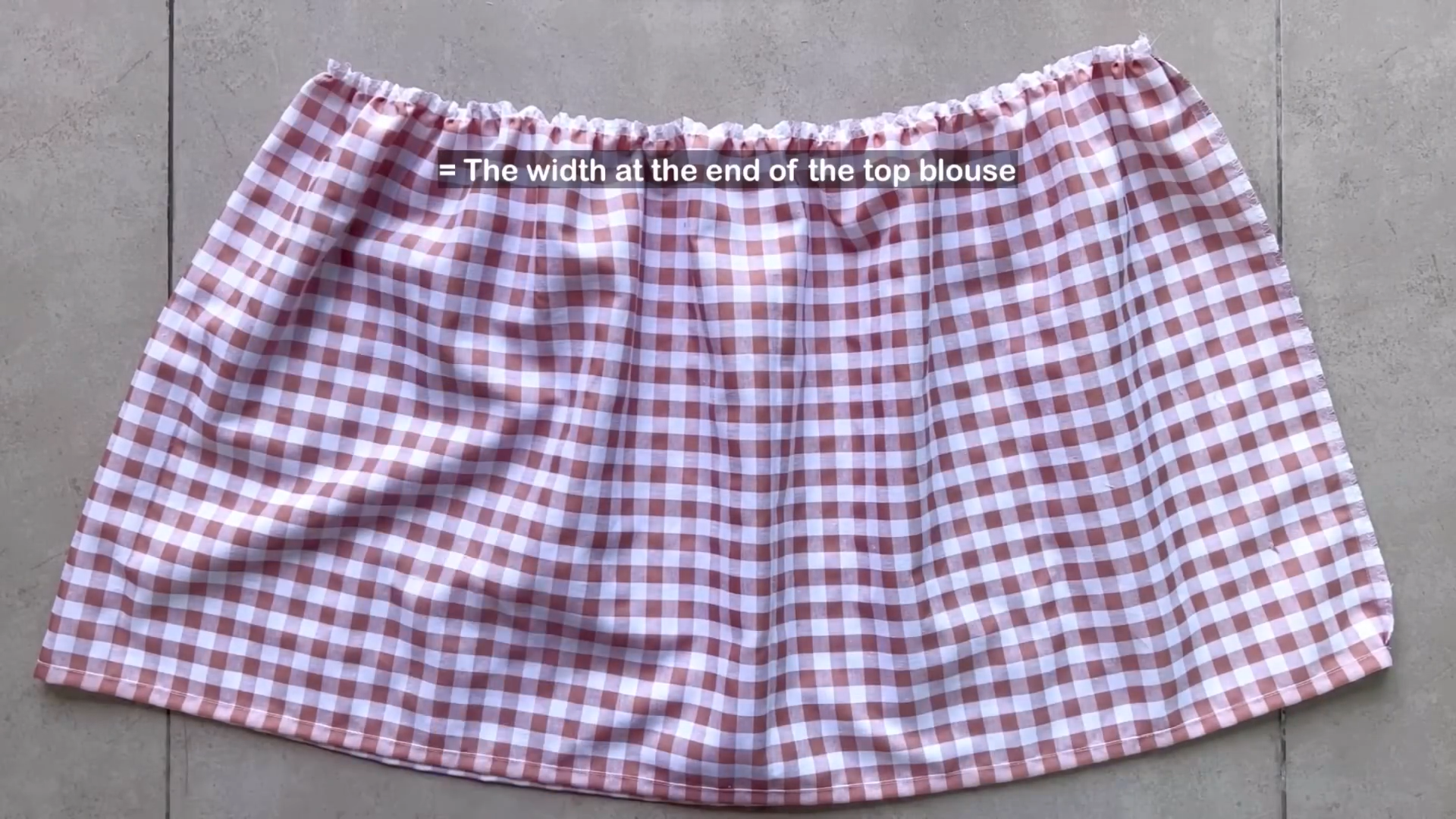
The final width of the gathering fabric will be the same as the end of the top part, so you can connect them together later.
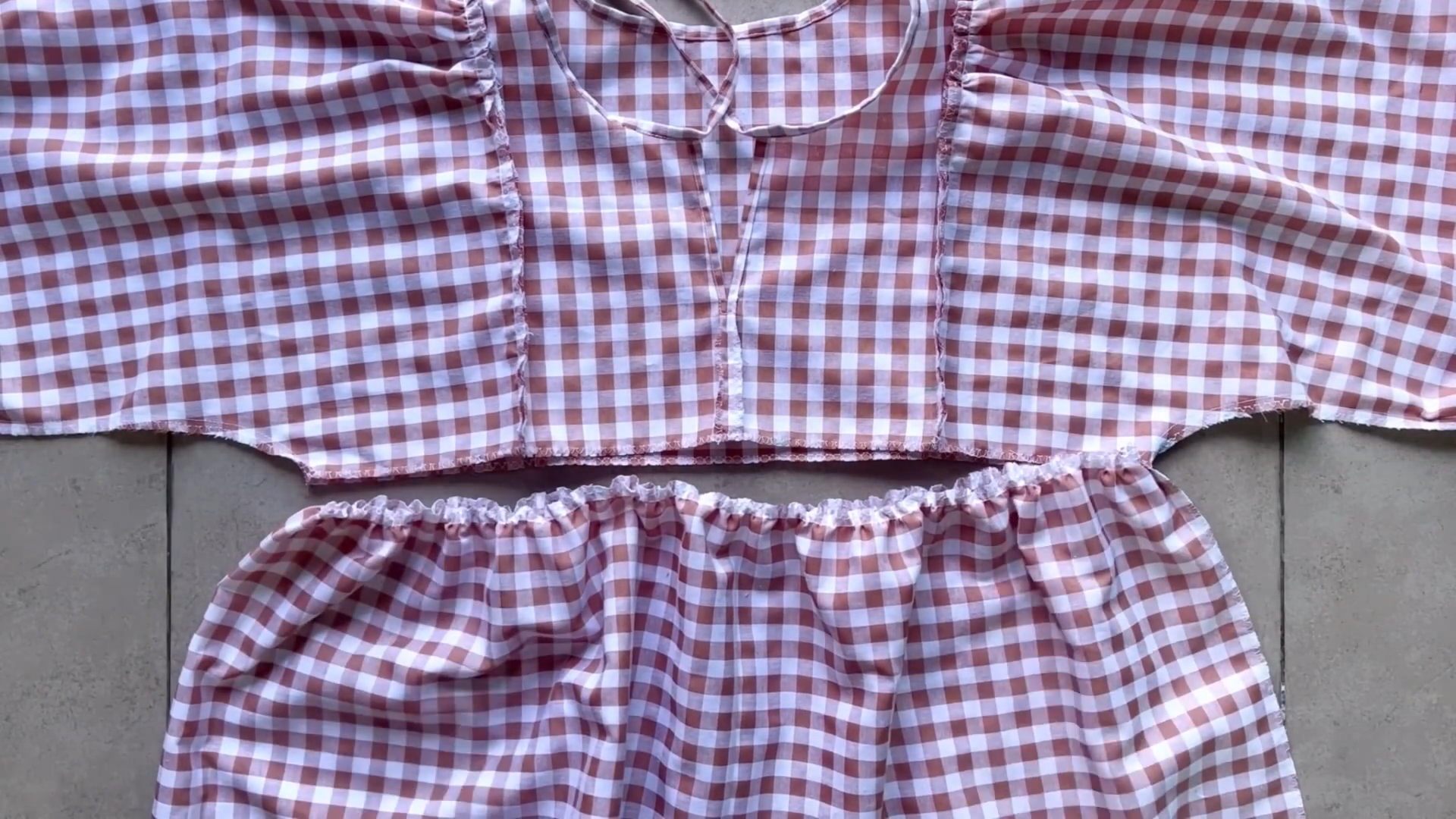
Then, connect the top part and the bottom part together.

DIY Puffy Sleeve Blouse
And there you have it - A Puffy sleeve blouse!
This blouse is both pretty and comfy, a perfect addition to any wardrobe.
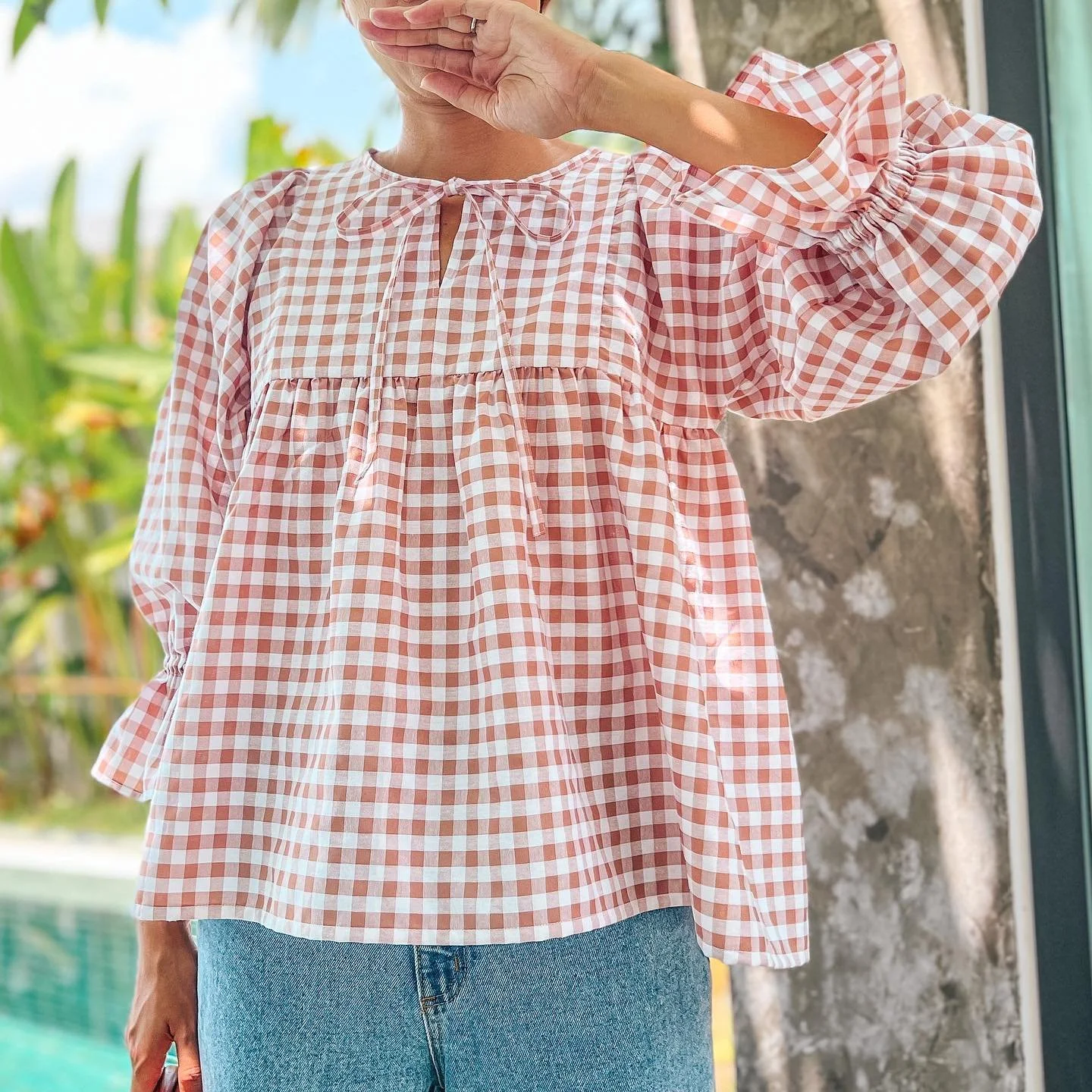
I hope you’ve enjoyed this journey as much as I have. If you’ve found this DIY helpful and enjoyable, please check it out and try it for yourself.
Until then, see you next week!